A refreshed guide from Iron Mountain Organics — originally published May 8, 2019
When you bring home produce from a small farm, a little care in the kitchen goes a long way. At Iron Mountain Organics here in Canton, Georgia, we harvest as close to pickup as we can so you get peak flavor. How you store those greens, peppers, herbs, and ginger once they leave our farm store often decides whether you still have a crisp salad later in the week.
This updates our older “Taking Care of Your Produce” post with clearer, crop-by-crop advice — especially for the lettuce, salad mixes, kale, peppers, herbs, and fresh ginger we grow — plus a few real gadgets that help cut waste. If you’ve found a method that works in your kitchen, leave a comment and share it with the farm community.
A few rules that apply to almost everything
Get it cold, but not crushed. Most leafy greens and tender vegetables want the refrigerator crisper, around 35–40°F, soon after you get home. Give them space so they aren’t mashed, and keep them off the coldest back wall where they can freeze.
Wash when you’re ready to eat. Extra moisture shortens storage life. Extension guidance for salad greens generally says: refrigerate first, wash just before use. If something arrives dirty from the field, rinse, dry thoroughly, then store.
Watch ethylene. Apples, bananas, and pears release ethylene gas that speeds spoilage. Lettuce and many greens fade faster next to those fruits (University of Arizona Cooperative Extension and other produce guides make this point clearly). Keep ethylene producers on a separate shelf or drawer when you can.
Use your senses. Toss anything that smells off, looks rotten, or feels slimy.
Lettuce and salad mixes
Large-leaf lettuce and fall mixed greens are delicate. Handled well, most salad greens keep about a week; whole heads often last a bit longer than loose leaves. Colorado State, Oklahoma State, and Texas A&M AgriLife Extension all point to the same core method:
- Sort and protect. Remove damaged outer leaves. Leave whole heads intact and unwashed until use when you can.
- Dry thoroughly. If greens are damp, blot or spin them dry. Wet leaves in a closed bag turn slimy fast.
- Paper towels in a container. Line a clean hard-sided container with dry paper towels, add the greens, and leave a little air space. A plastic bag works in a pinch — leave it slightly open.
- Crisper drawer. Store on high humidity, away from apples and bananas.
- Wash just before the bowl. Rinse under cold running water (no soap). Spin or pat dry so dressing clings.
Wilted but not spoiled? Illinois Extension notes limp lettuce can often be revived in ice water for a few minutes, then dried well. Discard anything slimy — revival is for wilt, not spoilage. And don’t freeze lettuce; high-water greens don’t freeze, can, or dry well.
Kale and other sturdy greens
Store kale unwashed, wrapped loosely in dry paper towels, in a perforated bag or container in the crisper. It often keeps up to about a week. Tender cooking greens such as spinach usually stay crisp about four days or longer with the same approach.
Peppers (Jimmy Nardello, shishito, jalapeño, sweet Italian)
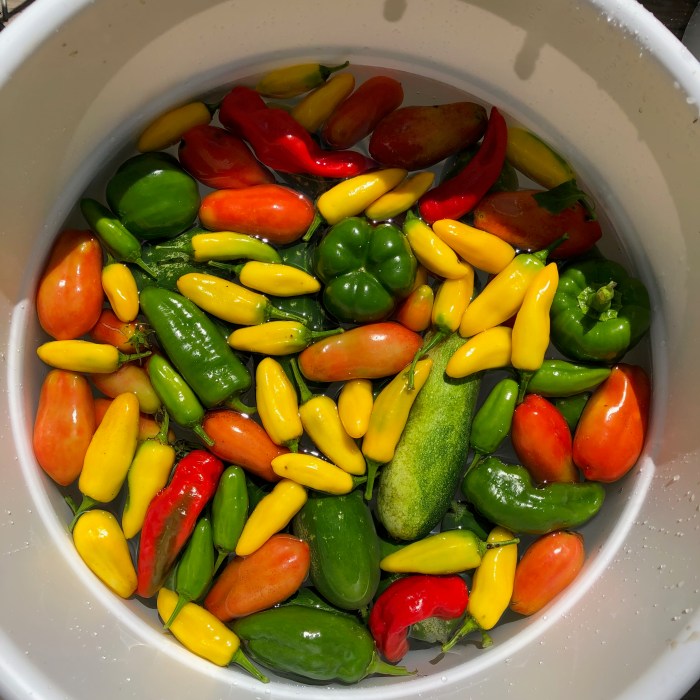
Refrigerate peppers unwashed in a breathable bag or produce container — not a wet, sealed plastic bag. Most keep roughly one to three weeks depending on variety and ripeness. Wash just before cooking.
Fresh herbs (spearmint, thyme, chives, lemon balm, catnip)
Treat soft herbs like a bouquet: trim the stems, stand them in a jar with an inch or two of water, cover loosely with a bag in the fridge, and change the water every day or two. Woody herbs such as thyme often do well wrapped loosely in a slightly damp paper towel inside a breathable bag. Wash only when you’re ready to chop. A dedicated herb keeper (below) makes this almost automatic.
Fresh ginger
Iowa State University Extension recommends storing unpeeled ginger in an airtight container or bag in the crisper, where it can stay usable for several weeks when kept well. Watch for mold, softness, or off smells. Ginger from our farm is young, tender ginger with a thin skin, so there’s no need to peel it before you eat or freeze it. For longer keeping, freeze it whole, sliced, or grated.
Tomatoes, potatoes, and a few others
Keep tomatoes and potatoes in a cool, dry, ventilated spot at room temperature; wash just before using. Don’t refrigerate whole tomatoes if you can help it (flavor and texture suffer). Keep potatoes in the dark, away from onions when possible.
Asparagus: refrigerate, ends wrapped in a moist paper towel, or stand spears in a glass of cold water. Beans and peas: rinse if dirty, dry completely, refrigerate with a few paper towels in a clean bag. Whole melons: room temperature until ripe; refrigerate cut pieces covered. Berries: vented bags or containers help; wash just before eating.
Freezing extras
Freezing fruit and most vegetables locks in peak quality (blanch when a tested recipe says to). Freezing is not recommended for lettuce and salad greens, artichokes, Belgian endive, eggplant, potatoes (other than mashed), radishes, sprouts, and sweet potatoes. Eat those fresh.
Gadgets that help
A few tools stretch farm-fresh produce further. Approximate list prices verified on product pages in November 2026; prices change. No affiliate links.
- OXO Good Grips Salad Spinner (~$33) — Gets greens truly dry after washing so they store and dress better.
- OXO GreenSaver Produce Keeper (4.3 qt) (~$24) — Elevated basket, humidity vent, and carbon filter help greens and peppers last in the fridge.
- Prepara Herb Savor Original (~$38–$42) — Water reservoir and slim fridge-door design keep mint, chives, and other herbs hydrated.
- Rubbermaid FreshWorks Produce Saver (medium, 7.2 cup) (~$12) — Built-in FreshVent filter and elevated base keep produce off pooled moisture.
- Bluapple Classic Produce Saver (2-pack) (~$18) — Ethylene-absorbing packets for the crisper or fruit bowl help slow premature ripening near greens. (Official page lists ~$18; availability varies — also commonly sold at major retailers.)
Clean containers and paper towels still work beautifully if you’d rather skip specialty gear.
From our farm to your fridge
Good storage won’t replace good growing, but it does honor the harvest. Bring home what you’ll enjoy for the week, give greens a dry, cool home away from ethylene-heavy fruit, and wash when the salad bowl is ready.
When you’re ready for the next bag of large-leaf lettuce, fall mixed greens, or whatever we’re picking this week, order from our online farm store.
Thanks for supporting local food
Sources consulted while updating this guide include University of Arizona Cooperative Extension, Colorado State University Extension, Oklahoma State University Extension, Texas A&M AgriLife, University of Illinois Extension, and Iowa State University Extension AnswerLine.


