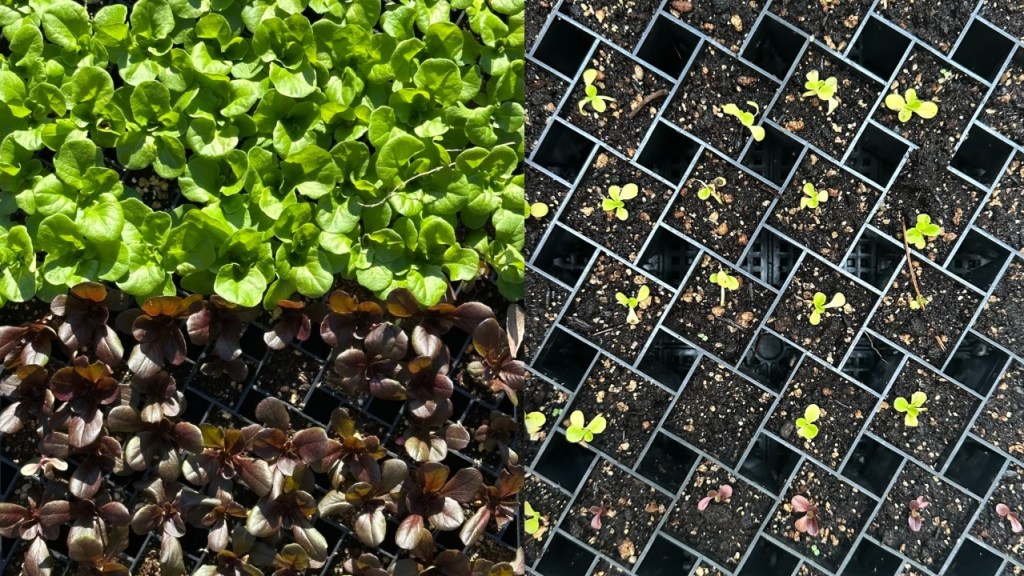
This fall, I tried something different with my lettuce crop. Instead of starting the seeds under lights as I usually do, I decided to go all in on a new approach. This approach involved planting outdoors in direct sunlight, along with a few other variables that I won’t bore you with.
The result? Most likely, I will not be offering fall lettuce to my IMO customers, which is quite a bummer. The experiment failed, and because I didn’t start small, the impact was disheartening.
Here’s the lesson: I should have tested this approach on 10–20% of my crop first, while keeping 80% in my tried-and-true system. Then, if it worked, I could scale it up. It’s a simple principle, but even after years of gardening, I forgot to practice it.
The same principle applies to business. At ThreeWill, we’ve been pivoting toward a managed services model. When we first shifted from time-and-materials projects to fixed-fee subscriptions, we didn’t bet the whole farm. We experimented on a small scale, learned what worked (and what didn’t), refined the approach, and then scaled it into a core offering. What started as a side hustle is now central to our business.
Experimentation is necessary for growth, but it’s wise to do it in a way that doesn’t risk the whole harvest. Start small. Learn. Then scale with confidence.
And a quick shout-out to my mom! She just found out about this newsletter and, when I told her about the lettuce mishap, she encouraged me to share it with you. Thanks, Mom, for the nudge.
So here’s your reminder: Experiment boldly, but wisely. Start small, learn fast, and scale what proves itself. 🌱
This post first appeared on September 19, 2025 in Sowing Success, my weekly LinkedIn newsletter on leadership and organic farming. Read the original on LinkedIn.


