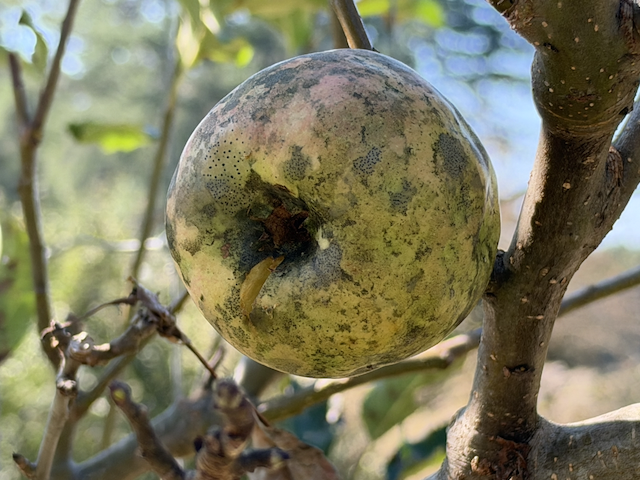
Ugly apple or work of art? You decide.

Ugly Apple or Work of Art

Ugly apple or work of art? You decide.

Core Insight

Is this an ugly apple or a work of art? My first thought when I saw it hanging on the branch was that it looked deformed. It is the kind of apple that would get rejected on an assembly line long before it ever reached a grocery store shelf.

But the longer I looked at the picture, the more I leaned the other way. I left this tree up to nature, and the ecosystem mottled the skin with the blemishes you see. Is that undesirable, or does it actually look kind of cool? I think it is in the eye of the beholder.

It made me wonder if we try to sterilize the work we do. We want every result to look the same, polished and predictable, and we do not always let the work take a shape that has its own character or beauty.

The beauty of things that come out naturally is that they will not all look the same. When I let someone on my team discover a new way of doing something, different from the way I would have done it, the result might be a work of art I never would have found on my own.

Three Concrete Details to Notice

1. My first reaction was the assembly line

I judged this apple by the standard of a grocery store bin before I really looked at it. Those standards exist for good reasons, but they are not the only way to see something. At work, my first reaction to a result that looks different is often to measure it against how I expected it to look.

2. The blemishes came from the ecosystem

I don’t think anything went wrong with this apple. The marks on its skin came from the place it grew. A lot of the differences I see in people’s work come from somewhere similar: their own experience, strengths, and way of thinking.

3. Different is not the same as defective

An apple that does not match the others can still be good, and it may be more interesting to look at. When someone on my team finds a new way to get the job done, I want to ask whether it works and what it adds before I decide whether it fits the mold.

Simple Closing Thought

The next time you look at an apple, will you see a defect or a work of art?

And the next time someone on your team does the work differently than you would have, it might be worth asking the same question.

Keep growing. Keep learning.

Farmer Tommy


This post first appeared on October 16, 2026 in Sowing Success, my weekly LinkedIn newsletter on leadership and organic farming. Read the original on LinkedIn.
Plant the Next Seedling Today

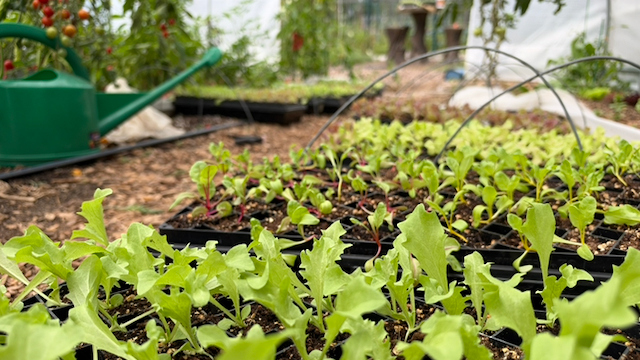
The next succession of lettuce, kale, Swiss chard, and beets, already on its way.

Core Insight

On a small farm, there are a few techniques that help you get the most from the land you are working. One of my favorites is succession planting. It can take different forms, but the general idea is to plant seeds in timed intervals, or back-to-back waves, so everything does not come in at once and the garden stays productive from spring through fall. The trays in this week’s photo are the next succession of lettuce, kale, Swiss chard, and beets.

Something I see often with home gardeners is that a spring garden gets planted, and by the time those harvests are done, it is too late to put in the next crop. That next crop needed to be started while the spring or summer crops were still producing. Once you notice the gap, the window has usually closed.

I think succession planting, or succession planning in the business world, is one of those Quadrant 2 activities. It is important, but it is rarely urgent. Nothing forces you to do it this week, which is exactly why it gets skipped.

At ThreeWill, I think about it in terms of the next Productivity Engineer, the next Sales Leader, and maybe one day, the next ThreeWill CEO. That last one would be the ultimate achievement in a business succession plan. I am not saying I am going anywhere today. But I do find myself thinking about how the ThreeWill legacy can live beyond its founders, and which seedling needs to be planted now.

Three Concrete Details to Notice

1. The next crop starts before the current one finishes

These seedlings are growing while other beds are still producing. If I waited for the current harvest to end before starting them, I would lose weeks of growing time and maybe the season. I think roles on a team work much the same way. The time to develop the next person is while the current work is still going well, not after someone has already moved on. Although, that takes building up margin in the business to make the investment.

2. Important but not urgent is easy to postpone

No one walks into the field and tells me to start the next tray of lettuce. The current harvest always feels more pressing. Succession work rarely comes with a deadline, so it needs a place on the calendar or it simply does not happen. BTW, there is a very cool product called Seedtime for you ambitious gardeners out there – https://seedtime.us/jkmel4ukl4tonac09iap-5fs?ref=tommy-ryan58

3. A legacy is planted in small trays

This photo is not a field of mature plants. It is a few trays of small seedlings that will matter later on. Thinking about the future of ThreeWill beyond its founders does not start with a grand announcement. It starts with ordinary choices today about who we invest in and what we are preparing to grow.

Simple Closing Thought

What is the next seedling in your organization that needs to be planted today, while the current season is still going strong?

It may not feel urgent this week. That is usually the best sign it is time to start.

Keep growing. Keep learning.

Farmer Tommy


This post first appeared on October 9, 2026 in Sowing Success, my weekly LinkedIn newsletter on leadership and organic farming. Read the original on LinkedIn.
Clear the Bed Before the Next Planting

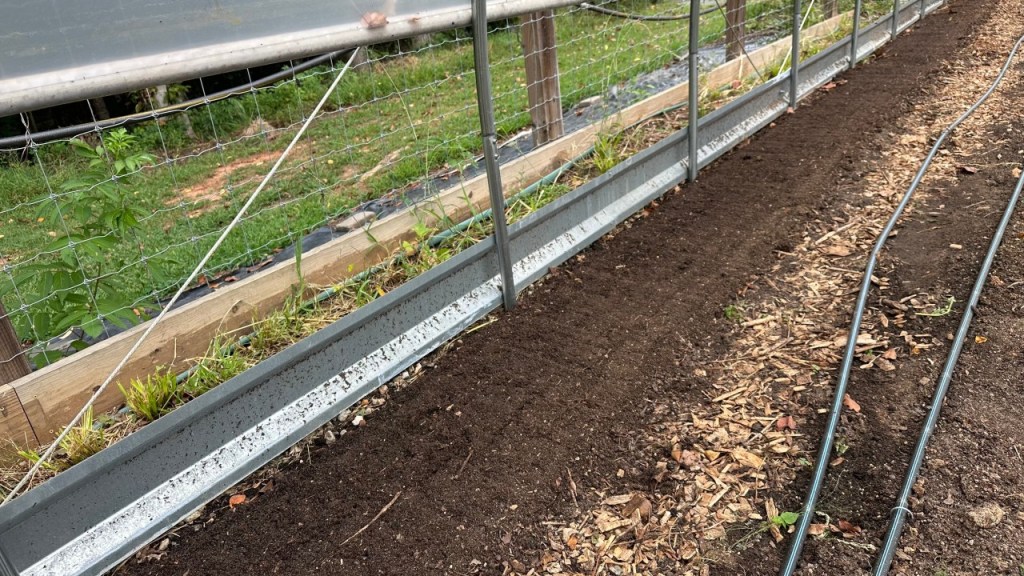
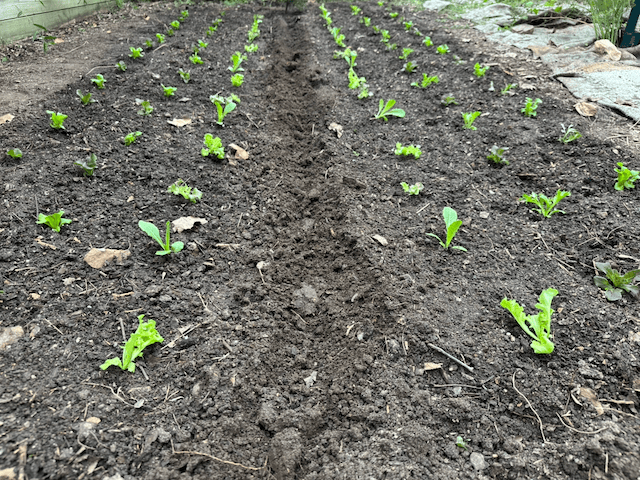
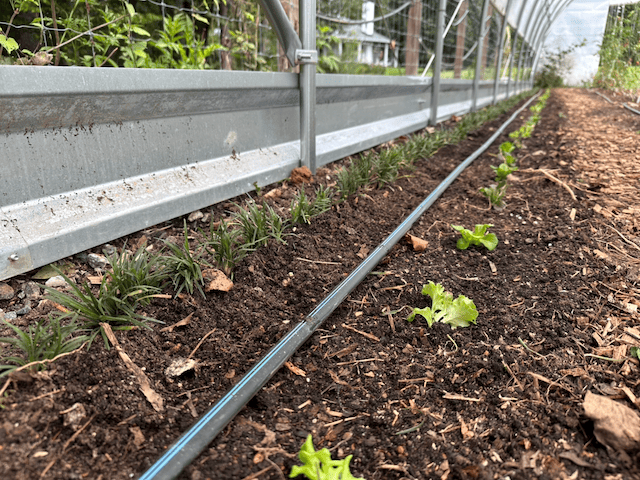
Cleared bed, drip lines ready. Blank slate for the next planting.

Core Insight

Late September at Iron Mountain Organics is a season of both harvesting and clearing.

Some of the summer plants that produced faithfully for months have reached the end of their season. It can be tempting to leave them in the garden a little longer, especially when I can still find an occasional pepper, tomato, or bean. But there comes a point when holding onto the old crop gets in the way of what needs to grow next.

Clearing a bed is not the most exciting work on the farm. I pull out tired plants, remove weeds, add compost, and prepare the soil. For a short time, the bed actually looks less productive because there is nothing growing in it. Yet that empty space is progress.

I think organizations need this kind of work too. We are usually much better at starting things than at stopping them. We add meetings, reports, processes, tools, and priorities. Each may have been useful when we started it, but over time they can take up space that could go to something more important.

Sometimes productivity is not about figuring out what else to do. It is about intentionally clearing some space.

Three Concrete Details to Notice

1. Something can have been valuable and still be finished

A summer plant may have produced hundreds of vegetables, but that does not mean I should keep it forever. The same can be true of a meeting, process, metric, or responsibility. Ending it does not mean it was a bad idea. It may simply have served its season.

2. Empty space can look unproductive

A freshly cleared garden bed does not look very impressive. But I know what that space makes possible. Leaders sometimes need to create margin before they know exactly what will fill it.

3. Clearing is part of the system, not a failure of it

Removing old plants is not separate from growing vegetables. It is part of growing vegetables. I wonder if organizations would benefit from making that same kind of clearing a regular practice. Periodically ask what should be stopped, simplified, or removed before adding something new.

Simple Closing Thought

Look at your calendar, your team’s priorities, or the systems you use every week. Is there something still taking up space simply because it has always been there?

Maybe it produced something valuable in its season. And maybe the next season needs that space.

Keep growing. Keep learning.

Farmer Tommy


This post first appeared on October 2, 2026 in Sowing Success, my weekly LinkedIn newsletter on leadership and organic farming. Read the original on LinkedIn.
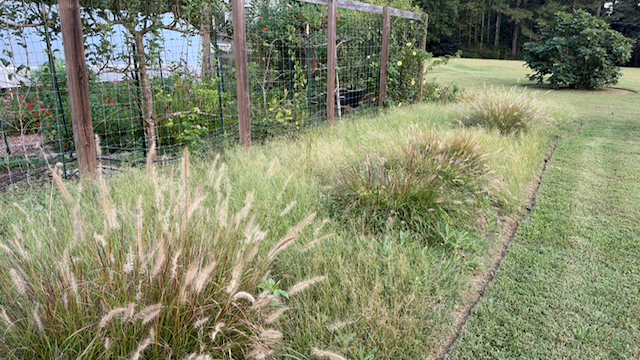
Let Beauty Work Itself Out

Yes, that's 1,000s of crabgrass seeds, and I am rolling with it.
Yes, that’s 1,000s of crabgrass seeds, and I am rolling with it.

Core Insight

This week’s picture is bunny tail grass with crabgrass going to seed along a fence-line bed. Thousands of crabgrass seeds. For several years I fought that crabgrass. This year I am letting it do its thing, and I am adding a few wildflower seeds into this palette of crabgrass.

Sounds insane. But is trying to weed this crabgrass each year also insane?

On the farm, I am learning to let some things evolve into what becomes naturally beautiful. That can mean letting flowers go to seed, drop on their own, and come back next year. It can also mean creating perennial environments, whether through plants that survive the winter and return in spring, or annuals that self-seed and show up again without me forcing the schedule.

I have also been getting less particular about taking out every weed. If I can create interest and add beauty around them, those weeds become less of a weed and more of a filler between other plants. Over time, the plants I want become more dominant, and the weeds fade into the background. The principle underneath all of this is simple. Sometimes the better move is to let things work themselves out, instead of holding tight control so everything looks pristine.

I see the same idea at work. Allowing mistakes, and allowing people their own style, can further the mission in ways I did not first imagine. Control can make a garden look tidy in the short run. Patience and room to grow often make it more alive.

Three Concrete Details to Notice

1. Sometimes the fight is the crazy part

I spent years trying to beat this crabgrass. This year the photo shows thousands of seeds, and I am rolling with it. I am even sowing a few wildflower seeds into that same patch. The question that keeps coming back is not whether crabgrass belongs in a perfect bed. It is whether another year of the same fight would have been the wiser choice. Leadership has versions of that same question. When a problem keeps returning, more control is not always the answer. Sometimes the wiser move is to change the frame and work with what is already there.

2. Beauty can reframe what looks like a weed

When I create interest around an unwanted plant, it stops being only a problem to remove. Bunny tail grass, wildflowers, and crabgrass sharing one palette is one example. The crabgrass becomes filler between the plants I care about most. Over time, the desired plants grow stronger and the weeds matter less. In a team, a rough edge or an unexpected approach can look like a weed until the mission gives it context. What seems out of place may simply need better surroundings and more time.

3. Leave room for a result you did not script

Trying to keep everything pristine can become a form of control. Letting things work themselves out is not neglect. It is a choice to stay present without gripping the outcome so tightly that nothing unexpected can become beautiful. At work, that means allowing people room for their own style and even for mistakes, as long as the outcome still furthers the mission, including in directions I did not plan.

Simple Closing Thought

This week’s reminder from the farm is that beauty does not always arrive on my preferred timeline or in my preferred arrangement. Some of the best growth comes when I sow carefully, tend what matters, and then let the rest find its way, even when that means rolling with a thousand crabgrass seeds.

Keep growing. Keep learning.

Farmer Tommy


This post first appeared on September 25, 2026 in Sowing Success, my weekly LinkedIn newsletter on leadership and organic farming. Read the original on LinkedIn.
Learning to Get Out of the Way

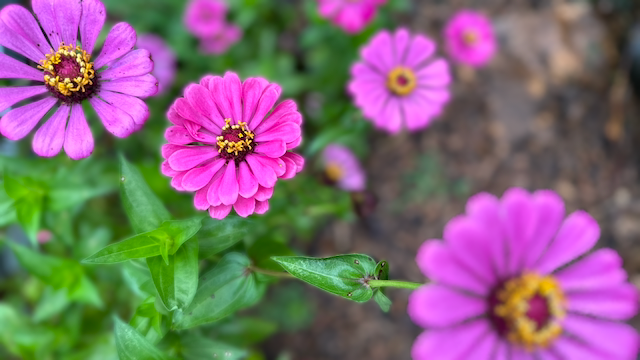
Self Sown Zinnias on the Farm

Core Insight

I continue to be amazed by some of the plants growing in the field this year. They came up on their own, and they are doing far more than surviving. They are truly thriving.

The zinnias have been the best example. I must have 50 that came up from seeds left by last year’s flowers, along with some small sunflowers that seem to be making a habit of returning through self-sowing. Letting those plants mature and go to seed has given me another season of color without starting the whole process over myself.

The only thing I have done with these volunteers is relocate some of them to other parts of the field. Nature handled the starting, and I found a few places where I wanted to see that growth continue. There is something humbling about enjoying such a beautiful result and realizing how little of it required my involvement.

It has me looking for more ways to incorporate perennials, like my fig and blueberries, alongside annuals that sow the next generation themselves. I like the idea of building on what is already established. Each season can carry something forward into the next.

That same thought has been rolling around in my head at ThreeWill. I am trying to get better at communicating what I need from the team, making sure the direction is clear, and then getting out of the way. There is a lot of ability, judgment, and creativity that deserves room to do its work.

Of course, I still like to meddle from time to time. When something catches my curiosity, I enjoy getting involved and helping craft it with the team. Our emerging operational dashboard product is a good example. I am interested in what we are creating, and I enjoy being part of that work.

I think the challenge for me is recognizing when my involvement is helpful and when I need to give an idea more room to develop. Curiosity can lead to good collaboration. It can also make it tempting to keep putting my hands on something that is already growing well.

The zinnias are giving me a pretty good reminder to pause and notice the difference.

Three Concrete Details to Notice

1. Letting something mature can create the next season of growth.

Last year’s zinnias had the opportunity to go to seed, and this year I am enjoying what followed. It makes me think about giving people and their ideas enough time to develop. If I keep stepping in and reshaping the work, I may miss what the team would have grown on its own.

2. A little thoughtful help can be enough.

I moved some of the plants to other parts of the field, but I did not need to direct every part of their growth. At work, I want to be more thoughtful about the help that is actually needed. Sometimes that means clarifying an expectation, talking through a challenge, or helping remove something that is slowing the team down. Then I need to leave room for people to carry the work forward.

3. My curiosity needs to leave room for ownership.

I enjoy helping shape our operational dashboard, and there is value in working through ideas together. I also want the team to have room to bring their own thinking and make decisions. That asks something of me: to be clear about what we need to accomplish and thoughtful about how much of the approach I need to prescribe.

Simple Closing Thought

Where might something already be growing well without needing more of your involvement? I am asking myself that question in the field and at work, especially when I feel the urge to jump in.

Those zinnias are making a convincing case for giving growth a little more room. I am enjoying what they are teaching me, even if I still need the occasional reminder to get out of the way.

Keep growing. Keep learning.

Farmer Tommy.


This post first appeared on September 18, 2026 in Sowing Success, my weekly LinkedIn newsletter on leadership and organic farming. Read the original on LinkedIn.
Give Them Room to Grow

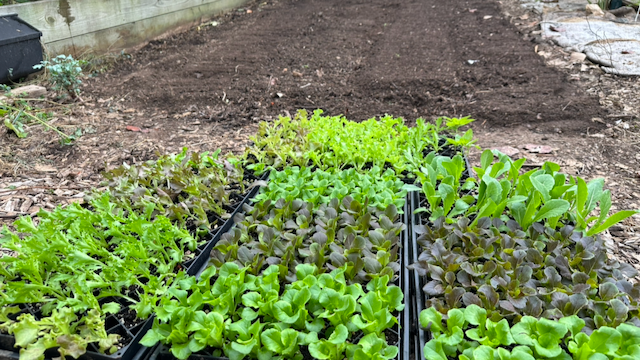
Seedlings just before transplanting

Core Insight

Over the holiday weekend, the heat finally eased enough for one of my favorite jobs on the farm: transplanting lettuce into the garden.

Linda and I have developed a tradition around this job. While she is an incredible partner in helping get everything ready for the farm store, spending hours weeding beds or preparing garden rows is not exactly her idea of a relaxing weekend. She has plenty of yard work of her own with the rose gardens, flower beds, and keeping the pool in great shape.

But lettuce is different.

She loves our Iron Mountain Organics lettuce so much that every year she joins me for transplanting day. We work side by side, placing hundreds of delicate seedlings into the soil. At first they seem almost too fragile for the garden, yet they quickly prove they are much tougher than they appear.

At first glance, those seedlings don’t look ready. My instinct is often to give them another week.

But experience has taught me otherwise.

If I leave them in the trays too long, they begin to outgrow the space. Their roots circle inside the small cells, and their growth starts to slow. The very environment that helped them get started eventually becomes the thing that limits them.

If you are curious, I have a few pictures of the fine work Linda did this weekend on the farm.

One of the outside beds
Underneath the high tunnel

The surprising part is that I don’t want these seedlings to be any bigger. In fact, younger transplants often establish themselves better than older ones. Once they’re in the ground, with room to spread their roots, they don’t just survive. They thrive.

Leadership has taught me the same lesson.

Sometimes we wait for people to look completely ready before giving them greater responsibility. But growth often happens because we trust them with the opportunity, not after they have already proven they can do it.

Three Concrete Details to Notice

1. The right conditions matter.

We waited until the holiday weekend, when the intense heat had finally eased, before transplanting. Timing can make all the difference. The same is true in leadership. Look for opportunities when people have the greatest chance to succeed, even if the conditions are not perfect.

2. Waiting too long can limit growth.

Seedlings that remain in trays too long become root bound and begin to stall. People can experience something similar. Holding onto responsibilities or delaying new opportunities can unintentionally limit someone’s development.

3. People are often stronger than we think.

Every year I am amazed at how quickly these delicate lettuce seedlings establish themselves once they have room to grow. I’ve seen the same thing with people. Give them meaningful responsibility, support them through the transition, and they often surprise both you and themselves.

Simple Closing Thought

Who on your team might be ready for a little more room to grow?

They may not look completely ready. Then again, neither does a tray of young lettuce seedlings.

The greatest act of leadership is not waiting until someone proves they are ready. It is recognizing their potential, giving them room to spread their roots, and trusting that they will grow into the opportunity.

Keep growing. Keep learning.

Farmer Tommy


This post first appeared on September 11, 2026 in Sowing Success, my weekly LinkedIn newsletter on leadership and organic farming. Read the original on LinkedIn.
The Law of the Harvest

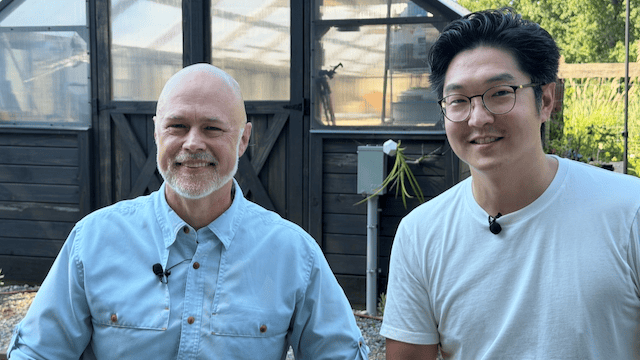
Me and Dr. Tim Hsu have a conversation at Iron Mountain Organics Farm

Core Insight

We had an interview on the farm this week with Dr. Tim Hsu. These interviews are special to me. Each one is a chance to build a new relationship or nurture an old one, and that part of the work matters as much as anything we say on camera.

It was an unusually hot day, and we got a later start than we planned. We moved as quickly as we could so the interview would not look like it was filmed in a sauna. I spent a fair amount of time wiping my forehead with a paper towel. Will is going to have an interesting time editing those moments out. 😊

When on the farm, I like drawing analogies of how nature informs how we interact with others and informs how we lead. I try not to overemphasize this, but I usually leave room for at least one question that opens that door. Dr. Hsu pondered my question and responded with a clarity that stayed with me. He pointed out that behavioral health care takes time, just like growing vegetables on the farm. As a pastor’s son, he put it simply: it happens on God’s time.

When Dr. Hsu said this, it reminded me of Stephen Covey’s The 7 Habits of Highly Effective People, where he discusses the Law of the Harvest. You reap what you sow, and you reap it in season. Seeds do not become a harvest because we want them to sooner. They become a harvest because we planted well, tended consistently, and waited long enough for the work to mature. I see that in the soil at Iron Mountain Organics. I also see it in relationships, in leadership, and in the slow work of building something that lasts at ThreeWill.

Three Concrete Details to Notice

1. Relationships require nurturing

The interview with Dr. Hsu was not only content to capture. It was time spent with a person. Every farm interview asks me to show up for someone, whether we are just getting to know each other or continuing a relationship that already has history. That kind of investment rarely shows its value in the same hour. It tends to show up later, the way a well-tended row does.

2. Urgency does not change the timeline

We felt the pressure of an unusually hot day and a later start. We hurried so the setting would still work. Even then, the deeper point of the conversation was about patience. Dr. Hsu’s reminder that things take time, and that some timing belongs to God rather than to our calendar, stayed with me through the sweat and the paper towels. Urgency can help us get started, but it cannot force a harvest.

3. Practice the Law of the Harvest at work

In leadership, it is easy to want results on our preferred schedule. The Law of the Harvest pushes back on that impulse. We still have to plant carefully, tend the work with consistency, and then give it enough time to become what it can be. Whether we are developing people, building trust with a client, or strengthening a system, the return comes from what we sowed and how faithfully we tended it, not from how badly we wanted it on our timeline.

Simple Closing Thought

This week reminded me that a good conversation, like a good crop, is shaped by care and by time. I am grateful for Dr. Hsu’s words, for the chance to sit together on the farm, and for the simple truth underneath the Law of the Harvest. We gather what we planted, and we gather it when it is ready.

Keep growing. Keep learning.

Farmer Tommy


This post first appeared on September 4, 2026 in Sowing Success, my weekly LinkedIn newsletter on leadership and organic farming. Read the original on LinkedIn.
Don’t Trust Your Memory

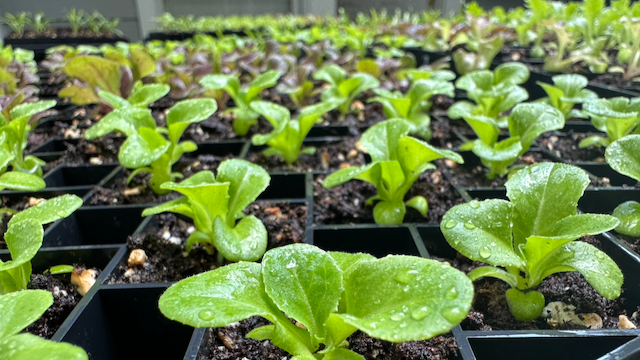
The lettuce transplants look healthy this morning despite my neglect

Core Insight

At 2:48 this morning, I woke up with one thought: I forgot to check the lettuce and spinach seedlings.

That little realization was enough to create just enough panic that sleep was pretty much over.

I tried a Lex Fridman podcast, hoping his monotone voice might coax me back to sleep. Unfortunately, the topic was AI programming and his very enthusiastic guest just gave my brain more things to think about. I moved on to Trevor Hall, and his mellow tunes were not a match for the thoughts racing through my mind. Then a Calm sleep story about Ireland. Nothing worked.

At 5:15, I finally punted and headed to the basement for a workout and checking my seedlings in the dark under the light of my iPhone flashlight.

Somewhere in those early morning hours, there was a pretty simple lesson staring me in the face: remembering is not a system.

Whether I am trying to keep lettuce seedlings alive or help ThreeWill grow, the things that matter cannot depend on someone remembering to do them.

Good systems create consistency. Great systems make the important things happen even when people are busy, distracted, traveling, or simply human.

And whether I am on the farm or in the office, I keep coming back to the same three ingredients: people, process, and technology. The right combination depends on the context, but all three work together to create something resilient. BTW, people, process, and technology is the “Three” in ThreeWill.

Three Concrete Details to Notice

1. If it matters, give it a home Checking seedlings should not be something I hope crosses my mind before bed. It needs a defined place in the rhythm of the day. The same is true at work. Important activities need a cadence, an owner, and a clear expectation. (Tim Coalson will appreciate that I got the opportunity to shim in one of the words he hears from me often – cadence)

2. Technology should support the process, not become the process I could solve my seedling problem with a reminder on my phone. But the reminder is only useful if it supports a habit and a clearly defined responsibility. Technology makes a good process easier to execute consistently.

3. Systems create resilience The real test of a system is what happens when the normal routine gets disrupted. Someone travels. A customer issue comes up. The day gets busy. A good system keeps important things from quietly falling through the cracks.

Simple Closing Thought

If something important is depending on you remembering it, maybe the answer is not to try harder to remember.

Build a system that makes remembering unnecessary.


This post first appeared on August 28, 2026 in Sowing Success, my weekly LinkedIn newsletter on leadership and organic farming. Read the original on LinkedIn.
The Promise of the Next Season

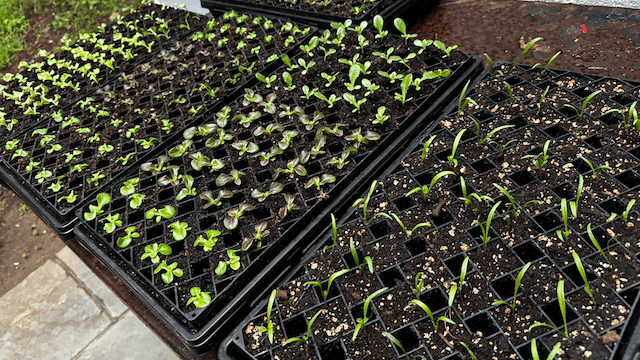
Spinach and lettuce starts put outside to begin adjusting to the summer sun
Just this morning these spinach and lettuce starts were put outside to start the transition to getting accustomed to the intensity of the summer sun.

Core Insight

Late summer can be one of the harder times for me to stay energized on the farm. The heat makes it harder to get outside, insect pressure is near its peak, and some of the plants that looked beautiful a couple of months ago are clearly showing their age. There is still plenty to harvest, but it can feel like the farm is asking for more effort while giving a little less in return.

Then I walk into the basement and see trays of lettuce and spinach getting a little bigger every day. They are still weeks away from being transplanted, but they remind me that this difficult stretch is temporary. A new season is already growing, even though I cannot harvest anything from it yet.

I think organizations need the same thing. There are seasons when the work feels harder, problems seem more persistent, and our energy naturally starts to fade. Sometimes the answer is not squeezing more productivity out of the current season. It is making sure we are planting something that gives people a reason to be excited about the next one.

Three Concrete Details to Notice

1. Every season eventually runs out of energy. The summer garden has been producing for months, and expecting it to look and perform like it did in June is unrealistic. Teams can experience something similar. Recognizing that energy naturally rises and falls can help us lead with more wisdom instead of assuming every slowdown needs to be fixed by working harder.

2. The next season begins before the current one ends. I cannot wait until the summer garden is finished to start thinking about fall. Those seedlings need weeks of attention before they are ready for the field. In business, the next opportunity, capability, relationship, or idea often needs to be nurtured while we are still doing today’s work. That overlap can feel demanding, but it is what creates continuity.

3. Something small can regenerate our energy. There is something encouraging about looking at a tray of young plants when much of the farm is tired. They represent possibility. Leaders can create that same sense of possibility by helping people see what is beginning, not just what needs to be finished. Sometimes a small glimpse of what is coming is enough to help us recommit to the work in front of us.

Simple Closing Thought

Late summer reminds me that feeling tired of the current season does not mean I am tired of growing. Sometimes I just need to see evidence that another season is coming.

The seedlings in the basement (now hardening off by the basement door) are that evidence for me right now. They remind me to keep tending what is still producing, while putting a little energy each day into what comes next.

Keep growing. Keep learning.

Farmer Tommy


This post first appeared on August 21, 2026 in Sowing Success, my weekly LinkedIn newsletter on leadership and organic farming. Read the original on LinkedIn.
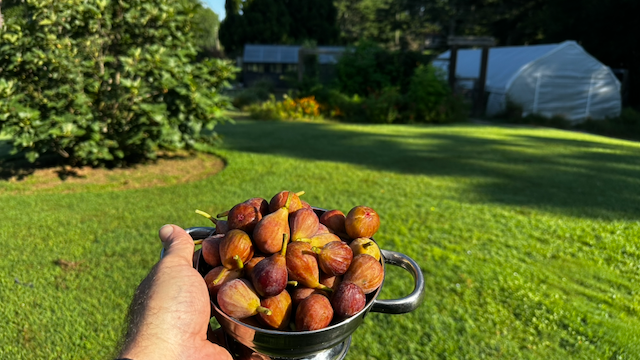
The Gift of Sharing

Freshly picked figs with the fig tree and the farm in the background
Figs picked this morning from the tree in the left of the picture with the farm in the background to be shared with people at a retreat this weekend.

Core Insight

One of the most meaningful lessons I have learned on the farm has very little to do with growing vegetables. It has everything to do with growing relationships.

Before many workdays, I spend a few minutes harvesting peppers, tomatoes, cucumbers, or figs before heading to meetings. Those fruits and vegetables often travel with me and find their way into the hands of coworkers, customers, and friends.

What I have discovered is that I am not just sharing food. I am sharing a part of who I am. Bringing vegetables into a meeting communicates something about my values and passions that words alone could never fully express. It creates a human connection before the business conversation even begins.

Leadership is much the same. Small acts of generosity communicate care, build trust, and remind people that they matter. The gift itself may be simple, but it communicates a desire to have a human connection first.

Three Concrete Details to Notice

1. Harvesting before the workday changes my perspective

Instead of beginning the day focused only on my calendar and everything I need to accomplish, I begin by thinking about someone else. Who might appreciate a bag of peppers? Who enjoys fresh figs? Who could use a little encouragement?

A basket of vegetables becomes a reminder that leadership starts with serving others. Those few minutes of harvesting help frame the rest of my day around people rather than tasks.

2. The vegetables are valuable, but the conversations are priceless

Selling vegetables helps offset some of the costs of farming, although I am not sure it will ever pay for the greenhouse 🤣. The greater return comes from seeing someone’s appreciation for food that was thoughtfully grown and personally shared.

That appreciation often opens the door to a conversation that might never have happened otherwise. We talk about recipes, gardens, family traditions, or a memorable meal.

In these moments, the exchange becomes about much more than vegetables.

3. Food has an incredible ability to connect people

Food gives us something familiar to share. Whether someone is describing a favorite recipe, remembering what a grandparent grew, or simply saying thank you, fresh food creates opportunities for authentic connection.

For example, just this week, I shared some shishitos with Michael White and got a pro tip from his COO, Ben Dawes, about adding zested lime at the tail end of blistering them. In that exchange, I also learned that Ben grows shishitos too. I did not know he was so cool. 😎

Simple Closing Thought

This week, consider what you have that is worth sharing. It does not have to be vegetables. It could be your time, encouragement, knowledge, attention, or an introduction that helps someone move forward.

Generosity has a remarkable way of growing something far greater than the original gift. It grows connection.

Keep growing. Keep learning.

Farmer Tommy


This post first appeared on August 14, 2026 in Sowing Success, my weekly LinkedIn newsletter on leadership and organic farming. Read the original on LinkedIn.