This edition includes a short video. Watch it on LinkedIn.
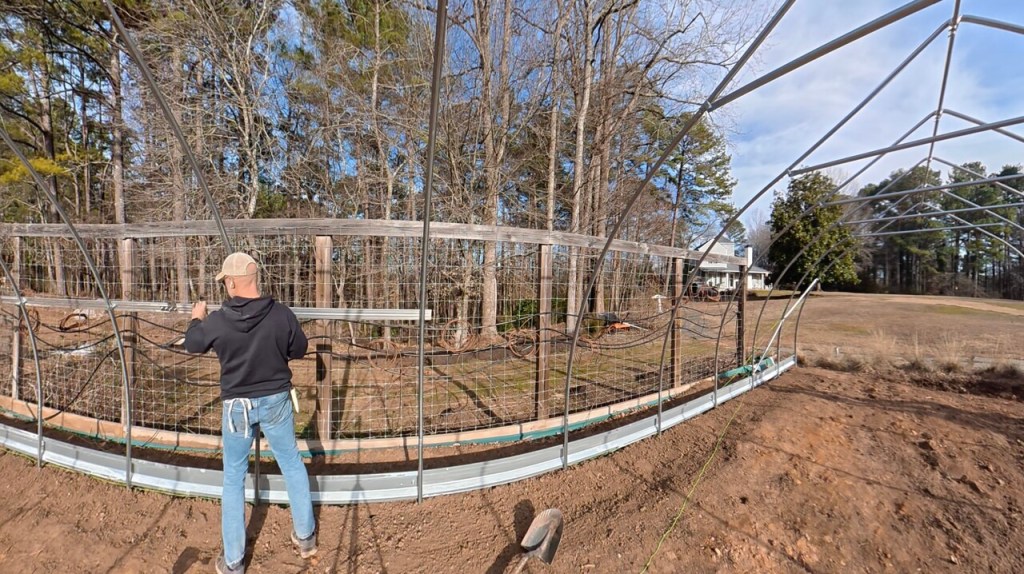
This week, the high tunnel continues to take shape.
There’s something honest about building a structure like this. It is a very human act. We take metal bows, braces, purlins, and plastic and try to create a little more predictability amid the realities of nature.
Growing in living soil in the South means accepting humidity, heavy rains, sudden downpours, and long stretches of damp heat. It means watching tomato skins split after moisture swings. It means soil splashing onto leaves and inviting fungal pressure. It means planning carefully and still being surprised.
The high tunnel is my attempt to reduce some of those variables.
Not eliminate nature.
But steward it differently.
Under cover, I can manage rain. I can extend the season with the greenhouse effect. I can create more consistent moisture for tomatoes. I can protect lettuce from pounding spring storms. In theory, I can grow healthier food for our community with fewer losses and more predictability.
And yet, I have mixed emotions.
On one hand, I’m excited. I love learning a new system. I’m eager to see how this elevates our tomato and lettuce game at Iron Mountain Organics. I’m curious what becomes possible when you change the environment just enough.
On the other hand, this is one more piece of infrastructure to manage. One more thing to maintain. One more responsibility.
That tension feels familiar.
In business at ThreeWill, we wrestle with the same dynamic. Keep things simple and streamlined. Avoid unnecessary complexity. At the same time, experiment. Build new offerings. Try new approaches. Risk small failures in pursuit of meaningful growth.
The question is not whether to build.
The question is why.
If the structure creates more life than burden, it is worth it.
If it amplifies your ability to serve, it becomes stewardship, not excess.
And to keep this real, I’ll share in the comments a picture of my first failure from last year’s propagation greenhouse. Some early tomato transplants that did not make it. Lessons learned the hard way.
Failure is part of the process.
If you are not failing occasionally, you are likely not stretching.
So here’s my question for you: What is your high tunnel project for 2026?
What are you building that gives you a little more control, a little more leverage, and a little more ability to serve well?
It’s good to have something you are striving toward.
It’s even better when it grows more than just you.
This post first appeared on February 13, 2026 in Sowing Success, my weekly LinkedIn newsletter on leadership and organic farming. Read the original on LinkedIn.


