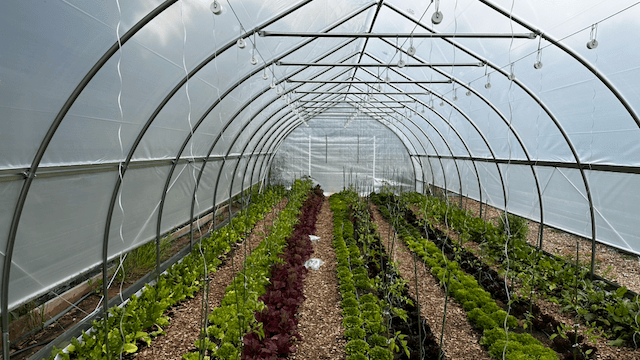
This spring is full of growth for me on the farm. Not just growth from the vegetables, but experimentation.
This year, I’m trying several new things at once. We are propagating vegetable starts in the greenhouse. We added a high tunnel to grow lettuce, beets, tomatoes and cucumbers earlier in the season. I’m grafting tomatoes for better vigor and disease resistance. I’m trying a lean-and-lower trellising approach to maximize production and improve harvesting flow.
Some of these experiments are exciting because they hold the possibility of dramatically better outcomes.
Some of them are intimidating because I genuinely do not know if they will work.
That tension feels very familiar to me right now in business as well.
At ThreeWill, we have been pushing ourselves to get more specific about who we serve best and how we help them succeed. We continue refining our focus around Human Services organizations and asking deeper questions about where we can create the most meaningful operational improvement for leaders carrying significant responsibility every day.
The challenge is not simply building good technology.
The challenge is building the simplest possible path for busy Human Services leaders to achieve success without adding more complexity to their already full plates.
That requires experimentation too.
We test messaging. We test offerings. We test approaches. We try to listen more carefully to the problems leaders are actually facing instead of assuming we already know the answer.
And honestly, experimentation can create anxiety.
You wonder if you are picking the right direction. You wonder if the investment of time, money, and energy will produce the return you hoped for. You wonder if you are creating unnecessary risk by trying something different.
But farming keeps reminding me that staying still and settling for the status quo is usually the bigger risk.
If I never experimented with the greenhouse, I would not have earlier lettuce harvests this spring.
If I never experimented with the high tunnel, I would not be learning how much more control it gives me over quality and consistency.
If I never experimented with trellising methods, I would never discover a better system that scales more effectively over time.
Progress often comes from a willingness to try something before having certainty.
That does not mean being reckless. Good experimentation still requires thoughtfulness, observation, and discipline. But it does require accepting that not every idea will become a breakthrough success.
Some experiments produce growth.
Others produce wisdom.
Both are valuable.
I think one of the healthiest things we can do as leaders is continue placing ourselves in situations where we are learning again. Situations where we are not fully comfortable. Situations where we have to observe carefully, adjust quickly, and stay humble enough to admit when something is not working.
Because every meaningful improvement on the farm or in business usually starts with someone willing to try something new.
I am learning that experimentation is less about getting every decision right and more about staying curious enough to keep moving forward.
What are you curious about right now? What experiment will you try this spring or summer?
This post first appeared on May 9, 2026 in Sowing Success, my weekly LinkedIn newsletter on leadership and organic farming. Read the original on LinkedIn.


