The Wisdom Beneath the Surface
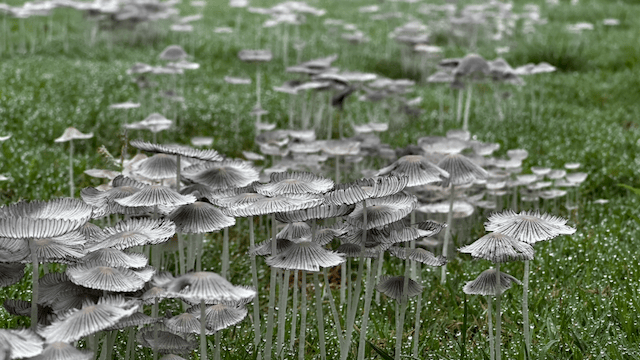
This week, I noticed mushrooms popping up through some Bermuda turf I planted last fall. Most people see mushrooms in a lawn and assume something has gone wrong. When I saw them, though, I smiled because I knew they were signs that something healthy was happening beneath the surface.
When we established the turf, we incorporated a significant amount of woody compost to help build organic matter and improve the long-term health of the soil. Seeing mushrooms emerge now is a visible reminder that the ecosystem underneath the grass is active and functioning the way nature intended. The fungi are breaking down the lignin from the woody material and returning nutrients back into the soil. The mushrooms themselves are simply the fruiting bodies pushing up through the grass for a short season before eventually fading back into the system that produced them.
I never stop being amazed by how natural systems continue improving the soil when we allow them to function according to their design. Nature rarely forces outcomes directly. Instead, healthy ecosystems create the conditions for growth, resilience, and renewal over time. The health underneath the surface eventually produces visible fruit above it.
As I stood there looking at those mushrooms, it immediately made me think about leadership and engineering teams.
Healthy Systems Produce Healthy Fruit
In business, especially in technology consulting and software engineering, there is often a temptation to control outcomes through layers of oversight, approvals, and management. Some structure and accountability are necessary, of course, but I continue finding myself drawn to a different question. How do we create healthy systems that naturally produce good outcomes over time?
I do not want our teams to depend entirely on management intervention for every decision or every challenge. Instead, I want us building an environment where trust, shared values, healthy communication, documentation, accountability, and ownership allow people to thrive and self-govern well together.
The more I reflect on it, the more similarities I see between healthy soil ecosystems and healthy organizational cultures. Much of the important work happens beneath the surface where you cannot immediately see it. You cannot always see trust forming between team members. You cannot always see judgment improving or confidence growing. You cannot always see people learning from one another or developing the instincts that lead to better decisions.
But eventually, the fruit appears.
You see it in stronger collaboration. You see it in better software solutions. You see it in team members stepping up without being asked. You see it in clients feeling supported and cared for. Healthy systems eventually reveal themselves through the quality of what they produce.
Letting the Ecosystem Work
One of the ongoing leadership challenges for me is discerning when I should step in directly and when I should allow healthy systems to do their work. I constantly find myself asking whether I am creating conditions that help natural processes emerge or unintentionally creating dependency on control.
Nature keeps reminding me that healthy systems are often more durable and powerful than tightly controlled ones. That does not mean lack of structure. Healthy ecosystems still have boundaries, rhythms, and order. But within those systems, there is room for life to adapt, mature, and strengthen naturally over time.
That feels increasingly important to me as our team matures and as we continue building a company designed to last beyond any one person.
Sometimes the best thing a leader can do is not control every outcome, but instead create the conditions where healthy outcomes emerge naturally through trust, clarity, accountability, and shared purpose.
This week, mushrooms in the grass reminded me of that truth once again.
This post first appeared on May 24, 2026 in Sowing Success, my weekly LinkedIn newsletter on leadership and organic farming. Read the original on LinkedIn.


