I aspire to be an organized person.
My wife, Linda, is one of the best people I know at putting things in their proper place. I cannot imagine what our house would look like without her influence. She also preserves our relationship by not constantly reminding me to follow her example.
One of the ways this plays out is with my folded laundry. Linda will patiently place it in a corner of the closet and leave the final step to me. Sometimes that pile sits there for an hour. During a particularly busy week, it may remain there for several days.
She does not nag me about it. The neatly folded pile simply waits, offering a quiet reminder that the work is not quite finished.
A Gift for My Future Self
Linda’s example has made me want to become better at putting things in their place, both at home and on the farm. I am learning that organization is not only about making a space look better. It is about making tomorrow’s work easier than today’s.
Every time I prepare a garden bed, coil a hose neatly, clean a seed tray, or return a tool to its proper place, I am leaving a small gift for my future self. The action may only take a minute or two, but it removes a decision, a distraction, or a delay from the next day’s work.
Those small choices rarely feel important in the moment. Over the course of a growing season, however, they add up to less friction and more peace. I am not distracted by disorder, and I spend less time searching for the things I need.
The work can simply begin.
A Place for Everything
The farm has a simple collection of tools that I use constantly, including harvesting knives, pruners, baskets, seed trays, and irrigation supplies. When each item is returned to the same place, I spend almost no time looking for what I need.
When tools are scattered, even a small job can begin with a frustrating search. The delay may only be five minutes, but it interrupts my concentration and creates unnecessary friction before the real work has even started.
Organizations experience this same kind of friction when people cannot find the latest document, do not know who owns a decision, or must search through several systems for the information they need. The time spent searching may appear insignificant when viewed one incident at a time. Across an entire team, however, those moments become hours of lost energy.
Good systems make the right next step easier to see.
Small Maintenance Prevents Big Interruptions
My irrigation system saves me hours of labor every week, but it only works because I periodically check the emitters, tighten fittings, clean filters, and replace parts that are beginning to wear out.
None of those tasks feels especially productive. I do not finish the day with a basket of vegetables or a newly planted bed. But that maintenance keeps a small problem from becoming a major interruption during the hottest part of the season.
The same is true with the systems we depend on in our organizations. Processes, technology, documentation, and working relationships all require attention. When we wait until something breaks, the repair is usually more disruptive and more expensive.
A small investment made early often protects a much larger investment later.
Productivity Is Often Preparation
We sometimes think productivity is about moving faster, fitting more into the day, or pushing harder. Increasingly, I believe productivity is about reducing the friction surrounding the work.
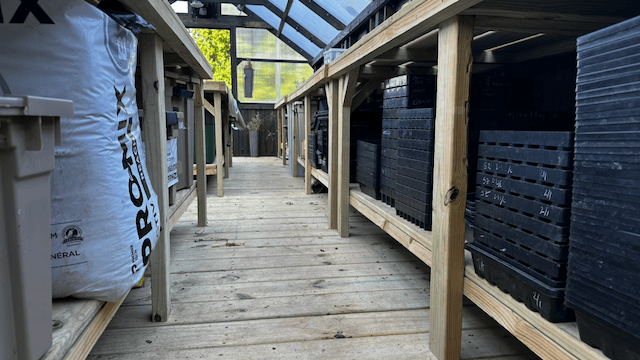
It is preparing the bed before planting day. It is returning the pruners before they are needed again. It is cleaning and putting seedling trays to their appropriate stack.
In an organization, it may mean documenting a decision so the team does not have to debate it again. It may mean creating a clear template so no one has to start from a blank page. It may mean organizing information so the next person can move forward without asking where everything is located.
Great productivity is often the result of making the next decision easier.
One Small Improvement
This week, look for one small improvement that will make tomorrow’s work easier than today’s. Put something back where it belongs. Finish the final step of a task. Document a decision. Automate one repeatable step in a process.
It may not feel significant in the moment. Those quiet investments, repeated consistently, are often what create steady progress over time.
And now, I probably need to go put away that pile of laundry.
Keep growing. Keep learning.
Farmer Tommy
This post first appeared on July 31, 2026 in Sowing Success, my weekly LinkedIn newsletter on leadership and organic farming. Read the original on LinkedIn.


