Core Insight
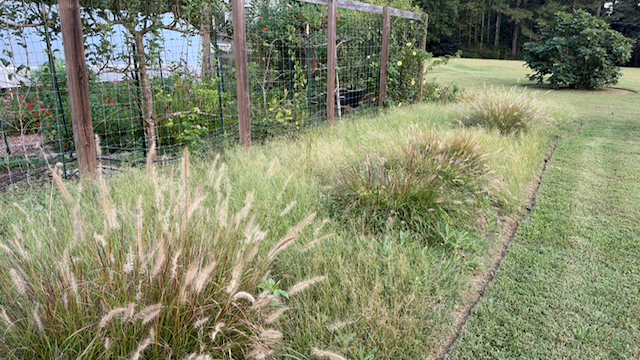
This week’s picture is bunny tail grass with crabgrass going to seed along a fence-line bed. Thousands of crabgrass seeds. For several years I fought that crabgrass. This year I am letting it do its thing, and I am adding a few wildflower seeds into this palette of crabgrass.
Sounds insane. But is trying to weed this crabgrass each year also insane?
On the farm, I am learning to let some things evolve into what becomes naturally beautiful. That can mean letting flowers go to seed, drop on their own, and come back next year. It can also mean creating perennial environments, whether through plants that survive the winter and return in spring, or annuals that self-seed and show up again without me forcing the schedule.
I have also been getting less particular about taking out every weed. If I can create interest and add beauty around them, those weeds become less of a weed and more of a filler between other plants. Over time, the plants I want become more dominant, and the weeds fade into the background. The principle underneath all of this is simple. Sometimes the better move is to let things work themselves out, instead of holding tight control so everything looks pristine.
I see the same idea at work. Allowing mistakes, and allowing people their own style, can further the mission in ways I did not first imagine. Control can make a garden look tidy in the short run. Patience and room to grow often make it more alive.
Three Concrete Details to Notice
1. Sometimes the fight is the crazy part
I spent years trying to beat this crabgrass. This year the photo shows thousands of seeds, and I am rolling with it. I am even sowing a few wildflower seeds into that same patch. The question that keeps coming back is not whether crabgrass belongs in a perfect bed. It is whether another year of the same fight would have been the wiser choice. Leadership has versions of that same question. When a problem keeps returning, more control is not always the answer. Sometimes the wiser move is to change the frame and work with what is already there.
2. Beauty can reframe what looks like a weed
When I create interest around an unwanted plant, it stops being only a problem to remove. Bunny tail grass, wildflowers, and crabgrass sharing one palette is one example. The crabgrass becomes filler between the plants I care about most. Over time, the desired plants grow stronger and the weeds matter less. In a team, a rough edge or an unexpected approach can look like a weed until the mission gives it context. What seems out of place may simply need better surroundings and more time.
3. Leave room for a result you did not script
Trying to keep everything pristine can become a form of control. Letting things work themselves out is not neglect. It is a choice to stay present without gripping the outcome so tightly that nothing unexpected can become beautiful. At work, that means allowing people room for their own style and even for mistakes, as long as the outcome still furthers the mission, including in directions I did not plan.
Simple Closing Thought
This week’s reminder from the farm is that beauty does not always arrive on my preferred timeline or in my preferred arrangement. Some of the best growth comes when I sow carefully, tend what matters, and then let the rest find its way, even when that means rolling with a thousand crabgrass seeds.
Keep growing. Keep learning.
Farmer Tommy
This post first appeared on September 25, 2026 in Sowing Success, my weekly LinkedIn newsletter on leadership and organic farming. Read the original on LinkedIn.


