Core Insight
A few editions back I mentioned that I am attempting to grow lettuce in the high tunnel through the winter. This year is my first opportunity to grow lettuce throughout the entire winter, and the honest answer to whether I know how to do it is that we will see. I have done a lot of reading and watched countless YouTube videos, and I am bringing all of that knowledge with me. What I do not have yet is my own experience of growing winter lettuce in my context.
That experience only comes from trying. I want to observe firsthand the factors that lead to success and the ones that lead to failure, here on this farm. I expect a bit of both. Success is not guaranteed, and that unknowing is a big part of what will make this rewarding.
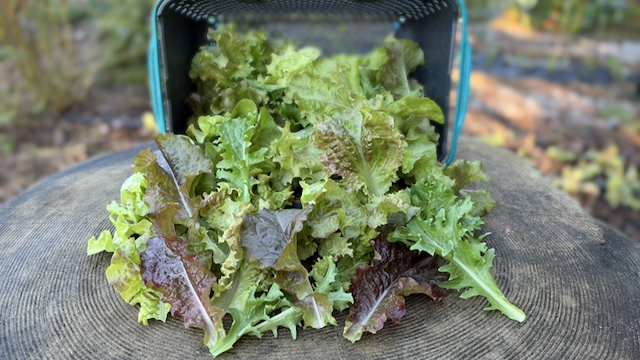
It is still technically fall, but the previews of the upcoming winter harvests are going well. The basket in this week’s photo holds part of my first harvest of the varieties that are in the high tunnel for this winter’s harvesting. So far, so good. It is early, and one basket does not tell me how the rest of the winter will go, but it is worth celebrating. I am also looking forward to the smiles I get when I bring bags of this lettuce along to coffee with my clients.
What I am learning is that real learning comes through experimentation and a willingness to do things that have a high chance of failure. If I only planted what I already knew would work, my understanding would stop growing. I think about this in how I lead ThreeWill. Reading and research matter, but at some point we have to take a calculated risk, pay attention to what happens, and let the results teach us.
Three Concrete Details to Notice
1. Bring what you know, then go find out
The reading and the videos gave me a real starting point. Knowledge from someone else’s farm only goes so far, though, until I test it in my own context. Growing the lettuce myself is how that borrowed knowledge turns into understanding I can actually use.
2. Expect success and failure in the same season
Going in expecting a bit of both changes how I pay attention. I am not waiting for a single verdict at the end of winter. I am watching for what helps and what hurts along the way, and each of those observations adds to what I know. The first harvest is encouraging, and I want to hold it as one good sign rather than proof that the whole experiment has worked.
3. Celebrate what works and learn from what fails
At ThreeWill, I want to approach new efforts the same way. That means being clear about what we hope to learn before we start, celebrating the parts that work, and treating the parts that fail as understanding we did not have before. A calculated risk may bring new challenges, and I would rather have a team that is willing to try and learn than one that only does what it already knows how to do.
Simple Closing Thought
The first basket is in, and the rest of the winter is still an open question. I would rather find out by trying than wonder what might have happened.
What are you experimenting with right now? What calculated risk are you taking in your business that might bring new challenges, but also grow your understanding?
Keep growing. Keep learning.
Farmer Tommy
This post first appeared on November 14, 2026 in Sowing Success, my weekly LinkedIn newsletter on leadership and organic farming. Read the original on LinkedIn.


