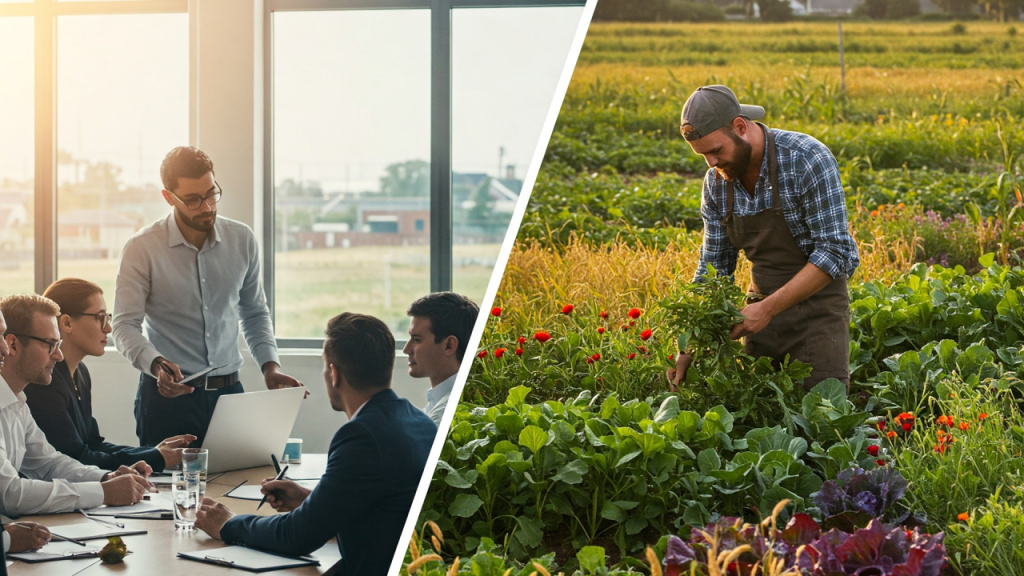
One of the most important lessons I’ve learned—as both a business leader and a farmer—is this: sustainability doesn’t happen by accident. Whether you’re building a consulting practice or growing organic vegetables, long-term viability requires intentional planning and a steady, sustainable pace.
There’s a temptation in both worlds to cram—pushing hard during crunch time, then burning out when the pressure lifts. But over the years, I’ve learned that the real secret to success is found in rhythm. It’s about setting a pace that’s not only effective but also repeatable.
At ThreeWill, we’ve structured our business cadence using the Entrepreneurial Operating System (EOS). It gives us a framework that helps us stay aligned, grounded, and focused on the right priorities at the right time. With a 10-year target, a 3-year picture, and a 1-year plan, we zoom in and out regularly to stay on track. But the heart of our rhythm lies in our 90-day world. Every quarter, we set our “rocks”—our biggest, most important priorities—and we stay accountable to them through weekly L10 meetings. It’s not about doing more; it’s about doing the right things consistently over time.
And here’s the good news—it’s never too late to adopt a system like EOS. At ThreeWill, we were over 20 years into building the business before we fully adopted EOS. It came at a critical time, as we made a heavy pivot to refocus our company around providing managed services that help businesses get more productivity out of Microsoft’s platform. That shift required clarity, alignment, and strong execution—all things EOS helped us cultivate.
A special thanks to Tabetha Sheaver, Certified EOS Implementer®, who guided us through the transition and helped us lock in a cadence that continues to serve us today. Her leadership helped us navigate change and move forward with confidence.
This same mindset has carried over into how I run Iron Mountain Organics. While my crop planning isn’t quite as complex as our EOS framework, the principles are strikingly similar. Each season, I take stock of what sold well, what thrived in our specific soil and weather conditions, and what simply didn’t work. That reflection feeds into a plan—one that’s informed by the past, grounded in present capacity, and aligned with future goals.
And just like in business, farming demands pacing. If I try to plant too much at once or introduce too many changes in a single season, the quality suffers—both in my crops and my own well-being. Instead, I’ve found that thoughtful, incremental progress rooted in data and experience yields the most sustainable results.
Whether you’re guiding a team or growing organic vegetables, sustainability comes from having a clear plan and a regular rhythm. You can’t grow what you don’t nurture—and that nurturing requires time, space, and intentionality.
Call to Action: What rhythms help you stay grounded and on track—whether in business, your garden, or life in general? I’d love to hear how you plan and pace yourself for sustainable growth. Drop a comment or share your thoughts!
This post first appeared on March 28, 2025 in Sowing Success, my weekly LinkedIn newsletter on leadership and organic farming. Read the original on LinkedIn.


