We’ve been in Virginia this week, welcoming our new grandson into the world. He is a beautiful child (no, we are not biased), and we feel fortunate to take the time to be present for this moment. There’s something grounding about these early days of his life.
I’m also breaking my usual pattern of pulling a lesson straight from the farm, mainly because I’ve been on the road. Although, for the record, I brought seed germination tests with me. Once a farmer, always a farmer. 😉
This week’s lesson came from a different kind of fieldwork: building systems that scale.
Watching a system get built, one repeat at a time
For the past couple of years, I’ve carved out time during these Virginia trips to work alongside my son-in-law, Ian, on their house build. I’m continually in awe of what he’s doing. He’s building a home literally from the ground up, and he approaches it with a steady, methodical confidence.
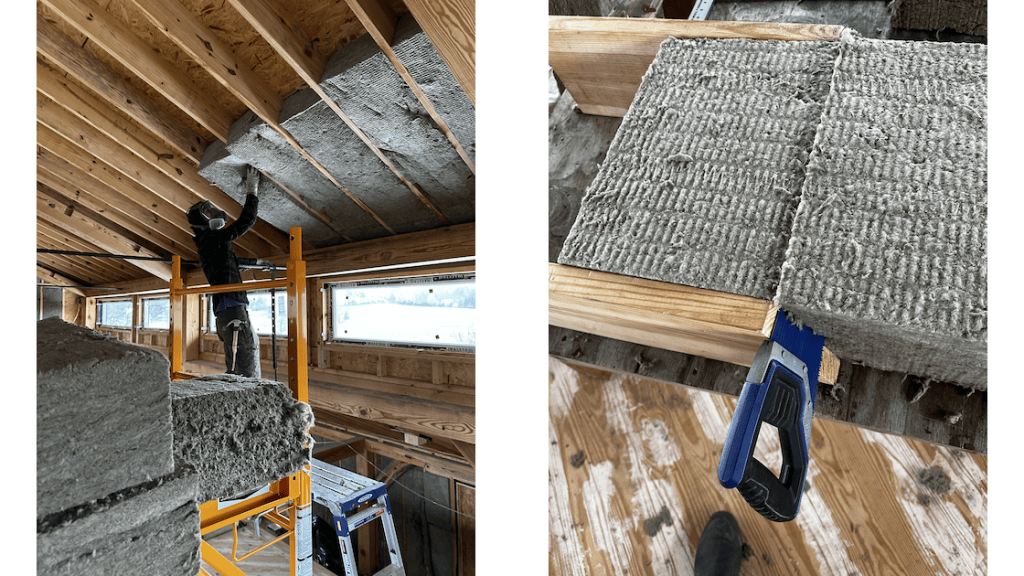
This trip focused on insulation batts in the rafters. If you’ve ever done repetitive work like that, you know how quickly “we’ll just do it by hand” turns into wasted motion, uneven results, and fatigue. Ian did something brilliant and straightforward: he tested an approach, then built a jig to make the work predictable.
That’s the part that stuck with me.
A jig is not flashy. It’s not the final product. It’s a tool that makes quality repeatable. It quietly turns effort into output you can trust.
The jig is the difference between hustle and scale
In business, we often celebrate hustle. We admire people who can power through, solve problems on the fly, and carry things across the finish line through sheer will.
Hustle is sometimes necessary, especially early on. But hustle does not scale.
Scale comes from taking a step back and asking:
- What are we doing repeatedly?
- Where are we wasting motion?
- What steps are inconsistent depending on who’s doing them?
- What would make “the right way” the easy way?
That’s what Ian’s jig did. It reduced decision points. It created consistency. It made it easier for two people to work together in flow, instead of stepping on each other.
How this shows up in our HCBC Productivity Toolkit
It immediately reminded me of what we’re building with our Home and Community-Based Care Productivity Toolkit.
We’re trying to be that “jig” for organizations that are doing mission-critical work with limited resources. We take core processes and pair them with maturity guides that help teams scale their operations using the Microsoft software they already own.
Not by adding complexity. Not by asking people to become tech experts. But by creating a clearer, more repeatable way to run the work.
In a sector where the stakes are real, where people are stretched thin, and where chaos steals time away from care, systems are not red tape. Systems are relief.
The farm has been teaching this all along
Even though I wasn’t physically on the farm this week, the lesson is deeply “farm true.”
Farming punishes waste. If you don’t create repeatable systems, you pay for it in time, energy, and missed windows. You learn quickly that small inefficiencies compound.
Some examples that show up on the farm:
- Tool placement: Store tools where they are used. Fewer steps adds up fast.
- Batching work: Prep all beds before switching to seeding. Reduce task switching between dissimilar work.
- Standard setups: Trays, stations, and routines that make it easy to do the right thing every time.
It’s the same principle, whether you’re growing food, building a home, or improving care operations.
The invitation
This week, I’m grateful for new life in our family. And I’m grateful for the reminder that scale is not about doing more. It’s about building what makes “doing it well” repeatable.
Look for the jigs in your world. Build the simple tools. Document the process. Make quality easier than chaos.
That’s how you grow without losing what matters.
This post first appeared on December 14, 2025 in Sowing Success, my weekly LinkedIn newsletter on leadership and organic farming. Read the original on LinkedIn.


