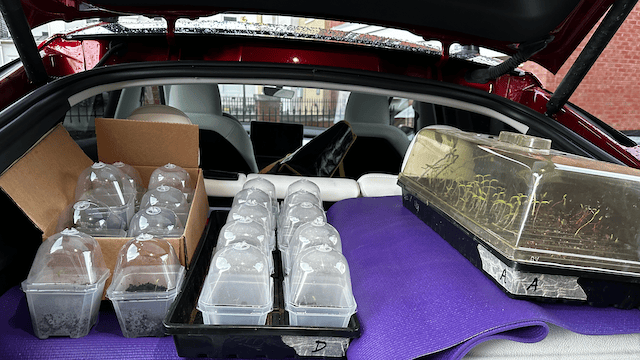
I’ve reached a new level of commitment to farming. The kind where my trunk looks less like luggage and more like a mobile seed-starting station. (Bioassays are coming in a future issue. Today is all about germination.)
Because germination is where hope becomes real.
It is the stage where you can’t yet see results, but everything depends on getting the conditions right. You look at a seed and you honestly do not know whether you’re going to be successful. The seed might be old. It might have been stored poorly. It might have experienced heat, cold, moisture, or time in ways you cannot see. Seeds, like ideas in business, can be fragile.
There are a few key concepts I always think about when it comes to germination: viable seed, fertile ground, and light. You could add water too, but I fold that into “fertile ground” because it is part of the environment that makes life possible.
1) Viable seed: Start with what can actually grow
Before I commit precious greenhouse space, soil, and time, I test germination rates. Not because I love spreadsheets (I do), but because I want reality. I want signal. I want to know if the seed has life in it.
In business, this is the discipline of testing an idea before you spin the whole company up around it. It is the humility to run small experiments. It is the wisdom to ask, “Is this viable?” before you ask everyone to sprint.
A non-viable seed doesn’t just fail quietly. It wastes time, energy, and attention that could have been invested in something that can actually become fruit.
2) Fertile ground: The environment that makes growth possible
Even a great seed struggles in poor conditions.
Fertile ground is not just “dirt.” It is oxygen access. It is moisture held at the right level. It is structure that roots can move through. It is nutrients that will support the plant once it pushes past the first fragile stage.
In our Human Services work, I see “fertile ground” as the ecosystem around the idea:
- Leaders in a potential client who is building a healthy culture, not just chasing quick fixes
- Partners and clients who share a vision, and want outcomes more than activity
- A shared commitment to do the hard work of clarity, standards, and follow-through
- Enough trust to try, learn, and iterate without fear
This matters because Human Services organizations operate in a world where the stakes are real and resources are stretched. If the environment is chaotic, even the best ideas struggle to take root. If the environment is aligned, small improvements compound into meaningful impact.
3) Light: The energy that turns potential into motion
Light is what fuels photosynthesis. Without light, a plant can sprout, but it cannot thrive. It cannot convert what it’s pulling from the soil into sustained growth.
In business, light is the energy around an idea. It’s belief. It’s momentum. It’s a team that understands the “why” and chooses to carry it together.
You can have a great plan on paper, but if there’s no excitement, no shared purpose, and no emotional buy-in, the idea stalls before it ever becomes healthy growth.
What I’m focusing on right now: fertile ground in Human Services
Today, my attention is on the fertile ground piece.
We want to find and serve Human Services leaders who are creating the conditions for their organizations to thrive. Leaders who are building culture, not just managing crisis. Leaders who want to reduce chaos so their teams can deliver more care with the resources they have today.
That kind of leadership is not loud. It’s consistent. It creates oxygen in the room. It makes it safe to improve. It makes it possible for good seeds to grow.
And if you’re reading this while you’re in your own germination season, here’s the encouragement I’m taking from the farm:
You don’t have to see the harvest yet. You just have to keep getting the conditions right.
This post first appeared on December 19, 2025 in Sowing Success, my weekly LinkedIn newsletter on leadership and organic farming. Read the original on LinkedIn.


