This edition includes a short video. Watch it on LinkedIn.
This week marked a meaningful milestone for Cultivating Care.
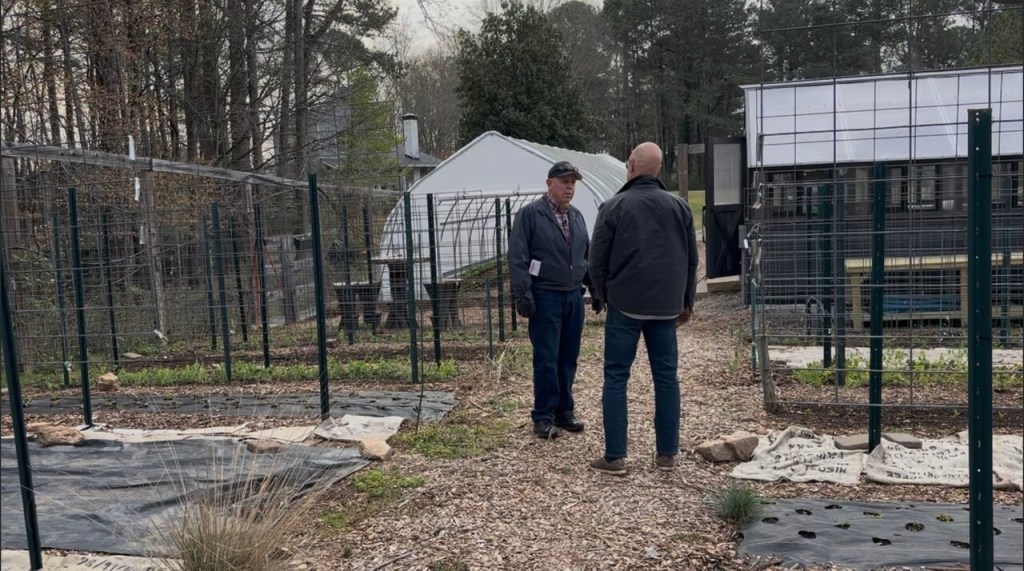
Yesterday, we recorded our first interview, and I could not have asked for a better first guest than Randall Cagle.
Randall serves in human services through his work as a pastor in Milton, Georgia, and he is someone I have had the privilege of knowing for more than 25 years. He is one of those people who always seems to have wisdom ready, not in a polished or performative way, but in the steady, grounded way that comes from living, serving, and paying attention.
He is also an avid gardener.
That meant we could have easily spent the entire conversation swapping notes on all the practical ways we try to cultivate care in the garden. Things like seed starting, pest pressure, and the kind of creative problem-solving that only gardeners or farmers understand. In fact, one of the more memorable moments was us talking about using a boom box covered in plastic in the garden to scare off raccoons that want to help themselves to the corn. There is something wonderfully human about that kind of ingenuity.
But eventually, we pivoted from caring for vegetables to caring for people.
And that is where the conversation deepened.
One of the things that stood out to me is how often nature gives us language for understanding the deeper parts of life. So much of ancient wisdom, especially biblical wisdom, leans on the natural world to explain things that are otherwise difficult to grasp. Seeds, soil, pruning, harvest, vines, roots, fruit. These are not accidental metaphors. They help us understand patience, formation, dependence, surrender, generosity, and care.
That came alive in our conversation.
We both walked away with something practical and something personal.
For Randall, it was a gardening takeaway. He is going to try using straight vermiculite to germinate tomato seeds as a way to reduce the chances of damping-off disease.
For me, it was a leadership and spiritual takeaway.
A phrase that stuck with me was giving forward instead of giving back.
There is something subtle but important in that shift. Giving back can sometimes sound like repayment, as if generosity is a way of settling an account. Giving forward feels different. It carries the spirit of offering something freely, without keeping score, without expecting return, and without needing the exchange to be even.
On the farm, life is constantly being offered forward. A mature plant gives in a way that benefits what comes next. It releases something that it may never directly enjoy, but that still matters for the health of the whole. In that sense, creation is not sustained only by exchange. It is sustained by abundance and by gifts that move beyond their original source.
That feels closer to the kind of care we most need in our lives, our communities, and our work.
It also feels deeply relevant to those serving in health and human services. Real care is rarely transactional. The best caregivers, leaders, pastors, and helpers are often the ones who show up with open hands. They give because it is needed. They give because people matter. They give because they themselves have received grace somewhere along the way.
That kind of giving changes people.
This will be the first video we are producing for Cultivating Care, so there may be a little time before it is ready to release. First efforts always come with a learning curve. But I am excited to share it when it is ready.
More than anything, I am encouraged by what this first conversation represents.
It is one more reminder that care can be cultivated.
It can be cultivated on a farm. It can be cultivated in friendship. It can be cultivated in faith. And it can be cultivated in the daily work of serving people well.
I am looking forward to sharing this conversation soon, and to continuing this journey of exploring what it means to cultivate care, both on the farm and in the world of health and human services.
This post first appeared on March 20, 2026 in Sowing Success, my weekly LinkedIn newsletter on leadership and organic farming. Read the original on LinkedIn.


