The Return of Abundance

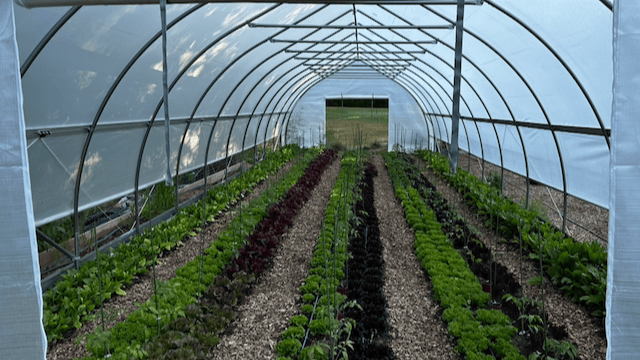
Rows of lettuce in the high tunnel
A recent picture of the rows of lettuce in the high tunnel.

The changes of the seasons are great reminders of life experiences, and this transition from winter to spring has been significant to me. Winter has a way of stripping things down to their essentials. And if I’m honest, in the first 3 months of this year, I have felt a winter season in my business, with some uncertainty and a lack of the growth I was hoping for.

But then something shifts.

When the Greens Come In

This week, I walked out to the high tunnel and saw it clearly. Lettuce everywhere. Full, vibrant, and ready. Not because it happened overnight, but because of the quiet work that came before it. The planting, the tending, the waiting.

Abundance rarely announces itself when it’s being built. It shows up later, when you finally have the space to see it.

Abundance at Home

At home, abundance has looked different, but just as real. Having my daughter here for a few weeks, along with my two grandsons, one just four months old and the other two years old, has filled the house in a way that is hard to describe.

There is something grounding about simply being in the same space. Holding them, laughing with them, and just being present. That kind of abundance doesn’t show up on a calendar or a dashboard, but you feel it deeply when you slow down enough to notice.

Abundance at Work

And in the business, I’m starting to feel it again too. After some challenging years, there is traction. There is momentum. There are opportunities that feel aligned with who we are and where we are going.

Nothing is perfect, but there is a sense that things are moving in the right direction. It’s easy to forget during the harder seasons that those stretches are often preparing us, stretching us and making room for what comes next.

What the Farm Keeps Teaching Me

The farm has a way of reinforcing a simple truth. Abundance is seasonal. It comes and it goes, but it is rarely random. The barren seasons are not wasted seasons. They are forming something, strengthening something, and getting us ready to better recognize and receive what comes later.

And maybe even more importantly, they help us appreciate it when it arrives.

Don’t Miss It When It’s Here

When abundance shows up, it’s tempting to move quickly past it. To focus on the next goal, the next milestone, or the next problem to solve. But the farm doesn’t rush past abundance. It leans into it, harvests it, shares it, and enjoys it.

Maybe that’s the invitation for all of us this week. To pause, to look around, and to notice what is growing.

A Simple Question

What are you seeing become abundant in your life right now? And are you giving yourself permission to soak it in?

At the end of the day, abundance is not just something we build toward. It is something we are meant to recognize, receive, and share.


This post first appeared on April 24, 2026 in Sowing Success, my weekly LinkedIn newsletter on leadership and organic farming. Read the original on LinkedIn.
When Stress Strengthens Growth

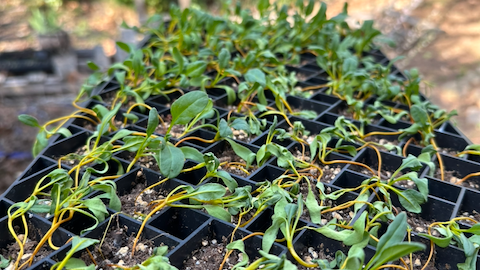
Beets after a long day of heat and before being watered

What Spring Is Really Teaching Me

Spring has a way of pulling our attention toward what’s visible. The green growth, the early flowers, the sense that everything is finally coming to life. But as I’ve spent more time on the farm these past few weeks, I’ve been reminded that spring is not just about growth.

It’s also about stress.

A Different Kind of Environment

Right now, my vegetable starts are teaching me this lesson in real time. With the warmer temperatures and steady wind we’ve been getting, they are drying out much faster than I expected. Some of these trays need water almost daily, which is a big shift from when I was growing in the basement under artificial light with controlled airflow and consistent conditions.

The greenhouse has changed everything. More sun, more heat, more exposure to wind (for ventilation). More stress. And I can see how the plants respond. Some are thriving in it. Some are struggling. All of them require more attention from me.

This new environment is shaping them, and it’s forcing me to stay closer and more observant. Because the same conditions that can strengthen a plant can also overwhelm it if I’m not paying attention.

The Kind of Stress That Builds

There’s something important happening in that tension. Plants that experience wind develop stronger stems. Plants that grow in natural light adapt in ways that controlled environments don’t quite replicate. When they are stretched just enough, they tend to become more resilient over time.

But there’s always a line.

Too little stress and they stay fragile. Too much stress and they break.

Finding that balance is not easy, and I’m realizing it requires presence more than anything else. Watching closely. Responding quickly. Adjusting based on what I’m seeing instead of what I expected.

Bringing This Into the Business

I’m seeing the same pattern show up in our business.

We’ve created a new environment for how we operate. New ways of thinking, new expectations, and new challenges (this thing called AI 😉). That naturally brings stress, not the kind that comes from chaos, but the kind that comes from growth and stretching into something new.

I can feel it in myself, and I can see it across the team.

And just like on the farm, the goal isn’t to remove that stress. The goal is to care for people within it. To stay close, to pay attention, and to make adjustments when needed so that the stress builds strength rather than causing burnout.

Holding the Balance

Because if handled well, this kind of stress can be healthy. It can build resilience. It can prepare us for what’s ahead. It can lead to better fruit.

If handled poorly, it can do the opposite.

That’s the balance I’m learning to hold right now. Allow the stress, but don’t let it break what you’re trying to grow. Challenge, but support. Push forward, but stay present enough to know when to ease off.

A Thought to Carry Forward

On the farm, plants don’t grow in spite of stress. They grow because of the right kind of it.

The same is true for us as human beings.

At the end of the day, growth needs stress, but it also needs someone paying attention.


This post first appeared on April 18, 2026 in Sowing Success, my weekly LinkedIn newsletter on leadership and organic farming. Read the original on LinkedIn.
Who Tends the Farm When You’re Gone

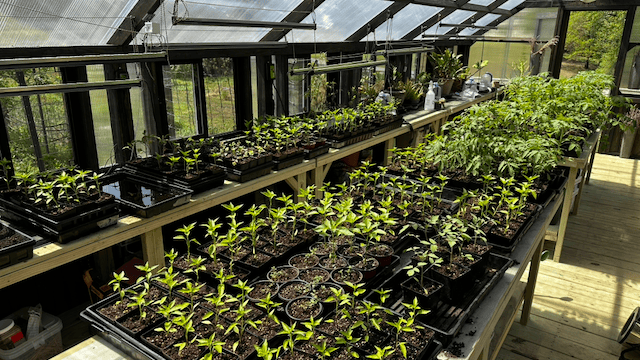
The Pepper and Tomato Transplants in the Greenhouse

Where Results Really Come From

On the farm, results don’t show up by accident. They come from rhythm.

Watering at the right time, opening the greenhouse in the morning, closing it up at night, checking the weather, and adjusting as needed. Then doing it again the next day. It’s not exciting work, but it is what makes everything else possible (and honestly, I enjoy having these daily rhythms).

I’m realizing the same is true in my work at ThreeWill. The outcomes we care about, better experiences for employees, clearer processes, stronger results, come from consistent rhythms. Daily habits, weekly planning, and small actions that compound over time. Not heroic effort, but repeated effort. That’s where the real progress lives.

The Hidden Fragility of Good Rhythms

Here’s the part I’m wrestling with right now.

Those rhythms work really well when I’m there. But what happens when I’m not?

As I look ahead to a beach trip in May, I’m realizing something uncomfortable. I’ve built rhythms that depend heavily on me showing up every day, and that creates a kind of fragility. The moment I step away, those rhythms are at risk of breaking.

Instead of feeling excited about time away, there’s a low hum of stress in the background. Will things be okay? Will the plants get what they need? Will the business keep moving forward?

Building Rhythms That Don’t Depend on You

I’m starting to see that good rhythms aren’t enough. They need support.

On the farm, that looks like investing in systems. Drip tape, timers, and simple ways to make sure watering happens whether I’m there or not. I can check on things from my phone, adjust when needed, and trust that the basics are being handled.

But not everything can be automated, so I’m also investing in people. Neighbors who are stepping in to help water the greenhouse, open it up in the morning, and close it down at night. It’s simple work, but it matters, and it creates a shared understanding of what it takes to grow healthy food.

At ThreeWill, I’m seeing similar opportunities. I can get ahead on writing and schedule content so it goes out while I’m away. I can block my calendar to avoid creating work that has to be undone later. I can delegate meaningful responsibilities that give someone else a chance to grow. It’s not just about coverage, it’s about designing the system so it works without you.

Chaining Habits Into a Week That Works

What’s becoming clearer is that results don’t come from isolated actions. They come from how those actions connect.

A good day feeds a good week, and a good week builds momentum. When those habits are chained together intentionally, they create something durable. But durability requires thinking beyond yourself. It requires asking, “If I stepped away for a week, would this still work?”

If the answer is no, that’s not a failure. It’s an invitation to build something stronger.

An Invitation Before Summer

As you look ahead to summer, here’s what I’m asking myself, and maybe it’s helpful for you too:

What are one or two rhythms I rely on every day? And what would it take to make sure those rhythms continue without me?

Maybe it’s a simple system. Maybe it’s a conversation with someone who can step in. Maybe it’s creating space for someone else to grow into responsibility.

A good vacation isn’t just about stepping away. It’s about knowing that what you’ve been building continues to stay healthy in your absence.

I’m not all the way there yet, and I never will be. This is a continual work in progress for me.


This post first appeared on April 11, 2026 in Sowing Success, my weekly LinkedIn newsletter on leadership and organic farming. Read the original on LinkedIn.
The Work Before the Harvest

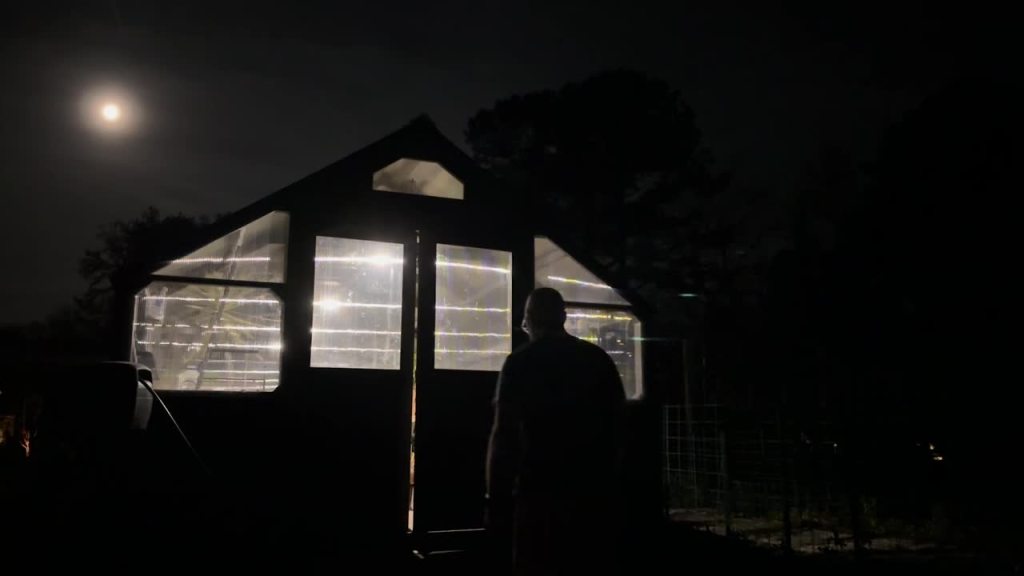
The greenhouse lit up in the early-morning dark
This Morning’s Work in the Greenhouse

This edition opened with a short video from the greenhouse. Watch it on LinkedIn.

There is a part of farming that no one really sees.

It is not the harvest. It is not the full beds of lettuce or the baskets of food ready to share. It is everything that comes before.

Lately, that has meant early mornings. Getting up at 4:30 or 5:00 AM to steal a few quiet hours before the day begins. Potting up seedlings. Watering trays. Making space in a greenhouse that is quickly filling up. It is steady, repetitive work that does not feel glamorous, but it is essential.

Because the truth is simple. There is no such thing as an overnight harvest or an overnight success.

Before anything grows, there is planning. Preparing beds. Mixing soil. Starting seeds. Watching closely. Adjusting constantly. Nurturing something fragile before it ever has a chance to take root in the field.

The farm keeps reminding me of something I also see in business.

We celebrate outcomes. But outcomes are built on unseen effort.

A new client, a strong quarter, traction in a new market. These moments can look like they appeared quickly from the outside. But behind them are months, sometimes years, of preparation. Conversations that went nowhere. Ideas that did not land. Systems that had to be refined. Teams that had to learn how to move together.

There is a long stretch where it feels like you are just… preparing.

And that is where the real work is happening. What I am learning right now is to be present in that part of the process.

Because the joy is not only in the harvest.

It is in having something meaningful to work toward. It is in figuring things out alongside a team. It is in the quiet rhythm of doing work that matters, even when no one sees it yet.

There is something grounding about getting your hands in the soil. Simple, repetitive work that clears your mind and restores your energy. It is a different kind of productivity. One that heals while it builds.

On the business side, it looks like working through how to gain traction in a new market. Testing. Adjusting. Staying patient when results are not immediate.

On the farm, it looks like trays of seedlings slowly filling a greenhouse. Both require the same thing.

Consistency. Care. And a willingness to trust the process before the results show up.

So right now, I am choosing to enjoy the work. The early mornings. The preparation. The slow progress.

Because I know what it leads to.

And when the harvest comes, it will be meaningful not just because of what was produced, but because of everything that went into it.


This post first appeared on April 3, 2026 in Sowing Success, my weekly LinkedIn newsletter on leadership and organic farming. Read the original on LinkedIn.
Growth Needs Light, But Not All at Once

Seedling with sunscald-yellowed leaves and healthy new growth
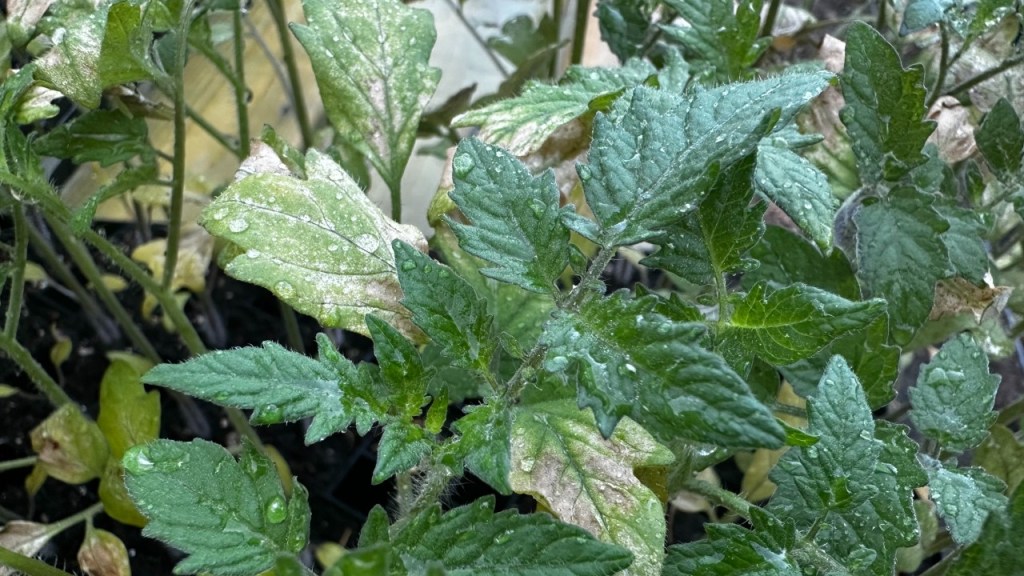
The yellowing in the leaves came from sunscald this season. As you can see, new growth has come after this with better care around exposure to light.

Spring has a way of waking up hope.

As I write this, I’m getting ready to head out and harvest the first flush of lettuce from the field. Some of that lettuce will go to my first and best customer, my wife. Honestly, the lettuce I grow is part of what makes this whole beautiful and chaotic farming life tolerable to her. And later today, I’ll be hand-delivering the first bag of lettuce to a client.

There is something deeply satisfying about those first deliveries of the season. They carry more than food. They carry anticipation. They carry effort finally becoming visible. They carry the reminder that growth is happening, even when it felt hidden for a while.

That is one of the gifts of spring. It renews our excitement for what is possible.

And as I think about what it takes to bring new life forward, one idea keeps standing out to me this week:

New growth needs light.

On the farm, light is essential to getting spring vegetables established and thriving. But there is a catch. You cannot take a tender young seedling from artificial light or protected conditions and suddenly expose it to the full intensity of outdoor sun without consequence. If you do, the plant can suffer sunscald. Too much light, too fast, and the leaves burn.

I know this not just in theory, but from experience. Every season seems to offer me another reminder of what not to do (see header image of this year’s reminder).

So the transition has to be managed. It has to be paced. You need routines and systems that help young plants adjust gradually to stronger light. Not because light is bad, but because even something good can be harmful when it arrives without care.

That feels true far beyond the farm.

A new employee needs light.

A new client relationship needs light.

A new patient or person receiving care needs light.

By light, I mean information, context, guidance, clarity, and encouragement. The things that help people orient themselves and grow with confidence.

But just like seedlings, people do not usually thrive when they are blasted with everything at once.

Too much information can create the human version of sunscald. Overwhelm. Confusion. Hesitation. Loss of confidence. A person can start to shrink back, not because they are incapable, but because they were exposed to more than they could absorb in that moment.

That is why growth requires more than enthusiasm. It requires restraint.

When we start something new, we are often eager to share everything we know. We want to explain the whole system, the whole vision, the whole history, the whole roadmap. Our intentions are good. We are trying to help.

But wisdom asks a better question:

What is the right amount of light for this moment?

That takes situational awareness.

It means meeting people where they are rather than where we wish they already were.

It means recognizing that the next step matters more than the whole staircase.

It means understanding that clarity is not dumping all available information on someone. Clarity is giving them what they need to take the next logical step with confidence.

Not all at once, but at the right pace.

This is true in leadership.

This is true in relationships.

This is true in client service.

And this is especially true in change.

At ThreeWill, we try to apply that mindset through our Community Management service. Every customer is at a different point in their productivity journey. Every organization has different pressures, habits, blind spots, and levels of readiness. If we overload them with too much change, too much information, or too much possibility all at once, we can actually slow growth instead of supporting it.

So we calibrate. We look at the challenges people are facing, pay attention to where they are in the journey, and try to provide the right level of light at the right time. Enough to help them grow with confidence, but not so much that they get overwhelmed and pull back. Spring keeps reminding me that growth is not just about providing what is needed. It is also about providing it in a way that can be received.

That is what good farming does. That is what good leadership does. That is what good care does.

So this week, as the season begins and the first lettuce heads out to people I care about, I’m reminded that excitement alone is not enough to nurture new life well.

New things need light.

But they need light with wisdom.

They need light with timing.

They need light with care.

And when we get that right, growth has a much better chance to take hold.


This post first appeared on March 27, 2026 in Sowing Success, my weekly LinkedIn newsletter on leadership and organic farming. Read the original on LinkedIn.
What the Farm Teaches Us About Giving Forward

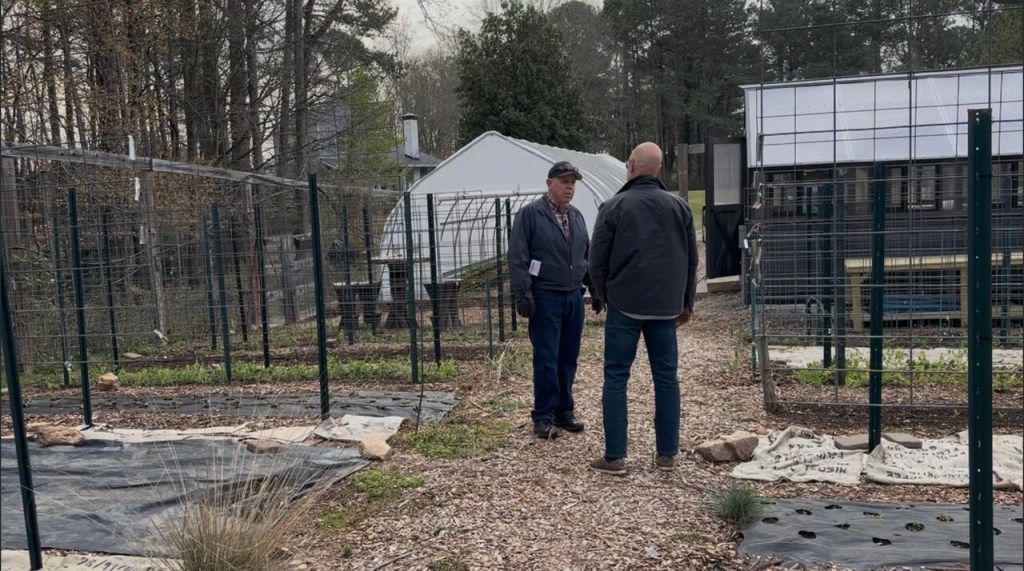
Randall Cagle and Tommy talking on the farm while Will records
Randall Cagle and I on the Farm as Will Records Our Conversation

This edition includes a short video. Watch it on LinkedIn.

This week marked a meaningful milestone for Cultivating Care.

Yesterday, we recorded our first interview, and I could not have asked for a better first guest than Randall Cagle.

Randall serves in human services through his work as a pastor in Milton, Georgia, and he is someone I have had the privilege of knowing for more than 25 years. He is one of those people who always seems to have wisdom ready, not in a polished or performative way, but in the steady, grounded way that comes from living, serving, and paying attention.

He is also an avid gardener.

That meant we could have easily spent the entire conversation swapping notes on all the practical ways we try to cultivate care in the garden. Things like seed starting, pest pressure, and the kind of creative problem-solving that only gardeners or farmers understand. In fact, one of the more memorable moments was us talking about using a boom box covered in plastic in the garden to scare off raccoons that want to help themselves to the corn. There is something wonderfully human about that kind of ingenuity.

But eventually, we pivoted from caring for vegetables to caring for people.

And that is where the conversation deepened.

One of the things that stood out to me is how often nature gives us language for understanding the deeper parts of life. So much of ancient wisdom, especially biblical wisdom, leans on the natural world to explain things that are otherwise difficult to grasp. Seeds, soil, pruning, harvest, vines, roots, fruit. These are not accidental metaphors. They help us understand patience, formation, dependence, surrender, generosity, and care.

That came alive in our conversation.

We both walked away with something practical and something personal.

For Randall, it was a gardening takeaway. He is going to try using straight vermiculite to germinate tomato seeds as a way to reduce the chances of damping-off disease.

For me, it was a leadership and spiritual takeaway.

A phrase that stuck with me was giving forward instead of giving back.

There is something subtle but important in that shift. Giving back can sometimes sound like repayment, as if generosity is a way of settling an account. Giving forward feels different. It carries the spirit of offering something freely, without keeping score, without expecting return, and without needing the exchange to be even.

On the farm, life is constantly being offered forward. A mature plant gives in a way that benefits what comes next. It releases something that it may never directly enjoy, but that still matters for the health of the whole. In that sense, creation is not sustained only by exchange. It is sustained by abundance and by gifts that move beyond their original source.

That feels closer to the kind of care we most need in our lives, our communities, and our work.

It also feels deeply relevant to those serving in health and human services. Real care is rarely transactional. The best caregivers, leaders, pastors, and helpers are often the ones who show up with open hands. They give because it is needed. They give because people matter. They give because they themselves have received grace somewhere along the way.

That kind of giving changes people.

This will be the first video we are producing for Cultivating Care, so there may be a little time before it is ready to release. First efforts always come with a learning curve. But I am excited to share it when it is ready.

More than anything, I am encouraged by what this first conversation represents.

It is one more reminder that care can be cultivated.

It can be cultivated on a farm. It can be cultivated in friendship. It can be cultivated in faith. And it can be cultivated in the daily work of serving people well.

I am looking forward to sharing this conversation soon, and to continuing this journey of exploring what it means to cultivate care, both on the farm and in the world of health and human services.


This post first appeared on March 20, 2026 in Sowing Success, my weekly LinkedIn newsletter on leadership and organic farming. Read the original on LinkedIn.
The Strength We Borrow

New stone stairs leading to the greenhouse
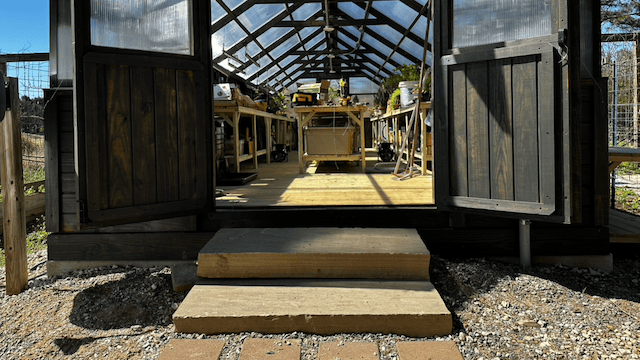
New Greenhouse Stairs, Made Possible by Community

Sometimes progress depends on tools you do not own

One of the brightest spots on the farm lately has not just been the infrastructure improvements themselves. It has been the people who helped make them possible.

I do not have a tractor, which means there are some jobs I simply cannot do on my own. And recently, I have found myself depending on the generosity of friends, neighbors, and family to move forward on projects that would otherwise stay stuck.

What has struck me is that they did not just bring equipment. They brought creativity, judgment, and willingness.

That looked like figuring out how to lift a 1,500-pound bag of soil at the upper limits of what a tractor could handle. It looked like carefully setting stair treads that weighed more than 350 pounds each. It looked like problem solving in real time, with patience and good humor, to make something hard feel possible.

It is amazing what can be done with the right tools and the right people.

The stone steps in the header image are one of those fruits. Every time I walk up those solid steps, I will think about Jeff and the generosity that helped make them possible.

Asking for help is an act of humility

There is a part of me that wants to be self-sufficient.

I like being capable. I like figuring things out. I like making progress through effort and determination.

But this season on the farm has reminded me that self-sufficiency can quietly turn into isolation if I am not careful.

There are moments when the better path is not pushing harder on my own. It is humbly asking for help.

That is not always easy.

For many of us, giving help feels natural. Receiving it can feel uncomfortable. It can make us feel indebted, exposed, or somehow out of balance. I have even had moments of feeling guilty about how much help I have received.

But when those feelings come up, I have been trying to remind myself of something important.

In receiving someone’s gift of time, strength, or equipment, I am not just taking. I am also creating space for connection.

I am giving them the opportunity to show up as a good neighbor.

I am giving them the chance to participate in something meaningful.

And maybe just as importantly, I am helping build the kind of relationship where they may feel more comfortable asking me for help one day too.

Community often starts when someone is willing to receive

We often talk about community in terms of giving.

Show up. Pitch in. Be generous. Serve others.

And all of that matters.

But real community is not built only through giving. It is also built through receiving.

Someone has to go first in the cycle of reciprocity. Sometimes that first move is not offering help. Sometimes it is asking for it.

That is what creates the opening.

That is what tells another person, “You are needed here.” That is what turns neighboring into community.

Receiving can feel like weakness when you are used to being the one who carries things. But I am learning that receiving is its own kind of strength. It takes humility. It takes trust. And it takes a willingness to let relationships be uneven for a while, knowing they do not have to stay that way forever.

Not every season is balanced. Not every relationship is perfectly symmetrical in the moment. That is okay.

What matters is being open-hearted enough to receive, and awake enough to reciprocate when your time comes.

The lesson beyond the farm

This does not just apply to moving soil or setting stone steps.

It applies to leadership.

It applies to teams.

It applies to client relationships.

In business, many of us are far more comfortable being the helper than the one needing help. We want to be the one with the answer, the one bringing value, the one carrying the load.

But healthy teams and healthy partnerships are built on more than contribution. They are built on trust.

And trust grows when people know they can both give and receive.

Sometimes the strongest thing a leader can do is ask for help. Sometimes the healthiest thing a team member can do is admit they cannot do it alone. Sometimes the best thing a client relationship can include is enough honesty to say, “We need another perspective here.”

That kind of humility does not weaken a relationship. It deepens it.

What I am taking with me

These new steps on the farm are practical. They solve a real problem. They make the greenhouse more usable.

But they are also something more.

They are a reminder that progress is often a shared effort. They are a reminder that asking for help can be the beginning of stronger community. They are a reminder that generosity leaves a mark you can walk on every day.

And maybe that is one of the quiet gifts of this season.

Sometimes the infrastructure we are really building is not just on the land.

It is between people.

A question to carry with you

Where in your life or work might receiving help be the very thing that opens the door to deeper trust, stronger relationships, and a more meaningful kind of community?


This post first appeared on March 13, 2026 in Sowing Success, my weekly LinkedIn newsletter on leadership and organic farming. Read the original on LinkedIn.
One Year of Letting the Farm Teach

Aerial view of the farm before the high tunnel and greenhouse
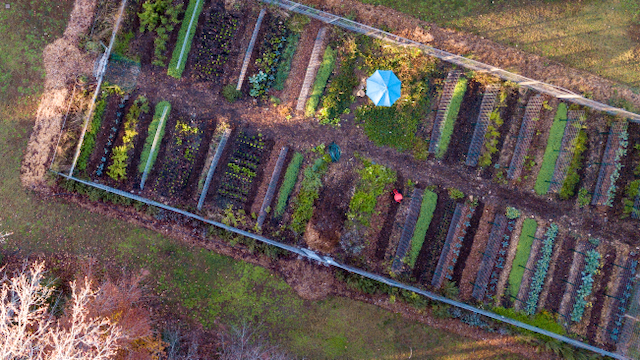
A view from Above (without High Tunnel and Greenhouse)

Somehow, the one-year milestone of writing this newsletter slipped right past me.

About a year ago, I started sharing these weekly reflections. At first, it felt a little like a personal experiment. I simply wanted to pause each week and capture what working in the garden was teaching me about caring for people, nurturing relationships, and leading companies.

Looking back, this newsletter has essentially become a public journal.

It’s a place where I try to pay attention to what nature quietly reminds us about how life and work actually function.

Before going further, I want to thank Lisa McGuire, Ed.S.. She didn’t tell me to start a newsletter, but she deeply influenced why it exists. Lisa often talks about bringing your full, integrated self into business relationships. That idea stuck with me.

I realized that if that belief was true, then I shouldn’t separate my love of growing healthy food for my family, friends, and neighbors from the way I show up in business. Those two parts of my life are connected.

This newsletter is the result of that realization.


A small confession about encouragement

A quick personal side note.

My wife and I recently attended a couples event about the 5 Love Languages, and I discovered something about myself. My primary love language is words of affirmation.

That discovery made me smile, because recently several people have reached out to tell me they enjoy this newsletter and look forward to reading it each week.

Those comments mean more than people probably realize.

They have been the fuel that keeps me writing.

And I suspect for every person who says something publicly, there are probably ten or twenty more quietly reading along each week.

So thank you for being part of this little experiment in paying attention.


Three lessons the garden keeps repeating

Over the past year, a few themes have surfaced again and again. If you haven’t read these earlier articles, I’d encourage you to circle back to them. They capture some of the core observations that shaped this newsletter.

1. How You Run Your Garden Is How You Run Your Business

(From: How You Run Your Garden as a Business)

One of the first realizations that struck me is how similar a garden and a business actually are.

Both require:

• Patience • Risk management • Consistent attention • And the humility to adapt when conditions change

In the garden, weeds don’t wait politely. If you ignore them, they quietly take over and compete with what you actually want to grow. The same thing happens in organizations.

Small problems, unclear priorities, or neglected relationships can slowly crowd out the things that matter most.

The lesson is simple.

Success in both environments usually comes from small, consistent care rather than heroic bursts of activity.


2. Healthy Soil Creates Healthy Growth

(From: Gardening: A Metaphor for Creating a Healthy Work Environment)

One of the most important truths in gardening is that the real work happens underground.

Before you ever plant seeds, you have to prepare the soil.

In organizations, culture plays the same role.

If the soil is depleted, even the best seeds struggle. But when the environment is healthy, growth happens naturally.

Leaders often focus on performance, results, or strategy. Those are important. But the farm keeps reminding me that the environment determines what is possible.

Healthy soil produces healthy plants. Healthy cultures produce thriving people.


3. Joy Matters More Than We Admit

(From: Joy in Work and in the Garden)

Another lesson that keeps resurfacing is that joy isn’t a luxury.

It’s a signal.

When we find joy in the work we are doing, it usually means we are connected to purpose, relationships, and meaningful contribution. Whether that joy comes from growing vegetables, serving clients, coaching a team, or sharing a meal with friends, it reminds us why the effort matters.

Work will always have pressure, deadlines, and responsibilities.

But when we stay connected to the purpose behind the work, those tasks start to feel less like burdens and more like contributions to something meaningful.


The garden keeps speaking

One of the reasons I love working on the farm is that nature has a way of repeating the same lessons over and over until we notice them.

Patience. Care. Relationships. Environment. Joy.

These are not complicated ideas.

But they are easy to forget in the noise of daily work.

That is part of why I keep writing these reflections. It forces me to pause, observe, and remember what the garden is quietly teaching.


A question for you

As I look back on this first year of Sowing Success, I’m curious about something.

What is one place in your life or work where nature, a hobby, or a passion outside your profession has quietly taught you something about how to lead or care for others?

Sometimes the most important lessons are hiding in plain sight.


This post first appeared on March 6, 2026 in Sowing Success, my weekly LinkedIn newsletter on leadership and organic farming. Read the original on LinkedIn.
Transplanting Plants and People with Care

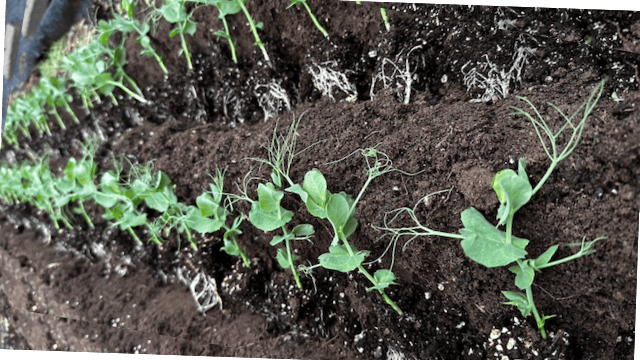
Snow pea transplants in the ground
Sugar Snap and Snow Peas are in the Ground (These are Snow Peas)

First transplants are coming

The high tunnel is making real progress, and the next milestone is getting the first plants into the ground. The first things going in are peas, kale, lettuce and beets, and they should be transplanted within the next week.

Before they go in, they need time to harden off under the tunnel so they can adjust to temperature swings and the intensity of real light. The goal is simple: help them transition without shock, so they can establish roots and start growing with strength.

Transplant shock is real (for people too)

As I think about transplanting, I can’t help but think about job role transitions.

When you move a plant from one environment to another, it’s not just “put it in the soil and hope.” You provide a little extra care at the edges. You reduce unnecessary stress. You give it time to adapt.

People aren’t that different.

Right now at ThreeWill, Kirk is stepping into a new COO role and Will is about a year into Marketing and Strategy. Both are being exposed to new responsibilities, new expectations, and new kinds of pressure. My job as a leader is not to “throw them in” and see what happens. It’s to nurture them with context, support, clarity, and steady encouragement as they ramp up.

Protection is not weakness

I saw a version of this lesson with sugar snap peas.

If you take starts that have been grown indoors and drop them straight into full outdoor conditions, you can create setbacks that were completely avoidable. That’s why I was mindful not to plant them right before temperatures dropped into the 20s with strong gusting winds. It’s not fear, it’s wisdom.

In leadership, the same principle applies. If you put people into turbulent situations, you may need to protect them from unnecessary stress so they can set roots in their new role. That protection can look like:

  • clearer priorities
  • fewer simultaneous changes
  • quick access to information
  • a safe place to ask “basic” questions
  • feedback that’s specific and kind
  • air cover when things get noisy

Not forever. Just long enough for the transplant to take. BTW, I am not perfect at this and taking time to reflect on this reminds me of how I should be leading my team.

A simple question to carry with you

Who in your world is in a transition right now that could go better with a little more “hardening off”?

And what’s one practical way you could nurture them this week so they can set roots and thrive?


This post first appeared on February 27, 2026 in Sowing Success, my weekly LinkedIn newsletter on leadership and organic farming. Read the original on LinkedIn.

Wiggle Wire, Willing Hands, and the First Signs of Spring

Will Holland working with wiggle wire on the high tunnel
Will Meets Wiggle Wire

This edition includes a short video. Watch it on LinkedIn.

The kind of help that builds more than a structure

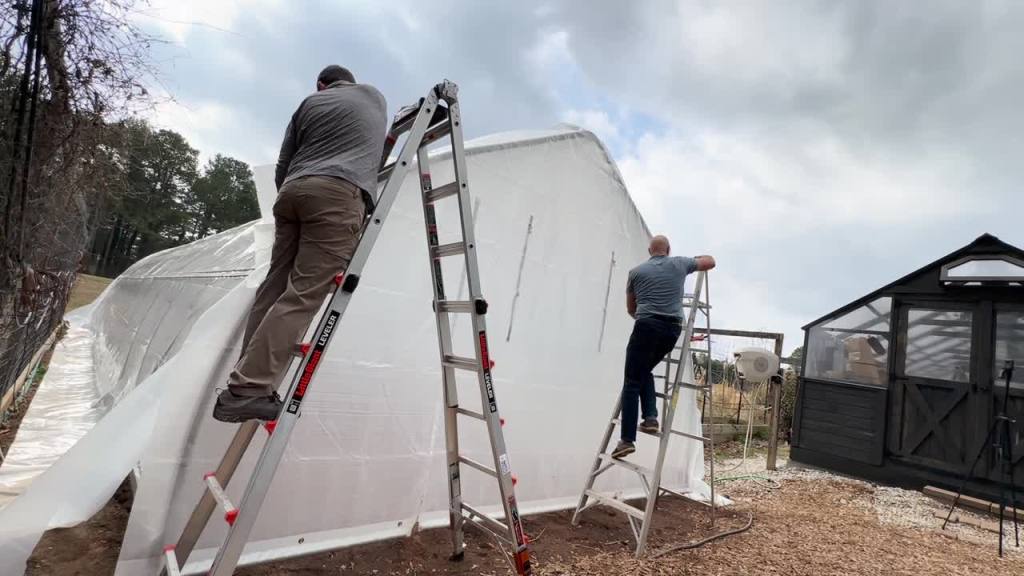
This week, I had help on the farm from Will Holland as we knocked out some of the last details on the high tunnel build.

Will got a kick out of learning what “wiggle wire” is (it sounds made up until you’ve wrestled it into place). What stood out most, though, was his posture. Helpful. Curious. Willing to learn something new without needing to be the expert.

That kind of attitude builds more than a high tunnel. It builds trust.

Signs of spring are starting to speak

Even with cold mornings still hanging around, the farm is giving little hints that the season is turning.

Apple buds are swelling on the trees. Blueberries are showing the earliest start of their flower heads. And my lawn, a chaotic mix of species I’ve stopped trying to control, is beginning to pop green in patches.

It’s not spring yet. But it’s close enough that you can feel it.

Let the farm tell us when it’s time

We’re preparing to welcome the Cultivating Care Community to the farm. The purpose is simple and meaningful: to share lessons about how nature informs care for people, especially those living in chronic life situations where dignity matters deeply.

And we’re letting the land set the pace.

When the farm greens up a bit more, that will be our signal that the space is ready. We’ll start lining up conversations for April and May, when the garden is teeming with life and will naturally inspire conversations about care, dignity, and hope.

A reminder to enjoy the build-up

I can get overly focused on the “launch” of something. But this week was a good reminder that the lead-up is part of the gift.

We’re building a space for meaningful conversations, and we’re also making sure we enjoy the journey that gets us there. Having one-on-one time with Will and figuring a few things out together was fun. Doing the work with someone different than you not only gives you fresh insights, it creates momentum and heightens the anticipation for what’s coming.

What’s coming soon (and an invitation)

While we were working, Will captured some of my thoughts on what I envision for Cultivating Care. That video should hit my LinkedIn feed soon (and likely ThreeWill’s and Will’s as well).

If you know someone who leads in Human Services in the Atlanta area, I’d love a warm introduction. I’m building a guest list of leaders who care deeply about their people and want to create more space for care in a world that needs much more of it.

Also, beyond conversations on the farm, we’re creating a second space: a Cultivating Care Community Breakfast. More details soon. Our target is late March / early April for the first one. Stay tuned.

One small encouragement as I close: Let the season arrive in its own time. In the meantime, prepare the ground and build with the kind of people you’re grateful to work beside.


This post first appeared on February 21, 2026 in Sowing Success, my weekly LinkedIn newsletter on leadership and organic farming. Read the original on LinkedIn.