Love Your Neighbor: From the Garden to the Workplace

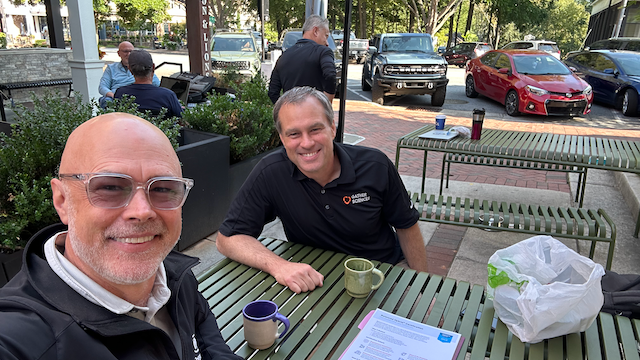
Coffee with John Wichmann - geeking out on productivity.
Coffee with John Wichmann – geeking out on productivity.

This week has been a heavy one. Between remembering 9/11 and the weight of the news cycle, I’ve been reminded how much our world needs a simple yet powerful practice: love your neighbor.

For me, that’s a big part of why I’m drawn to growing food. It’s more than just tending to plants. It’s about caring for people. I want to create healthy, enjoyable food experiences for my community, whether that’s introducing someone to a vegetable they’ve never tried before or growing the tomatoes (sun golds) and peppers (jimmy nardello) they look forward to each season.

I do sell vegetables from our property, but I also find it rewarding to bring vegetables to work as gifts when I meet up with people. There’s something deeply joyful about giving food away. Even yesterday, I brought a small harvest to coffee with a new work partner, John Wichmann (see picture above). The smile on his face when I introduced him to shishito peppers reminded me how meaningful it is to share something with someone else out of your passion. That moment of connection was also a reminder of how refreshing it is to see someone be passionate about making a positive difference in this world. His passion for helping organizations navigate hybrid work environments is rooted in a genuine desire to make the world better. That, too, is to love your neighbor.

This spirit of love your neighbor doesn’t have to stop at home or in the garden. It can and should extend into our workplaces. We love our neighbor when we care for our employees, clients, and vendors. When we (ThreeWill) strive to help organizations focus on what matters most, use their tools more intentionally, and create healthier work cultures, we’re practicing the same principle of care.

The truth is, we all have opportunities to improve the world right where we are. The question is: do you bring a genuine care for your employees and clients? If not, maybe it’s time to shift your mindset. Beyond tasks and responsibilities, there’s always a chance to love your neighbor at home, at work, and in every community we’re part of.


This post first appeared on September 12, 2025 in Sowing Success, my weekly LinkedIn newsletter on leadership and organic farming. Read the original on LinkedIn.
Simplify Your Systems: How Core Processes Keep Things Running When You Step Away

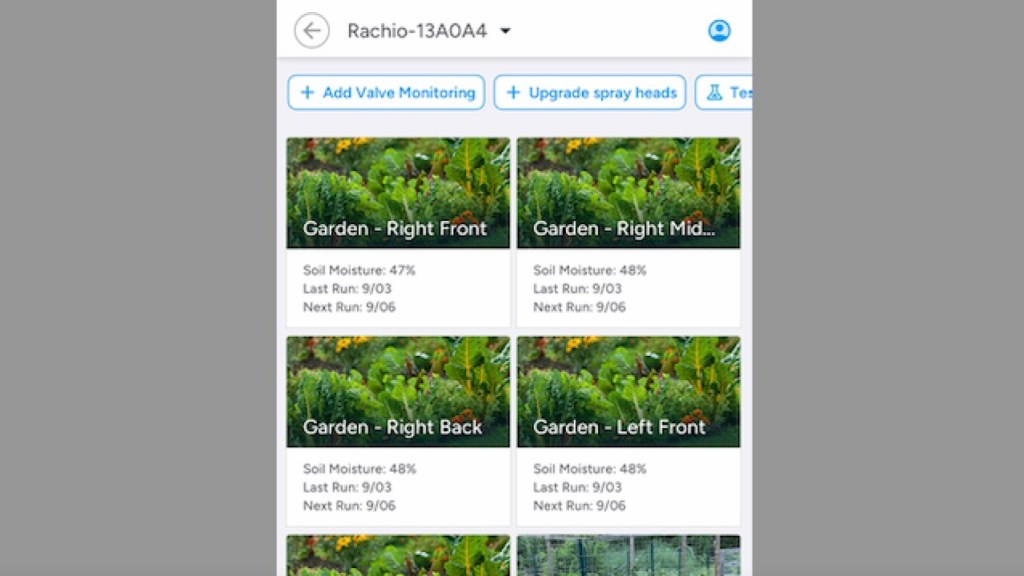
Part of how IMO is automated with drip irrigation that can be monitored remotely.

This week I’m writing from Oregon, where I’m spending time with my oldest son and his family. Being away from Iron Mountain Organics and ThreeWill reminds me of the importance of having systems in place and people who care, so that things continue to run smoothly even when I’m not there.

On the farm, vegetables don’t pause just because I’m on vacation. Nature moves forward. That means I need reliable systems to ensure things happen at the right time. Some of this is automated (like drip irrigation) but there’s always work that requires human hands. Without clear guidance, I can’t just say, “Farmer Austin, take care of the farm while I’m gone.” For my son to truly help, I need to define what “taking care” means.

When I outline a process (whether verbally or in writing), stress drops for both of us. People want to help, but they also want to know what “good” looks like. Defining the standard gives everyone confidence and a way to measure success.

A simple example: packing orders for IMO customers. Linda and I have found a rhythm. She prints the orders, prepares the bags, weighs the portions, and calls them out. I pick the herbs, fill the bags, and mark the orders as ready in the system. We both put out the sign and umbrella together. Because our roles are clear, order pickup day feels less like a scramble and more like a team effort.

At ThreeWill, we use EOS as our guide to capture and document core processes. The more we simplify, the less stress we feel and the easier it becomes to identify what should be automated. Over the past few years, I’ve learned that simpler processes are more likely to be followed. Complexity creeps in naturally, and the discipline is in pruning it back.

Whether in farming or consulting, clarity in process is what allows you to step away without everything falling apart. The simpler the system, the easier it is to scale and the more freedom you gain to focus on what matters most.


This post first appeared on September 5, 2025 in Sowing Success, my weekly LinkedIn newsletter on leadership and organic farming. Read the original on LinkedIn.
Diversity: Nature’s Design for Thriving Systems

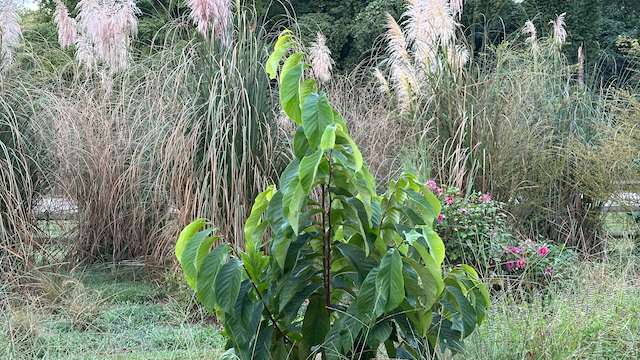
My paw paw tree that is beautiful, but will not bear fruit without a diverse companion.

As I watch a paw paw tree take shape in my yard, I’m reminded of an essential truth: it will never bear fruit on its own. For paw paws to bear fruit, they need diversity through the presence of another paw paw tree of a different variety nearby to facilitate cross-pollination.

If we were all cloned to be the same “perfect” person, that would be a pretty boring world to live in, so we could probably all agree that diversity is essential. Diversity is a fundamental design element of life, and it appears in nature in ways that help me apply that basic principle to my work experience.

I see this play out in my garden. Instead of controlling every “pest,” I’ve learned to let the ecosystem do its work. Birds, beetles, and other beneficial creatures naturally balance things out, so I’m not overrun with any single “pest.” The garden thrives because of diversity, not despite it.

Contrast that with how we often treat our lawns. We demand a monoculture of Bermuda or fescue, working tirelessly against nature’s urge to bring clover, crabgrass, and wild ground covers into the mix. Don’t get me wrong, I love a beautiful, thick, lush turf of fescue to walk in barefoot, but in our need for control, we miss the richness and resilience that variety brings.

It makes me think: how often do we do the same thing in our work and relationships? We gravitate toward people like us. We control for sameness because it feels safe. But sameness can limit the creation of new concepts or a more well-rounded idea. It’s when we invite others who challenge our assumptions, stretch our thinking, and bring new ideas that our businesses — and our lives — truly thrive.

Nature whispers this lesson everywhere: diversity is strength, and it’s the path to abundance.

Closing Reflection Question: Where could you let go of control and invite diversity to do its work in your own life or organization?


This post first appeared on August 29, 2025 in Sowing Success, my weekly LinkedIn newsletter on leadership and organic farming. Read the original on LinkedIn.
The Gift of Abundance: How Overflow Creates Connection

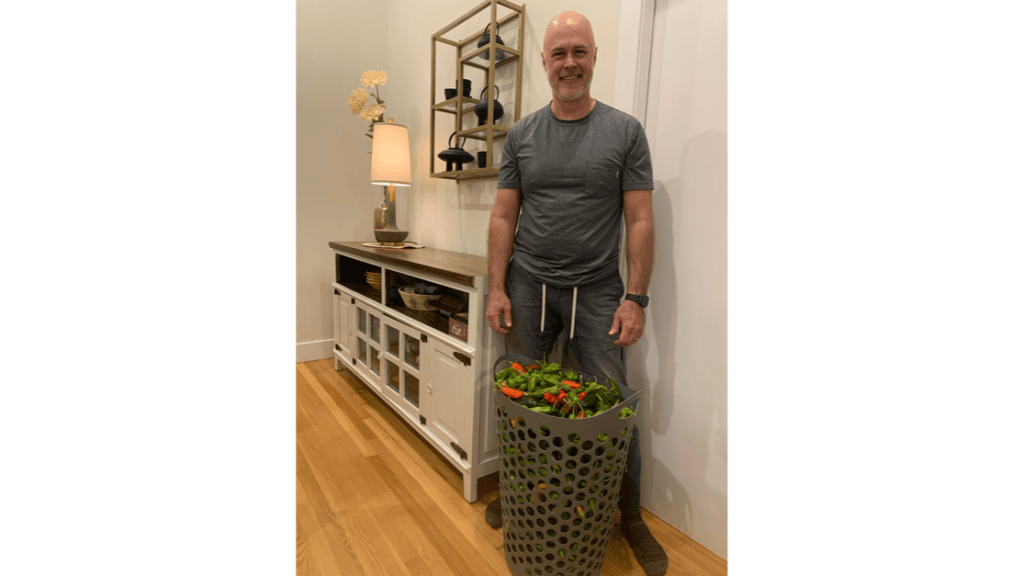
My fall pepper harvest!

One of the beautiful lessons from the garden is abundance and how it naturally overflows to benefit others. Some plants just give more generously than others. This time of year, peppers are plentiful, and their abundance pushes me to find new ways to use them and, more importantly, new people to share them with.

Just this week, I met up with my friend Patrick Falgoust for a beer, and we exchanged the overflow from our gardens. That simple act of sharing abundance sparked a deeper connection, rooted in generosity and community.

I try to carry this same spirit into my work life. At my coworking space, THRIVE | Coworking (which truly is the best), I often bring in extra produce to share. It’s always fun to see people light up with excitement as they get to try something new, fresh, local, and organic that they might not otherwise experience. Over time, this little ritual has even earned me the nickname “Farmer Tommy” around Thrive, which is a title I wear with pride.

Whether it’s veggies from the garden, profit shared with a team, or time given to help someone else succeed, abundance is not meant to be hoarded. It’s intended to ripple outward. When we let abundance flow, it strengthens relationships and builds bonds that last.

So let me ask you: What is abundant in your life right now, and how are you sharing it with others?


This post first appeared on August 22, 2025 in Sowing Success, my weekly LinkedIn newsletter on leadership and organic farming. Read the original on LinkedIn.
Avoiding the Distraction Trap: Bringing Intentionality to the Garden (and Life)

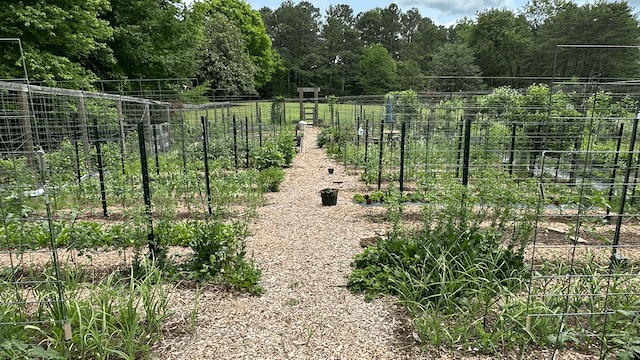
Looking down the center aisle of IMO

In my July 18th edition of this newsletter (Planning at the Right Level: What My Market Garden is Learning from Our Consulting Business), I planted a seed in my mind about being more intentional with Iron Mountain Organics.

Now that idea is starting to take root, I’ve noticed how easy it is for me to get distracted in the garden. I can walk down the center aisle and find a million and one things to do. Each of these little side projects brings me joy, but they can also pull me away from what matters most.

If I’m not careful, I can spend a whole morning on tasks that are interesting but don’t move me closer to my bigger purpose: serving my community with healthy food. That’s why I’ve been thinking more about being a better steward of my time in the garden.

From an EOS perspective, that means setting “90-day rocks” and weekly commitments that help me make meaningful progress. I might not start running full-blown Level 10 meetings with Linda, but I am considering setting aside one day a week to pause, reflect, and choose the 1–3 “must-do” priorities that can’t be lost to distraction.

There’s less pressure to bring this discipline into the farm compared to my consulting business, but if I did, I believe I could get further with my mission. More vegetables to sell and share. More lessons learned through journaling. More intentional partnership with nature.

So let me ask you: What passions in your life (outside your primary work) could benefit from more intentional quarterly and weekly planning? Could that kind of focus make them more fulfilling for you? Please share in the comments.


This post first appeared on August 15, 2025 in Sowing Success, my weekly LinkedIn newsletter on leadership and organic farming. Read the original on LinkedIn.
The Power of Community and the Abundance Mindset

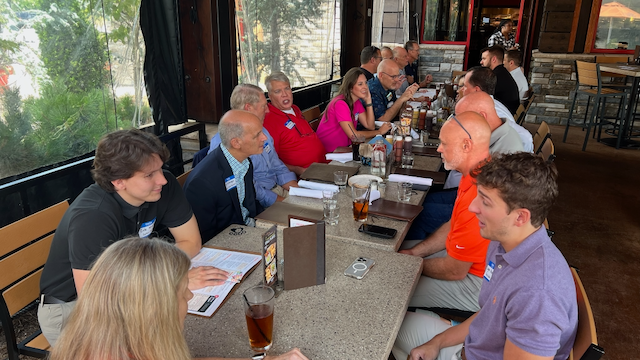
Taking Time to Pour into Others at the ThreeWill Alliance Luncheon

There is incredible power in taking time to learn from others.

As you can see in the photo, people are leaning into conversations. If this photo had sound, you’d hear a vibrant buzz with sharing ideas, energy flowing, and relationships deepening. Looking back on this week’s ThreeWill Alliance Luncheon, I was reminded just how much I appreciate the magic of community and how an abundance mentality fuels both farming and business.

This event was a moment of clarity: this is what I love about the small-scale farming world, too.

There are many reasons I started Iron Mountain Organics (IMO). But one of the most important is community. When you step into the small-scale farming world, you’ll quickly discover something remarkable: a spirit of generosity. Growers openly share what’s working and what’s not. They’re quick to support one another. It’s a community that values contribution over competition. And it’s one of the best examples I’ve found of what an abundance mentality looks like in action.

Here are a few voices that have shaped my farming philosophy and filled my cup over the years:

  • Farmer Jesse (No-Till Growers Podcast) – A champion of regenerative practices and community building. His podcast is a masterclass in humble expertise.
  • Joe Lamp’l (Joe Gardener) – My first garden podcast back in 2017, when the seeds of IMO were just starting to sprout. He lives just 10 minutes from me, and I still remember being nervous meeting this gardening legend for the first time.
  • Connor Crickmore (Neversink Farm) – A former software consultant like me, now a systems-driven farmer with a unique, compelling voice. His focus on operational excellence really resonates.
  • Eliot Coleman – Often called the godfather of organic farming. His decades of work planted some of the earliest seeds for me on what’s possible with healthy soil.
  • Charles Dowding – The voice of “No Dig” in the UK. I’ve spent countless hours watching his videos. His calm, methodical approach has deeply shaped how I grow today.
  • Jean-Martin (JM) Fortier – A Canadian market gardener whose book The Market Gardener is a must-read. He deeply understands the soul of local food and community impact.

This might be more than you wanted to know about small-scale farming, but I often get asked where my inspiration comes from. So I thought I’d pull back the curtain.

Whether it’s a farming collective, a business luncheon, or a local network of professionals… surrounding yourself with a community that believes in lifting others up changes everything.

Are you part of a community with an abundance mindset? If not, I encourage you to find one, OR BETTER YET, be the person who creates it. Life is too short not to be part of a healthy, thriving community.


This post first appeared on August 8, 2025 in Sowing Success, my weekly LinkedIn newsletter on leadership and organic farming. Read the original on LinkedIn.
Scaling Starts Small: Finding the Right Size to Thrive

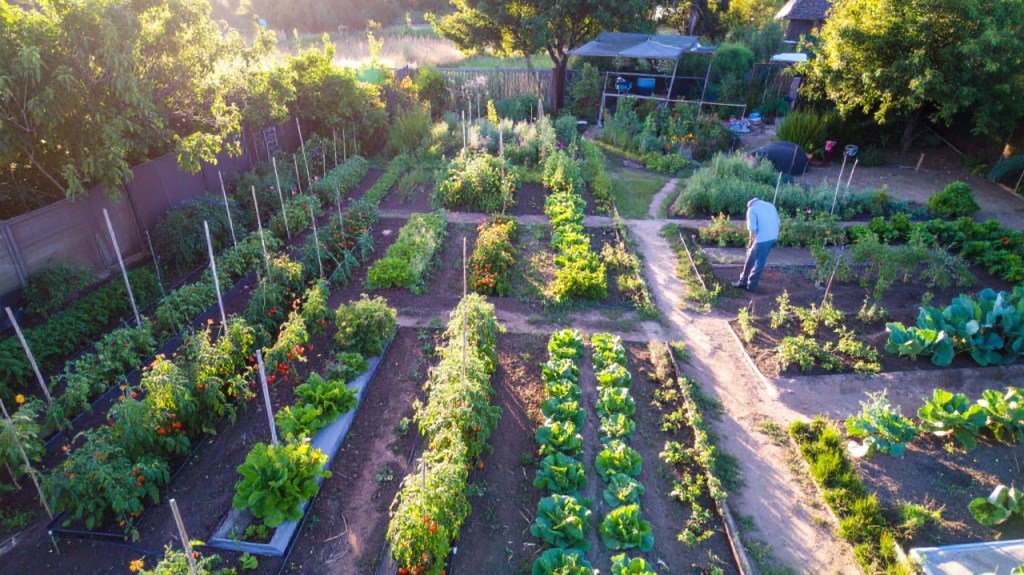
The Vision of My Market Garden with just Cherry Tomatoes and Lettuce

I listen to Farmer Jesse a few times a week to feed my farming soul. His quirky style, paired with humble confidence, makes each episode both educational and refreshing. A recent podcast titled “How Big for a One Person Market Garden + High Tunnels as Ecological Traps” watch it here, really stuck with me and inspired this week’s Sowing Success newsletter.

One of the lessons I’ve been learning on the farm (and relearning in my business) is the value of starting small and scaling with intention. Whether it’s farming or technology consulting, there’s always a sweet spot between capacity and output. In market gardening, Jesse suggests the magic number is about 1 farmer per 1/3 acre. Of course, that ratio flexes depending on factors like energy, crop complexity, and your go-to-market model.

That got me thinking… what’s my own version of “the right size”?

In farming, it might mean focusing on just cherry tomatoes and lettuce. If I had the right market for it, that combo alone could be my core offering. Fewer crops means deeper expertise: better timing, stronger soil management, improved pest control, and more targeted recipes for my customers. Simplicity leads to mastery.

But if you peek at my Iron Mountain Organics store, you’ll still see over a dozen veggies listed. I haven’t made that leap to minimalism yet. Why? Because it’s hard. Narrowing focus feels risky even when it’s the healthier long-term path. Also, narrowing focus takes discipline each year as I browse through my seed catalogs and think of all the things I could grow.

The same lesson is playing out at ThreeWill. Like many service companies, we started with a wide variety of offerings—almost a dozen. But we’ve realized that less is more, and now we’re narrowing down to a single core service offering, described at thethreewillway.com, tailored to just a few industry verticals.

The first vertical we’re focusing on is Home and Community-Based Care. These organizations do deeply meaningful work, and we’ve found that thoughtfully applied Microsoft technology can free up hours of admin time and redirect that time to care. That’s the mission. And that’s the power of narrowing your focus.

So, let me ask:

Are you simplifying what you grow in the garden—or what you grow in your business? It’s not easy. But it’s often the healthiest thing you can do to have a flourishing business.


This post first appeared on August 1, 2025 in Sowing Success, my weekly LinkedIn newsletter on leadership and organic farming. Read the original on LinkedIn.
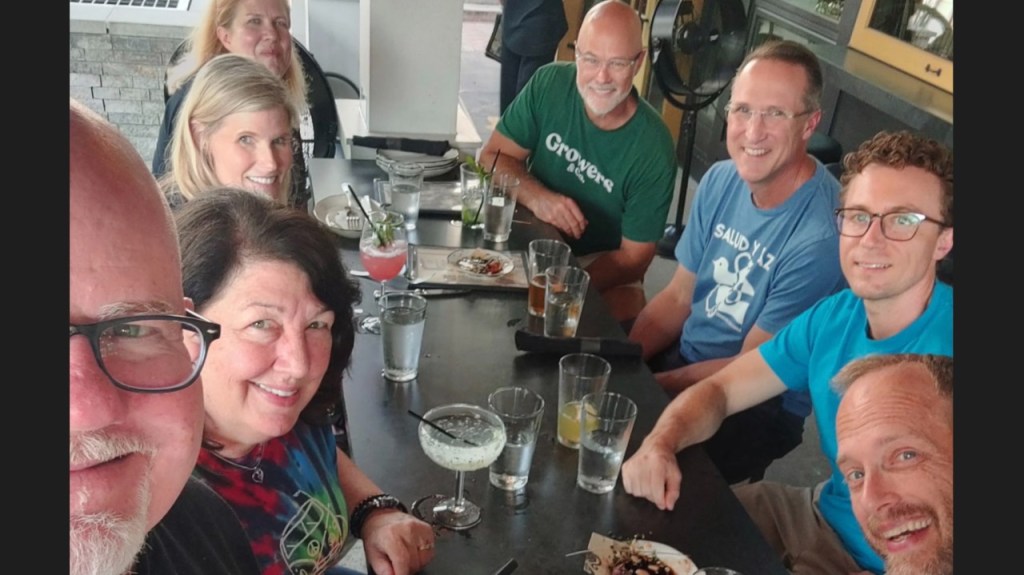
You Don’t Get Fruit the Day You Plant the Seed

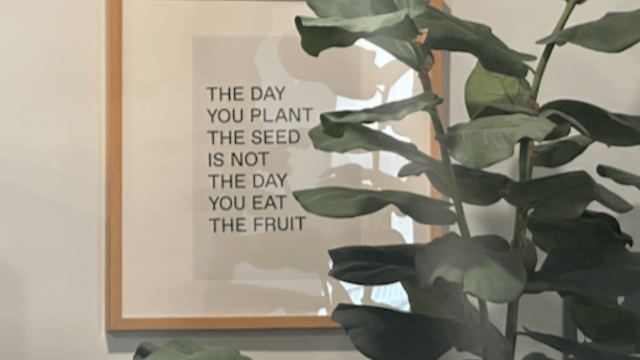
A quote at Thrive Alpharetta - West End
A quote at Thrive Alpharetta – West End

Today, at my coworking space called THRIVE Coworking — hands down the best coworking space thanks to its incredible community and top-notch community managers — I walked past a framed quote that stopped me in my tracks.

Funny thing is, I’ve probably passed it a hundred times without noticing. But today, it caught my eye. And given how often I draw lessons from nature, I’m honestly surprised it didn’t hit me sooner.

The quote simply read:

“The day you plant the seed is not the day you eat the fruit.”

It’s such a simple truth, one I live by as a farmer. But seeing it in a workspace reminded me just how relevant it is in leadership and business too.

When I’m on the farm, I don’t rush nature. I know that each seed needs time — time to root, to rise, to be shaped by its environment. I can nurture it, give it the best chance to grow, but I can’t force it to bear fruit on my timeline.

That same patience is something I’m learning to carry into my work as a CEO. Whether it’s launching a new service, mentoring a team member, or shifting a company culture, real change doesn’t happen overnight. It happens gradually — invisibly at first — through consistent, thoughtful effort.

And often, just like in the garden, the growth you don’t see is the most important part.

That quote hanging in Thrive wasn’t just a decoration — it was an invitation to slow down, breathe, and trust the process. I’m grateful to be in a space that values inspiration and reflection. It’s a reminder that the best environments, whether farms or companies, are the ones designed to cultivate growth — not demand it instantly.

So if you’re planting new seeds in your life, your work, or your community — keep tending to them. With enough care and time, the fruit will come.


This post first appeared on July 25, 2025 in Sowing Success, my weekly LinkedIn newsletter on leadership and organic farming. Read the original on LinkedIn.
Planning at the Right Level: What My Market Garden is Learning from Our Consulting Business

Chillaxin after a productive day of EOS Quarterly All Day

At ThreeWill, we’ve learned that success depends on more than vision. It depends on planning at the right level.

Before using the Entrepreneurial Operating System (EOS) at ThreeWill, we set annual goals but rarely paused to reflect or adjust. That changed when we started our implementation of EOS and introduced Quarterly Pulses. These are companywide days where we take a step back, look at where we are, and make adjustments based on what it will take to reach our goals. We also have Weekly L10s (an EOS Worldwide term, see – https://www.eosworldwide.com/blog/the-level-10-meeting) that help us stay aligned and address issues before they become roadblocks.

These rhythms are not just for leadership. They involve everyone and give the entire team a shared sense of direction.

Yesterday, during one of those quarterly sessions, I found myself thinking about Iron Mountain Organics. On the farm, I’ve always had an annual plan. I know what I want to grow, when to plant, and how we want to serve our community. But I’ve never applied the same structure we use at ThreeWill to our market garden.

What I experienced yesterday raised some thoughtful questions…

  • What would it look like to have a quarterly planning rhythm for the farm?
  • Could a weekly check-in with Linda Ryan help us stay aligned and better measure our impact?
  • Would that give us the ability to adapt in season instead of reacting too late?

I haven’t implemented these ideas on the farm yet. But I’m starting to think that I should.

Running a farm takes more than hard work. It takes planning. Sales, marketing, operations, and finance all have a role. The same disciplines that make a business successful can help a farm thrive.

This is the first time I’ve looked to the business to inform the farm. It may not be the last ;).

Where are you running on autopilot that might benefit from a purposeful pause?


This post first appeared on July 18, 2025 in Sowing Success, my weekly LinkedIn newsletter on leadership and organic farming. Read the original on LinkedIn.

Pause, Then Act: The Gate, The Deer, and Better Business Decisions

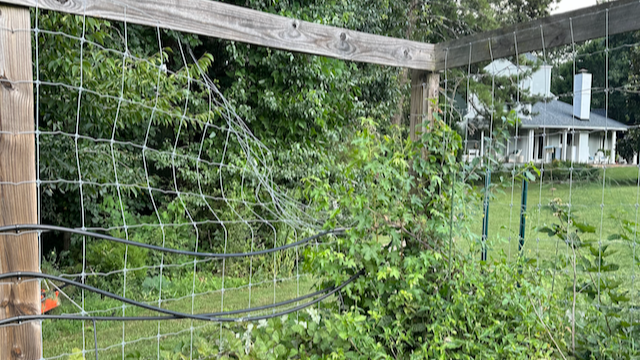
This is what happened this week with the deer encounter.

This week, I learned once again that sometimes the best action is no action at all, at least not immediately.

On the farm, I found myself standing at the entrance gate, aware that a deer had somehow gotten inside my 8-foot fence. My first instinct? Try to control the situation and guide the deer out. But without taking a moment to pause, I ended up pushing the deer into a corner. It panicked, ran into the fence multiple times, and finally crashed through it. Instead of a calm solution, I was left with a fence to repair and the thought that I caused unnecessary stress for that poor animal.

If I had simply paused for a moment, I could have thought through my options: open the gates wide, create a clear and safe exit, and let the deer find its own way out calmly.

This situation reminds me of how we should lead in business. When we encounter a new challenge or an unexpected problem, it’s tempting to react immediately, to force things, to act out of urgency. But in most cases, unlike a true emergency, a pause is the wiser move.

Taking that brief pause to run through possible scenarios and visualize the likely outcomes helps us avoid mistakes that can set us back or cause more damage than the original problem.

A short pause to think instead of jumping to act can be the difference between a broken fence and a peaceful exit. Or, in business terms, between a setback and a breakthrough.


This post first appeared on July 11, 2025 in Sowing Success, my weekly LinkedIn newsletter on leadership and organic farming. Read the original on LinkedIn.