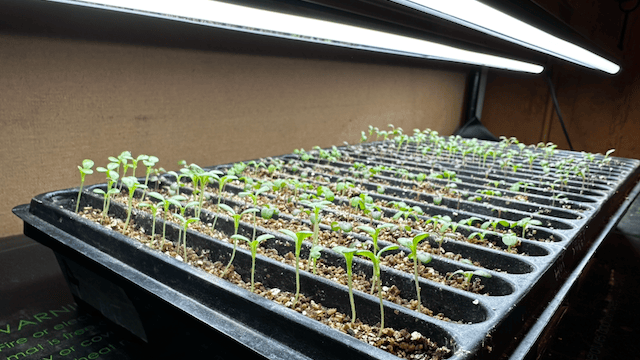
What my lettuce seedlings for fall planting look like this morning.
Core Insight
One of the things I appreciate about farming is that every season brings work that cannot be skipped. Right now, we are still harvesting peppers, herbs, and cucumbers, but we are also starting lettuce, beets, and other cool-season crops. It feels strange to think about fall while summer is still in full swing.
The temptation is to wait until the current season is over before preparing for the next one. On the farm, that almost always means missing an opportunity. The healthiest transitions happen when one season is winding down, and the next is already beginning to take shape.
Organizations are no different. The best teams do not wait for business to slow down before improving systems and assets, developing people, or planning what comes next. They prepare for the next season while continuing to serve well in the current one.
Three Insights from the Farm
1. The next season begins before the current one ends
The peppers may still be filling up my basement coolers, but lettuce and beet seedlings need to be started now if we want a successful fall harvest. Waiting for summer to end would put us behind before the next season even begins. Timing matters.
2. An empty bed is an opportunity, not a break
As one crop finishes, the soil is refreshed and prepared for the next planting. The empty space is not simply evidence of what has ended. It is an opportunity to consider what should grow there next.
3. Small investments today create options later
Cleaning trays, organizing tools, and preparing irrigation for new plantings are not exciting tasks, but they allow us to move quickly when the weather and timing are right. The preparation we do today gives us more choices tomorrow.
Simple Closing Thought
This week, ask yourself what your next season requires. You do not have to finish everything you are doing before you begin preparing for what comes next. Some of the best opportunities are created by starting a little earlier than feels necessary.
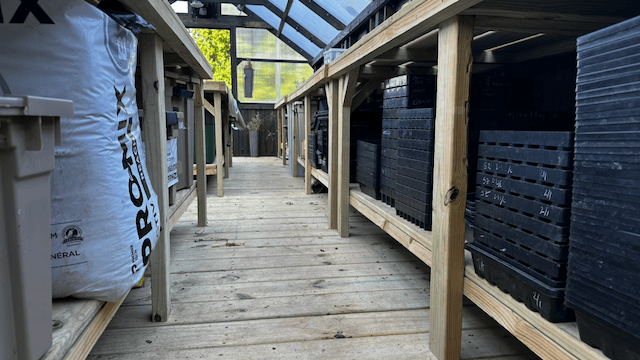
Soil and growing trays organized in the greenhouse
I aspire to be an organized person.
My wife, Linda, is one of the best people I know at putting things in their proper place. I cannot imagine what our house would look like without her influence. She also preserves our relationship by not constantly reminding me to follow her example.
One of the ways this plays out is with my folded laundry. Linda will patiently place it in a corner of the closet and leave the final step to me. Sometimes that pile sits there for an hour. During a particularly busy week, it may remain there for several days.
She does not nag me about it. The neatly folded pile simply waits, offering a quiet reminder that the work is not quite finished.
A Gift for My Future Self
Linda’s example has made me want to become better at putting things in their place, both at home and on the farm. I am learning that organization is not only about making a space look better. It is about making tomorrow’s work easier than today’s.
Every time I prepare a garden bed, coil a hose neatly, clean a seed tray, or return a tool to its proper place, I am leaving a small gift for my future self. The action may only take a minute or two, but it removes a decision, a distraction, or a delay from the next day’s work.
Those small choices rarely feel important in the moment. Over the course of a growing season, however, they add up to less friction and more peace. I am not distracted by disorder, and I spend less time searching for the things I need.
The work can simply begin.
A Place for Everything
The farm has a simple collection of tools that I use constantly, including harvesting knives, pruners, baskets, seed trays, and irrigation supplies. When each item is returned to the same place, I spend almost no time looking for what I need.
When tools are scattered, even a small job can begin with a frustrating search. The delay may only be five minutes, but it interrupts my concentration and creates unnecessary friction before the real work has even started.
Organizations experience this same kind of friction when people cannot find the latest document, do not know who owns a decision, or must search through several systems for the information they need. The time spent searching may appear insignificant when viewed one incident at a time. Across an entire team, however, those moments become hours of lost energy.
Good systems make the right next step easier to see.
Small Maintenance Prevents Big Interruptions
My irrigation system saves me hours of labor every week, but it only works because I periodically check the emitters, tighten fittings, clean filters, and replace parts that are beginning to wear out.
None of those tasks feels especially productive. I do not finish the day with a basket of vegetables or a newly planted bed. But that maintenance keeps a small problem from becoming a major interruption during the hottest part of the season.
The same is true with the systems we depend on in our organizations. Processes, technology, documentation, and working relationships all require attention. When we wait until something breaks, the repair is usually more disruptive and more expensive.
A small investment made early often protects a much larger investment later.
Productivity Is Often Preparation
We sometimes think productivity is about moving faster, fitting more into the day, or pushing harder. Increasingly, I believe productivity is about reducing the friction surrounding the work.
It is preparing the bed before planting day. It is returning the pruners before they are needed again. It is cleaning and putting seedling trays to their appropriate stack.
In an organization, it may mean documenting a decision so the team does not have to debate it again. It may mean creating a clear template so no one has to start from a blank page. It may mean organizing information so the next person can move forward without asking where everything is located.
Great productivity is often the result of making the next decision easier.
One Small Improvement
This week, look for one small improvement that will make tomorrow’s work easier than today’s. Put something back where it belongs. Finish the final step of a task. Document a decision. Automate one repeatable step in a process.
It may not feel significant in the moment. Those quiet investments, repeated consistently, are often what create steady progress over time.
And now, I probably need to go put away that pile of laundry.
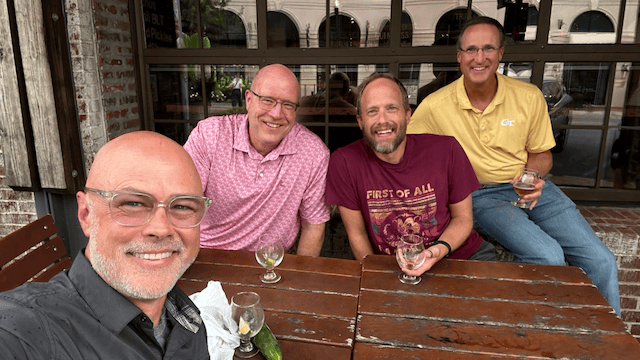
Was so fun to see previous employee Pete Skelly (and glad to share some of my harvest with him last night)
There are seasons on the farm when the work seems harder to do. Lately, I have had days when I do not feel as though I am keeping up with everything that needs to be done. There is always another bed to weed, another irrigation issue to fix, another crop to tend, and another task that quietly waits for attention.
On those days, I sometimes wonder whether all the work is worth it.
Then Monday evening comes.
My Iron Mountain Organics customers arrive to pick up vegetables, and I get a chance to hear what they enjoyed from the previous week. Someone tells me how they cooked the peppers. Someone asks what is coming next. Those conversations are often brief, but they have a way of putting wind back in my sails.
The same thing happens when I bring vegetables to my coworking community. A few cucumbers, tomatoes, peppers, or herbs can create a conversation that would not have happened otherwise. The vegetables may be the reason we stop and talk, but the real value is having a meaningful connection.
Recently, I also had the chance to catch up with a former ThreeWill employee, Peter Skelly (aka Pete). It reminded me that the work we do creates relationships that can continue long after a project ends or someone moves into a different season of life. I love seeing what my previous employees are up to and enjoy being a part of their journey.
The Quiet Work
Most of the work that produces a healthy harvest is not very visible. Customers see the basket of vegetables, but they do not see the irrigation repairs, the planning, the planting, the weeding, the failed experiments, or the mornings when the work begins before anyone else is awake.
Business is not much different.
At ThreeWill, much of my work can feel routine. It includes email follow-ups, meeting reschedules, travel coordination, proposal conversations, and the steady effort required to keep opportunities moving forward. None of those activities feel like the big moment. Most of them happen quietly and without much recognition.
But they create the conditions for the moments that matter.
A thoughtful follow-up can lead to a meaningful conversation. A rescheduled meeting can eventually become the right meeting at the right time. A trip that requires hours of coordination can lead to an hour with a client where trust grows and a real need becomes clear.
The visible moment is often made possible by a long stretch of invisible work.
Finding the Right Match
What gives me energy at ThreeWill is not simply winning more work. It is finding the right match between what an organization needs and what our team is uniquely equipped to provide.
When we discover that match, the daily grind begins to make sense. The follow-ups, meetings, travel, and coordination become part of helping someone solve a meaningful problem. We get to use our skills to make their work easier, more productive, and more effective.
That is the business version of a healthy harvest.
The same is true on the farm. The work becomes more meaningful when I see the vegetables feeding people, bringing them together, or giving someone a small moment of joy. Community helps connect the labor to its purpose.
Community Renews the Work
I am learning that community does more than encourage us. It reminds us why the quiet work matters.
We all have responsibilities that can feel repetitive, unnoticed, or disconnected from the result we hope to achieve. We may not always see how today’s follow-up, repair, preparation, or small act of service will contribute to something larger.
Community gives us a glimpse of the larger picture.
It may come through a customer conversation on a Monday evening, a vegetable shared with a coworker, a conversation with someone from an earlier chapter, or a client who realizes that our team can genuinely help. Those moments do not remove the work, but they renew our willingness to continue it.
Sometimes we do not need less work.
Sometimes we need to be reminded who the work is for.
Quarterly Business Planning with the ThreeWill Team at The Farm
The Rhythm of Refocusing
This past week, I had the ThreeWill team together at Iron Mountain Organics for our quarterly pulse (part of the EOS Worldwide operating system). Seeing the team gathered at the farm created an interesting connection between two important parts of my life. It also reminded me just how valuable a quarterly pulse can be for a business.
At ThreeWill, we use EOS to create a regular rhythm of planning and accountability. Our quarterly pulses give us an opportunity to step away from the daily demands of client work and look at the business as a whole. We revisit our goals for the year, evaluate our progress, identify what has changed, and decide where we need to focus next.
That rhythm has become critical to keeping the business healthy and moving in the right direction. It does not guarantee that everything will go according to plan, but it helps us recognize when we are drifting and gives us a chance to make adjustments before too much time has passed.
When the Farm Learns From the Business
Most of the time, I write about lessons the farm has taught me that I can apply to leadership and business. This week, I found myself flipping the script.
The middle of summer can be an especially challenging time to think about planning. The days are hot, the weeds continue to grow, irrigation needs attention, and the crops already in the ground create an endless list of immediate tasks (like trellising tomatoes and cucumbers in my lower and lean system under the tunnel). It is easy to spend all my time reacting to what needs to be done today.
But fall is coming.
If I want a harvest in the fall, many of those seeds need to be planted now. I cannot wait for cooler weather to begin preparing for the next season. By then, I will have missed the window.
The farm needs its own version of a quarterly pulse. I need to step back from the daily work, look at the entire operation, and ask some of the same questions we ask at ThreeWill. What is working? What is not working? What have I learned from this season? What needs my attention now?
Planning Without Overplanning
The challenge for any business is finding a planning rhythm that does not feel like overplanning but still happens frequently enough to provide a needed boost.
Plan too often, and people can feel like they are constantly revisiting decisions rather than making progress. Plan too infrequently, and an organization may spend months investing energy in goals or activities that no longer deserve the same level of attention, or you may let the sand that fills the day guide the day rather than compelling rocks that will move the needle toward your annual goals.
A healthy planning rhythm creates enough time for meaningful work while also providing regular opportunities to learn and adjust. For ThreeWill, the quarterly pulse gives us that balance. We have time to pursue our priorities, see the results, and then come back together to realign around our goals for the year.
The farm needs that same discipline because farming, like consulting, requires constant adaptation. Weather patterns change. Crops perform differently than expected. Pests arrive. Equipment fails. The time and energy available rarely match what was imagined at the beginning of the season.
Planning is not about creating a rigid path that ignores changing conditions. It is about regularly lifting our heads, noticing what has changed, and deciding what the current season requires from us.
There is something fitting about planning quarterly. It seems to take a cue from nature, where conditions, priorities, and possibilities shift every three months.
Planting What Comes Next
There is something encouraging about realizing that a reset does not require solving every problem at once. Sometimes the most valuable result of a planning meeting is simply identifying what needs to be planted next.
On the farm, that might mean starting trays of fall seedlings, preparing beds, adjusting irrigation, or deciding which crops deserve another attempt. At ThreeWill, it might mean sharpening a service offering, having a strategic client conversation, improving a process, or committing to a company priority that will move us closer to our annual goals.
Those actions may feel small when they begin, but the future harvest depends on them.
The heat of summer may not feel like the beginning of a new season, but in many ways it is. What gets planted now will determine what is available in the fall.
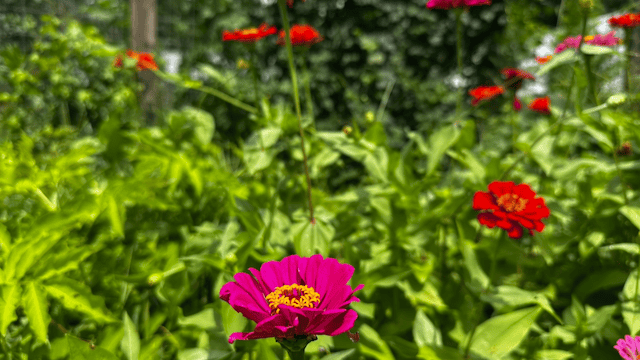
Self sown zinnias with hops in the background (the dark green at the top of the photo)
I returned to the farm this week after being away for more than a week. One of the first things I did was walk the property to see how everything had held up while I was gone. It did not take long to find a few problems. There were several stressed areas where my automated irrigation system was clearly not working as planned. Plants that I had intentionally planted, carefully laid out, and expected my irrigation system to support were showing the signs of a short stretch of hot, dry weather.
Then I walked past another part of the farm that caught my attention for a very different reason.
This particular area is not one I have carefully planted or irrigated. Flowers have self-sown there over the years, dropping their own seeds and returning the following season. There are also hops growing in the area that I thought I had pulled up. Apparently, I did not get all the roots, which anyone who has tried to remove hops will probably understand.
What struck me was how vigorous everything looked.
We had just been through a short drought, yet these flowers were not showing the same signs of stress I was seeing in other parts of the farm. I had not started the plants in the greenhouse. I had not carefully selected the planting date. I had not transplanted them into the field or run irrigation to them. Nature had created the seed, allowed it to fall, and somehow that seed found a fertile place to rest. Then, when the timing was right, it germinated and began to grow.
Nature decided when it was ready.
I started thinking about how different that was from much of what I do as a farmer. I decide when to start a seed. I control the temperature in the greenhouse. I decide when to transplant it. I determine where it will grow, how much water it will receive, and sometimes even how much sunlight reaches it. There is nothing inherently wrong with any of that. Farming requires planning, structure, and intervention.
But there is also something to be learned from the plants that found their own way.
I have heard regenerative farmers talk about becoming a co-conspirator with nature. I love that idea. Instead of constantly trying to overpower nature, the goal is to understand what nature is already trying to do and find ways to work alongside it. Sometimes my job is not to force a plant to grow. My job is to create the conditions where it has the opportunity to flourish.
I think the same can be true with people.
Over the years, I have watched people flourish when they find work that connects with something that comes naturally to them. They are curious about it. They pursue it without being asked. They read about it, experiment with it, and find themselves thinking about it when no one has assigned them a task. There is an energy that comes from acting on your own free will and pursuing something you genuinely care about.
You can almost see the difference.
Of course, building a healthy and productive team is not as simple as telling everyone to go do whatever they want. A farm still needs structure. Plants need pruning. Fields need weeding. Sometimes water needs to be provided, and sometimes a plant needs support to keep it from falling over. There are times when intervention is absolutely necessary.
Organizations are no different.
We need clear goals, accountability, processes, and expectations. We need to prune activities that are no longer productive and weed out distractions that compete for our time and energy. We need to invest in people and occasionally provide additional support when someone is going through a difficult season.
But none of those things can overcome bad soil.
The culture of an organization is its soil. It is the environment where people are being asked to put down roots and grow. When the soil is healthy, people have a much better opportunity to gravitate toward their strengths, explore their interests, and contribute in ways that may not have been perfectly planned by a leader or written into a job description.
That does not mean leadership disappears. In fact, I think it makes leadership even more important. The role simply begins to look a little different. Instead of trying to control every aspect of growth, we spend more time creating fertile ground, paying attention to what is naturally emerging, and deciding where a little support might help something flourish.
Maybe the best leaders are co-conspirators too.
Walking through that little patch of self-sown flowers reminded me that I do not always have to be the one with the plan. Sometimes there is wisdom in paying attention to what is already growing, asking why it is thriving, and finding ways to support it.
There will always be watering, pruning, and weeding to do.
As my very large garden / mini-farm has matured over the past several years, I’ve found myself paying more attention to the herbs.
That wasn’t always the case. When I first began gardening, I was focused almost entirely on the vegetables that would produce the biggest harvest. Tomatoes, peppers, cucumbers, beans, and lettuce received most of my attention because they were what I imagined filling the harvest baskets each week. Herbs were simply tucked into the corners of the garden, almost as an afterthought.
Somewhere along the way, that changed.
This year I’ve continued expanding my herb garden with chives, rosemary, thyme, lemon balm, mint, and oregano, while also planting annual favorites like parsley, cilantro, and basil. They’re some of the easiest plants to overlook until it’s time to cook. Then you realize that a handful of basil can transform fresh tomatoes, rosemary can elevate roasted potatoes, and fresh thyme can completely change the character of a meal. Herbs may never be the centerpiece of dinner, but they often become the ingredient that people remember.
I’ve also come to appreciate that herbs do much more than season our food.
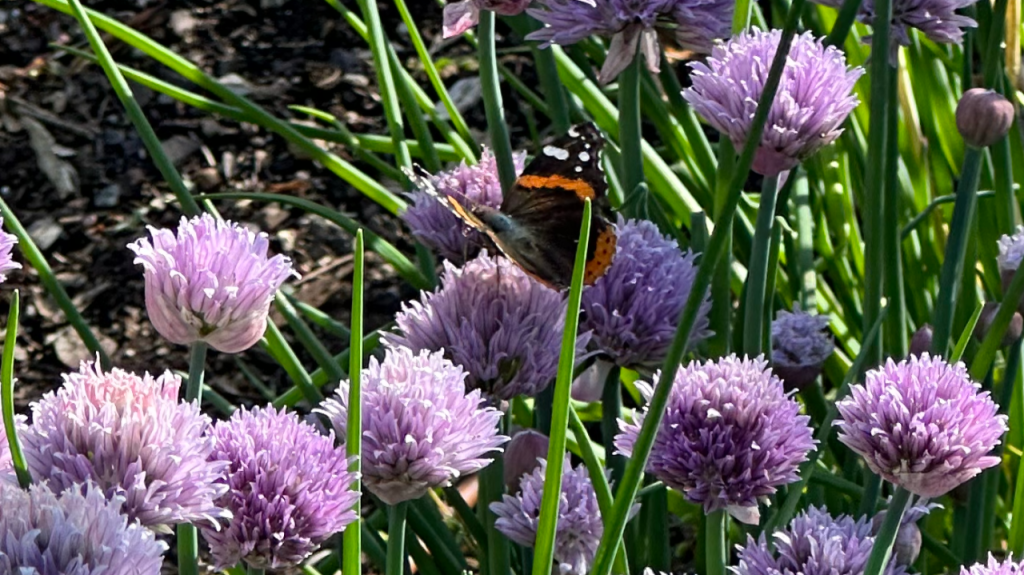
Many of them faithfully return year after year. Chives and rosemary reward us with beautiful blooms that attract bees and other pollinators long before I ever think about harvesting them. Those same flowers often find their way into a small vase on our dinner table, bringing a little of the garden indoors. The herbs quietly serve multiple purposes without asking for much attention in return.
Standing in the garden one morning, it struck me that organizations have herbs too.
Every business naturally focuses on its main crop. We should. Revenue, serving customers well, delivering projects, and building great solutions are why we exist. Those things deserve our best effort because they sustain the organization.
But over the years I’ve become convinced that healthy organizations aren’t built only by the work they produce. They’re also shaped by the small, intentional practices that bring out the best in the people doing the work.
At ThreeWill, one of those practices comes from EOS. Every leadership meeting begins with each person sharing a Personal Best and a Business Best from the previous week. It takes only a few minutes, but those few minutes have become one of my favorite parts of the meeting. Instead of immediately diving into numbers and issues, we learn what’s happening in each other’s lives.
One week we’re celebrating a child’s soccer tournament. The next week someone is excited about progress in their garden (ok that is me 😉). Another person talks about a motorcycle trip, learning a new guitar song, or enjoying time with family. None of those conversations solve a customer problem or close a sale, yet they do something equally important. They remind us that we are working alongside whole people with interests, passions, and lives beyond the office.
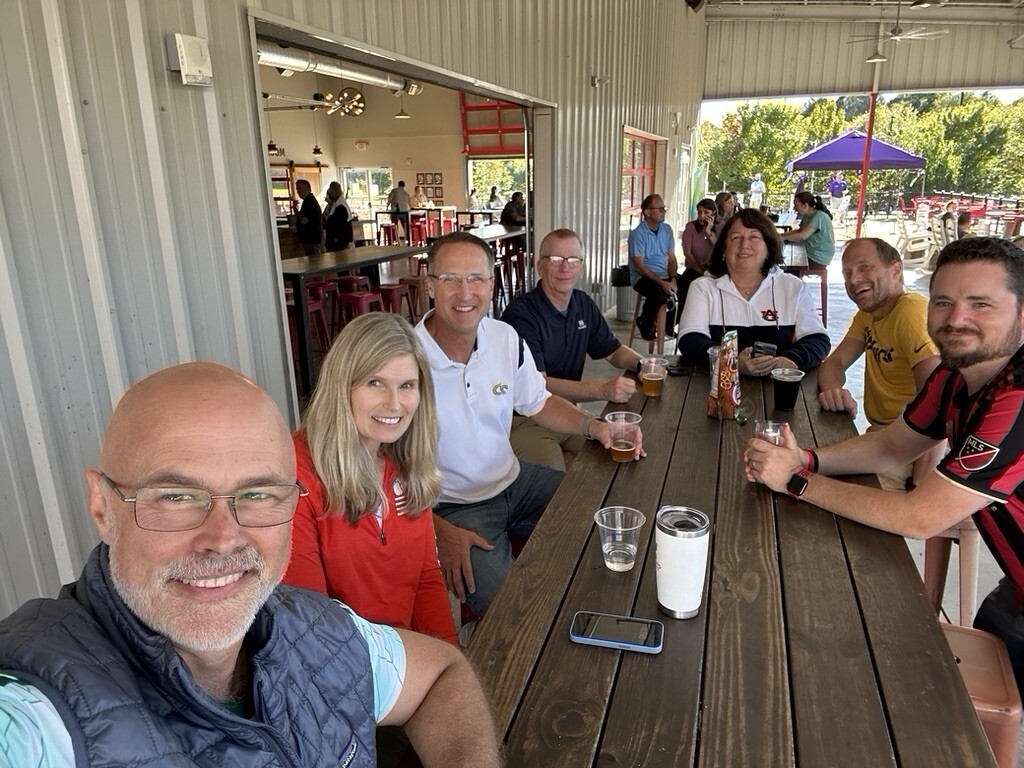
Hanging out at Reformation Brewery after an EOS Quarterly All Day
The same is true of our Pint Nights and other team gatherings. They may seem unrelated to the business on the surface, but they create relationships that make the business stronger. Trust grows more naturally. Collaboration becomes easier. Difficult conversations are handled with a little more grace because people know one another beyond their job titles.
I’ve realized those moments are the herbs of our organization.
They aren’t the main crop, and no one would point to them as the primary reason for our success. Yet they add something that spreadsheets and project plans never can. They create flavor. They create beauty. They attract people into the culture we’re trying to build, much like flowering herbs attract pollinators into the garden.
The older I get, the more I appreciate that the healthiest gardens are filled with plants that serve different purposes. Some provide the harvest. Others improve the soil. Others attract beneficial insects. Herbs seem to do a little bit of everything, quietly making the entire garden better.
Perhaps leadership works the same way.
It’s easy to focus all of our energy on growing the main crop because that’s what everyone measures. But if we intentionally cultivate the relationships, traditions, and conversations that help people feel known, appreciated, and connected, we often discover that everything else grows a little better too.
On the left side – NOT GRAFTED tomato and on the right side – GRAFTED tomato
This season has been a significant one for experimentation, and I have a tomato story to share. I know not everyone likes tomatoes (my wife included), but it frames a lesson I learned in the field.
So, a little backstory…
For several years, I’ve battled what I believe is early blight in my tomatoes. Every season seemed to follow a similar pattern. The plants would start out beautifully, but eventually disease would begin working its way through the leaves and production would decline long before I hoped.
Each year seemed to get a little worse.
This year, I decided to try two new things: growing tomatoes under the new high tunnel, which you’ve seen in earlier posts, and tomato plant grafting (this link will give you an 11-second visual. Of course, it’s paired with a Green Day song).
I grafted my apple trees years ago, but never considered grafting tomatoes until this season. By grafting my favorite tomato varieties, like Sun Golds, onto vigorous, disease-resistant rootstock, I hoped to give the plants a stronger foundation. I wasn’t sure how much difference it would make, but it seemed promising enough to try.
At the same time, I invested in infrastructure to improve how I grow tomatoes. We put a greenhouse in the middle of the farm and added a high tunnel. One of my biggest assumptions was that protecting the plants from rain would dramatically reduce disease. Wet leaves and rain splashing soil onto lower foliage are often contributors to fungal diseases, so I expected growing under cover would be the biggest breakthrough.
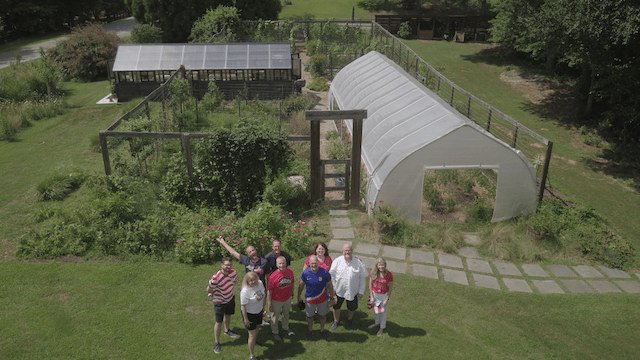
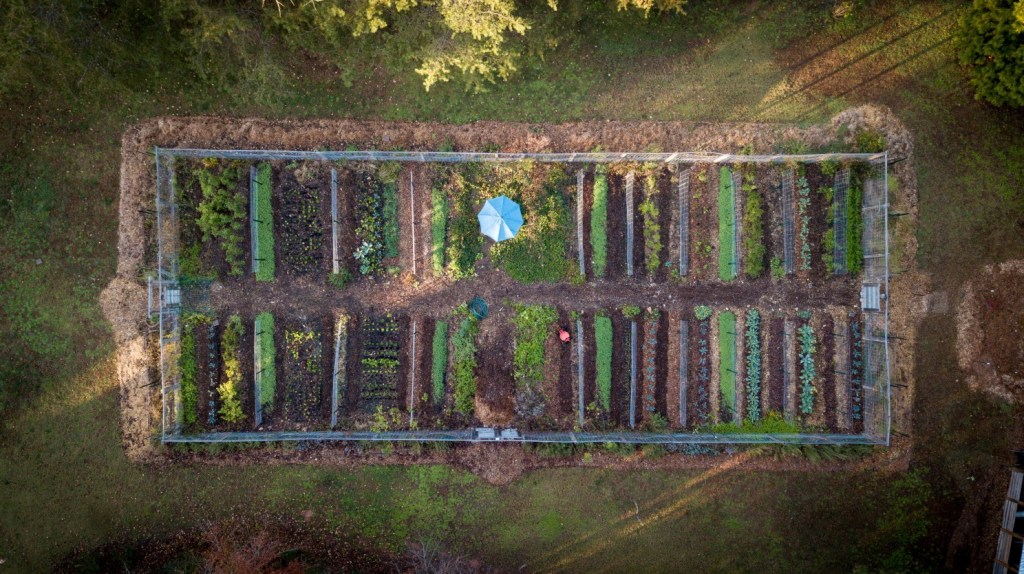
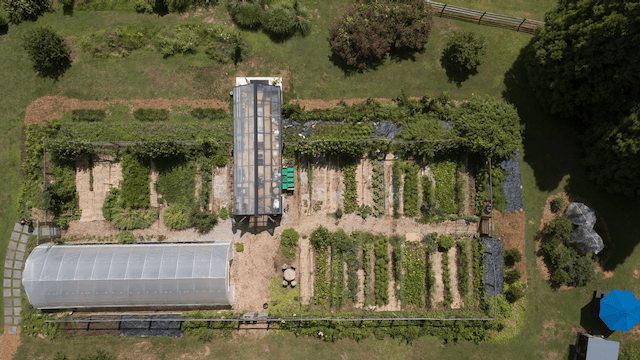
My experiments on the farm have also changed the farm itself. Looking back at a drone photo from 2021 compared to today reminds me that meaningful improvements rarely happen because of one big decision. They happen because of years of trying new ideas, keeping the ones that work, and building on them season after season.
Drone shot from 2021Drone shot from 2026
The interesting part is that both experiments have been valuable.
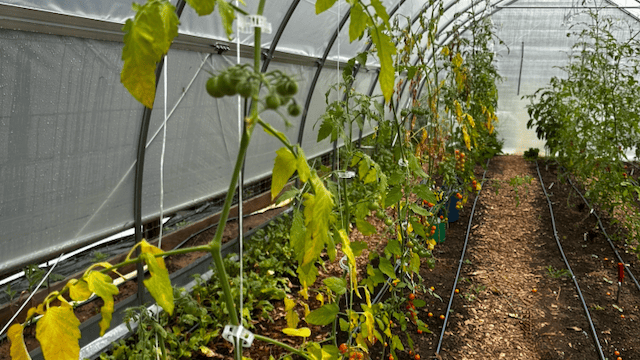
The high tunnel has opened up entirely new growing possibilities. I’m using the lower and lean method for the first time (if you’re curious, this silly guy on TikTok explains it well in a minute), allowing a single tomato vine to continue growing throughout the season. Instead of topping the plant, I lower it and lean it along the row, creating one incredibly long vine that just keeps producing.
But when it comes to disease resistance, the biggest surprise has been the grafting.
The tomatoes growing on grafted rootstock are outperforming my expectations. They have remained healthier despite being exposed to many of the same environmental conditions. While the high tunnel certainly provides benefits, it hasn’t been the primary reason the plants are thriving.
That wasn’t what I expected.
A real-life experiment in the field corrected my assumptions.
One of the things I love most about farming is that nature doesn’t care about my theories. Plants simply respond to reality. The only way to truly know what works is to try something different and observe the results.
As you know, I like to inform my life in my consulting business from what I learn on the farm. This lesson of experimentation definitely has its place building a consulting business and keeping that business relevant.
At ThreeWill, we constantly experiment with new services, new workshop formats, new messaging, and new ways of helping organizations improve how they work. We can study the market, interview customers, and build business cases, but until something is tested in the real world, it’s still just a hypothesis.
Sometimes the thing we’re convinced will make the biggest difference barely moves the needle.
Other times, a smaller experiment quietly becomes the breakthrough we weren’t expecting.
Progress comes from creating opportunities to learn.
That means being curious enough to try something new, humble enough to admit when our assumptions are wrong, and disciplined enough to measure the results instead of defending our original ideas.
The farm reminded me this week that experiments are not about proving ourselves right. They’re about discovering what’s actually true. And once the field teaches us something new, we can build the future on something much stronger than assumptions. We can build it on experience.
Are you experimenting enough in your business?
Do you have a persistent problem you’ve wanted to solve for years, but find yourself trying the same solutions over and over? Maybe it’s time to be brave enough to run a new experiment. You never know which one will change everything.
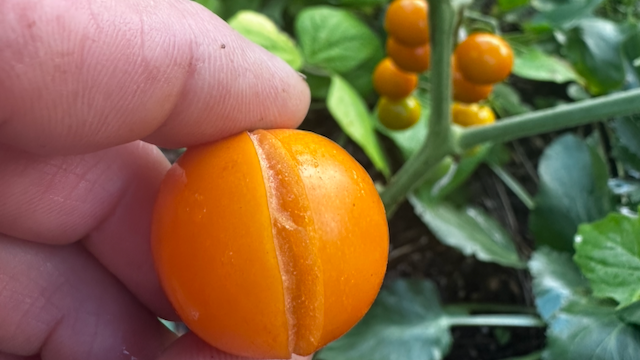
Sun Gold cherry tomatoes splitting due to heavy rain
The Lesson of Too Much Rain
This growing season has reminded me that balance in nature is often more important than abundance.
Our weather patterns this year have been extreme. We seem to get several days of heavy rain followed by stretches of little or no rain at all. While plants certainly need water, these dramatic swings create challenges that many people don’t see. One of the biggest is fruit splitting.
My Sun Gold tomatoes are notorious for this. After dry conditions, a sudden soaking rain causes the plants to rapidly absorb water, and the fruits swell faster than their skins can keep up. This season, I’m seeing nearly half of my ripe Sun Golds splitting on the vine. Even my blueberries are splitting this year, something I’ve never experienced before.
I have to admit, though, every problem presents an opportunity.
As I harvest, I snack on the split tomatoes that can’t make it into the store, and the extras have become a wonderfully simple marinara sauce that pairs perfectly with my breakfast eggs. Some of my favorite meals this season have come from fruit that otherwise would have been considered a loss.
When people hear about all the rain we’ve had, they often say, “Your farm must be loving this weather.” And to a point, they’re right. Gardens and farms need rain. But too much of a good thing eventually becomes a problem. Excessive moisture increases disease pressure, encourages fungal issues, and damages fruit quality.
Moderation matters.
The lesson extends far beyond the garden.
In business and in our personal lives, we often assume that more of something good must automatically be better. More work. More growth. More opportunities. More activity. Or on the other end of the spectrum, more rest, more downtime, and fewer responsibilities.
The reality is that healthy systems usually thrive within a range of balance. It is normal and even beneficial to experience cycles of busyness and slower seasons. But when the swings become too extreme, stress begins to surface, cracks appear, and problems emerge that were previously hidden.
Too much work can lead to exhaustion, poor decisions, and strained relationships.
Too much inactivity can create complacency, loss of momentum, and uncertainty.
The extremes themselves become the challenge.
One of the blessings on the farm this year has been my high tunnel. The tomatoes growing underneath it have been protected from much of the sudden rainfall. The high tunnel doesn’t eliminate every problem, but it dampens the extremes. It creates a more stable environment where the plants can thrive despite the unpredictability outside.
That has made me appreciate something I have also learned in business.
Good systems act like high tunnels.
At ThreeWill, our EOS implementation has given us structures that help reduce the impact of our own organizational weather. Our operational scorecard provides early visibility into what is happening in the business. Our meeting rhythms create consistency. Our accountability systems help us respond to challenges before they become crises.
We cannot control every market condition, every customer decision, or every unexpected event.
But we can build systems that help us absorb the shocks and create greater predictability.
Nature continues to remind me that life isn’t about eliminating change. It’s about creating resilience.
Whether it’s a high tunnel protecting tomatoes from too much rain or an operational scorecard helping a company navigate uncertainty, intentional systems help us avoid being tossed around by every extreme.
Because sometimes, even good things need boundaries.
And sometimes the secret to thriving is not getting more rain.
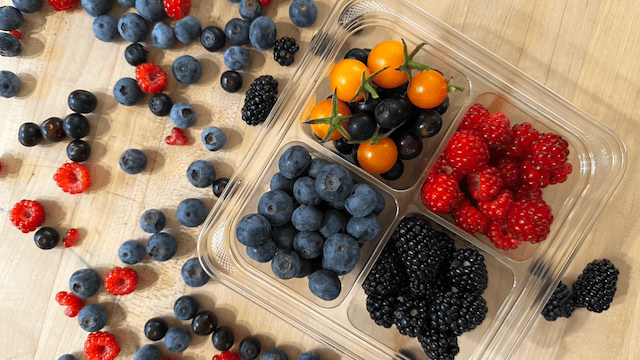
A typical sampler of berries I bring with me when visiting people
The Sweetness of Abundance
One of my favorite times on the farm is when the summer fruits begin arriving in abundance. There is something special about walking through the garden and seeing bright reds, deep blues, and vibrant oranges beginning to appear among the green foliage. The colors catch your eye immediately, and the sweetness invites you to reach for one more handful. Summer fruits (and yes, a sun gold tomato is a fruit) seem to signal that the season has truly arrived.
While I grow plenty of vegetables throughout the year, berries create a different reaction altogether. Hand someone a zucchini and they may politely thank you. Bring a basket of fresh berries to a friend, neighbor, or client, and their face almost always lights up. There is something universally appealing about berries. They are beautiful, easy to enjoy, and somehow feel like a special treat regardless of your age.
We do not grow large quantities of berries on the farm. Most years, our goal is simply to harvest enough to freeze so that Linda and I can enjoy them throughout the year. Even so, I often find myself setting aside a small sampling to share with others because I enjoy giving them away almost as much as I enjoy eating them.
Gifts That Create Delight
One of my favorite things is showing up to meet a client or spend time with a friend, carrying a small container of freshly picked berries. The response is almost always positive. People lean in to see what is inside. They smile. They ask questions. Sometimes they start eating them immediately. It is a simple gift, but it creates an immediate connection.
Now, every once in a while, you find a true foodie who gets just as excited about a beautiful harvest of Bright Lights Swiss chard as they do a basket of berries. I appreciate those people because they understand the beauty hidden in vegetables that most people overlook. Still, if my goal is to bring a little joy into someone’s day, berries tend to be the safer choice.
What I have realized over time is that the joy does not come from the berries themselves. The joy comes from seeing someone else enjoy something that was grown with care. There is a satisfaction in sharing a small piece of abundance that cannot be measured in dollars or transactions. It is simply the pleasure of watching another person experience something good.
Nature Gives Forward
As I reflected on this, I realized that one of the things I love most about farming is the opportunity to give without expecting anything in return. Well, perhaps I expect one thing. I hope to see a smile, a moment of delight, or a brief pause where someone appreciates what they have been given. Beyond that, there is no expectation attached to the gift.
That thought brought me back to a recent conversation with Randall Cagle. During our discussion, he made an observation that has stayed with me ever since. He said that nature does not give back. Nature gives forward.
The more I thought about that statement, the more I appreciated its wisdom. Plants produce fruit without expecting repayment. Flowers provide nectar without requiring compensation from the pollinators that visit them. Trees offer shade to anyone willing to sit beneath them. Creation continually provides gifts that sustain life and create abundance without demanding something in return.
Of course, there are ways we can steward and care for the systems that provide these gifts. Composting comes to mind immediately, but that is probably a topic for another newsletter. The point is that nature’s posture is one of generosity. It continually produces and shares abundance far beyond itself.
The Fruits of Our Labor
The lesson extends far beyond the farm.
In our careers, our businesses, and our relationships, we are all producing fruits from our labor. Sometimes those fruits take the form of products, services, and solutions. Other times they are knowledge, encouragement, opportunities, wisdom, or relationships that help others succeed. Every one of us has something we are cultivating through our efforts each day.
The question is not whether we are producing fruit. The question is what we do with it once it is produced.
Some people hold tightly to everything they create. Others look for opportunities to share what they have learned, invest in the success of others, and help people around them grow. When I look back on my own life, the people who have had the greatest impact on me were rarely the ones who accumulated the most. They were the ones who gave the most. They shared their time, their knowledge, their encouragement, and their opportunities without expecting immediate returns.
Their influence continues today because what they gave forward created value long after the original gift was given.
Sowing Success
As I fill containers with berries this season, I am reminded that some of the sweetest rewards are not found in what we keep but in what we share. The farm continues to teach me that abundance has a way of multiplying when it is given away, and that generosity often creates a harvest far larger than we originally imagined.
So this week, I leave you with a question.
What are the fruits of your labor that enrich the lives of others, and how might you give some of those fruits forward?
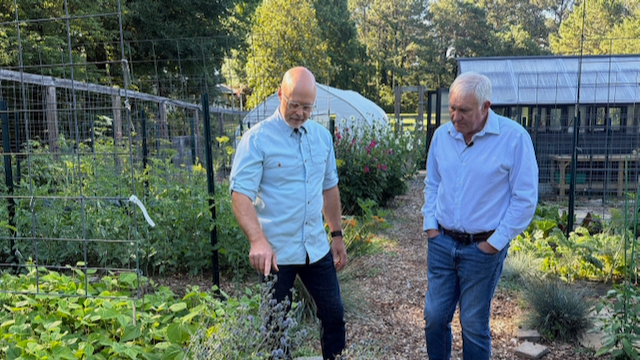
With Tim Knight on the farm, I pointed out how different flower sizes attract different pollinators, from tiny beneficial wasps to large bumblebees.
This week, I had the opportunity to give Tim Knight of Isakson Living a tour of the farm. As we walked through the growing areas, I found myself explaining something that has become increasingly important to me as both a farmer and a business leader: diversity is not just something nice to have. It is essential to creating healthy systems.
One of the things we discussed was the variety of flowers planted throughout the farm. At first glance, they simply add beauty and color to the landscape. But their purpose runs much deeper than aesthetics. Different flowers attract different pollinators. Some flowers are designed for larger pollinators like bumblebees, while others attract smaller native bees, wasps, and beneficial insects. By intentionally planting a diversity of flower shapes, sizes, and bloom times, we create an environment that supports a much wider range of life.
The result is a healthier and more resilient ecosystem.
The same principle extends beyond pollinators. Around the farm, we maintain hedgerows that provide habitat for birds. Those birds help control insect populations naturally, reducing the need for intervention on my part. Of course, there is a tradeoff. I often joke that every farm pays a “blueberry tax” to the birds because they certainly enjoy helping themselves to some of the harvest.
Even so, the value they provide far outweighs the occasional missing berry.
This year, our hedges became home to nesting birds, and we even had the opportunity to watch a young bird making its first attempts to fly. It was a wonderful reminder that when you create the right environment, life shows up in ways you never planned or expected. Tim actually captured a picture of the young bird during his visit, which made the moment even more memorable.
Nature continually teaches the same lesson.
Diversity creates balance.
Diversity creates beauty.
Diversity creates interest.
Most importantly, diversity creates resilience.
A healthy ecosystem is not built around a single plant, insect, or animal. It is built around many contributors, each playing a unique role. The interactions between those contributors create stability that no single participant could achieve on its own. When one species has a difficult season, others help fill the gap. When conditions change, the system adapts because it was never dependent on only one source of strength.
I have noticed the same pattern in my personal life.
Recently, Linda and I enjoyed dinner with two other couples. As the evening unfolded, each person shared stories from their own experiences, careers, families, and journeys. What made the evening memorable was not how similar we were. It was the opposite. Each person brought a different perspective and a different set of experiences to the conversation.
The diversity of stories made the discussion richer.
We all left with a broader perspective because we were able to see life through someone else’s eyes. Different backgrounds created new insights. Different experiences sparked curiosity. Different perspectives helped us appreciate things we may have otherwise overlooked.
The same lesson applies to business.
One of the greatest strengths of any organization is the diversity of talents, personalities, experiences, and interests that people bring to the team. Some people are builders. Some are organizers. Some are visionaries who see possibilities before others do. Others excel at creating structure, maintaining quality, and ensuring that good ideas become successful outcomes.
When a team embraces those differences rather than trying to eliminate them, balance begins to emerge.
People challenge one another’s assumptions. They fill gaps that others cannot see. They bring strengths that complement one another rather than compete with one another. The result is often far better than what any individual could have accomplished alone.
I see this principle extend beyond our internal teams and into the clients we serve. Every client has unique goals, challenges, cultures, and perspectives. Working with organizations that are different from one another exposes us to new ideas and new ways of solving problems. Over time, those experiences make us stronger advisors because we gain wisdom from seeing a variety of situations rather than repeating the same experience over and over again.
The strongest systems are rarely built on uniformity.
Nature thrives because of diversity, not despite it. The healthiest ecosystems are made up of many different contributors working together in ways that create balance, resilience, and growth. Whether we are talking about a farm, a family, a team, or a business, the goal is not to make everything the same. The goal is to create an environment where different strengths can work together to produce something better than any one contributor could create alone.
That is a lesson worth carrying from the farm into every area of life.