Avoiding the Distraction Trap: Bringing Intentionality to the Garden (and Life)

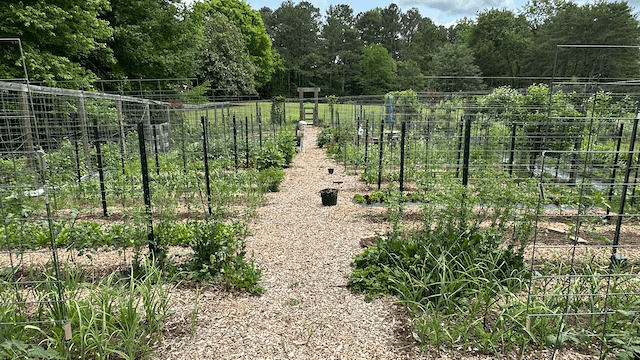
Looking down the center aisle of IMO

In my July 18th edition of this newsletter (Planning at the Right Level: What My Market Garden is Learning from Our Consulting Business), I planted a seed in my mind about being more intentional with Iron Mountain Organics.

Now that idea is starting to take root, I’ve noticed how easy it is for me to get distracted in the garden. I can walk down the center aisle and find a million and one things to do. Each of these little side projects brings me joy, but they can also pull me away from what matters most.

If I’m not careful, I can spend a whole morning on tasks that are interesting but don’t move me closer to my bigger purpose: serving my community with healthy food. That’s why I’ve been thinking more about being a better steward of my time in the garden.

From an EOS perspective, that means setting “90-day rocks” and weekly commitments that help me make meaningful progress. I might not start running full-blown Level 10 meetings with Linda, but I am considering setting aside one day a week to pause, reflect, and choose the 1–3 “must-do” priorities that can’t be lost to distraction.

There’s less pressure to bring this discipline into the farm compared to my consulting business, but if I did, I believe I could get further with my mission. More vegetables to sell and share. More lessons learned through journaling. More intentional partnership with nature.

So let me ask you: What passions in your life (outside your primary work) could benefit from more intentional quarterly and weekly planning? Could that kind of focus make them more fulfilling for you? Please share in the comments.


This post first appeared on August 15, 2025 in Sowing Success, my weekly LinkedIn newsletter on leadership and organic farming. Read the original on LinkedIn.
The Power of Community and the Abundance Mindset

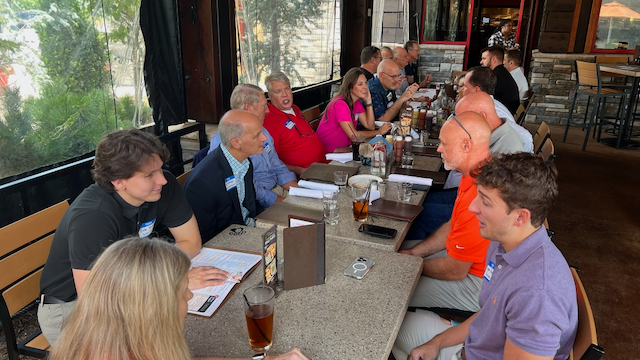
Taking Time to Pour into Others at the ThreeWill Alliance Luncheon

There is incredible power in taking time to learn from others.

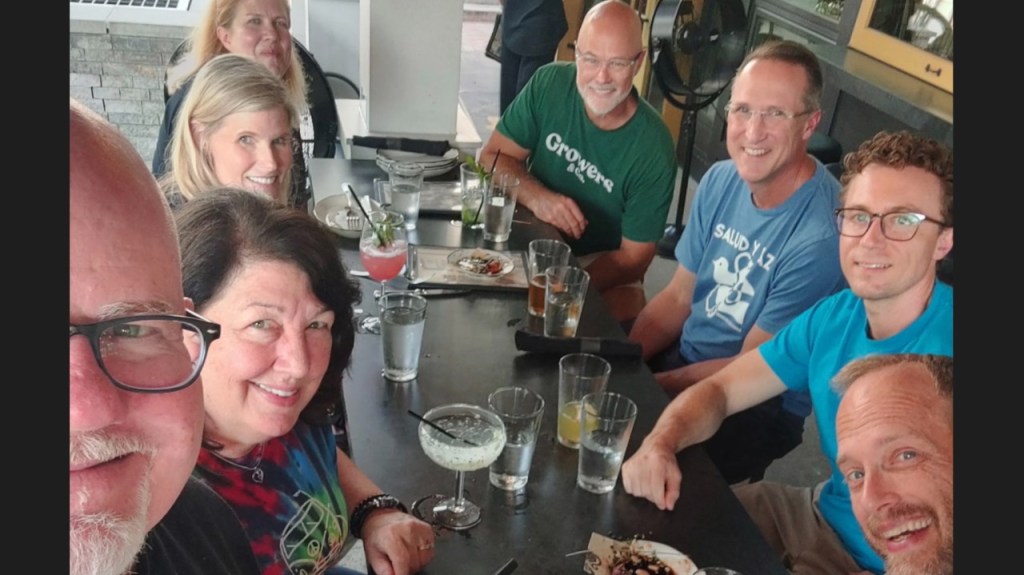
As you can see in the photo, people are leaning into conversations. If this photo had sound, you’d hear a vibrant buzz with sharing ideas, energy flowing, and relationships deepening. Looking back on this week’s ThreeWill Alliance Luncheon, I was reminded just how much I appreciate the magic of community and how an abundance mentality fuels both farming and business.

This event was a moment of clarity: this is what I love about the small-scale farming world, too.

There are many reasons I started Iron Mountain Organics (IMO). But one of the most important is community. When you step into the small-scale farming world, you’ll quickly discover something remarkable: a spirit of generosity. Growers openly share what’s working and what’s not. They’re quick to support one another. It’s a community that values contribution over competition. And it’s one of the best examples I’ve found of what an abundance mentality looks like in action.

Here are a few voices that have shaped my farming philosophy and filled my cup over the years:

  • Farmer Jesse (No-Till Growers Podcast) – A champion of regenerative practices and community building. His podcast is a masterclass in humble expertise.
  • Joe Lamp’l (Joe Gardener) – My first garden podcast back in 2017, when the seeds of IMO were just starting to sprout. He lives just 10 minutes from me, and I still remember being nervous meeting this gardening legend for the first time.
  • Connor Crickmore (Neversink Farm) – A former software consultant like me, now a systems-driven farmer with a unique, compelling voice. His focus on operational excellence really resonates.
  • Eliot Coleman – Often called the godfather of organic farming. His decades of work planted some of the earliest seeds for me on what’s possible with healthy soil.
  • Charles Dowding – The voice of “No Dig” in the UK. I’ve spent countless hours watching his videos. His calm, methodical approach has deeply shaped how I grow today.
  • Jean-Martin (JM) Fortier – A Canadian market gardener whose book The Market Gardener is a must-read. He deeply understands the soul of local food and community impact.

This might be more than you wanted to know about small-scale farming, but I often get asked where my inspiration comes from. So I thought I’d pull back the curtain.

Whether it’s a farming collective, a business luncheon, or a local network of professionals… surrounding yourself with a community that believes in lifting others up changes everything.

Are you part of a community with an abundance mindset? If not, I encourage you to find one, OR BETTER YET, be the person who creates it. Life is too short not to be part of a healthy, thriving community.


This post first appeared on August 8, 2025 in Sowing Success, my weekly LinkedIn newsletter on leadership and organic farming. Read the original on LinkedIn.
Scaling Starts Small: Finding the Right Size to Thrive

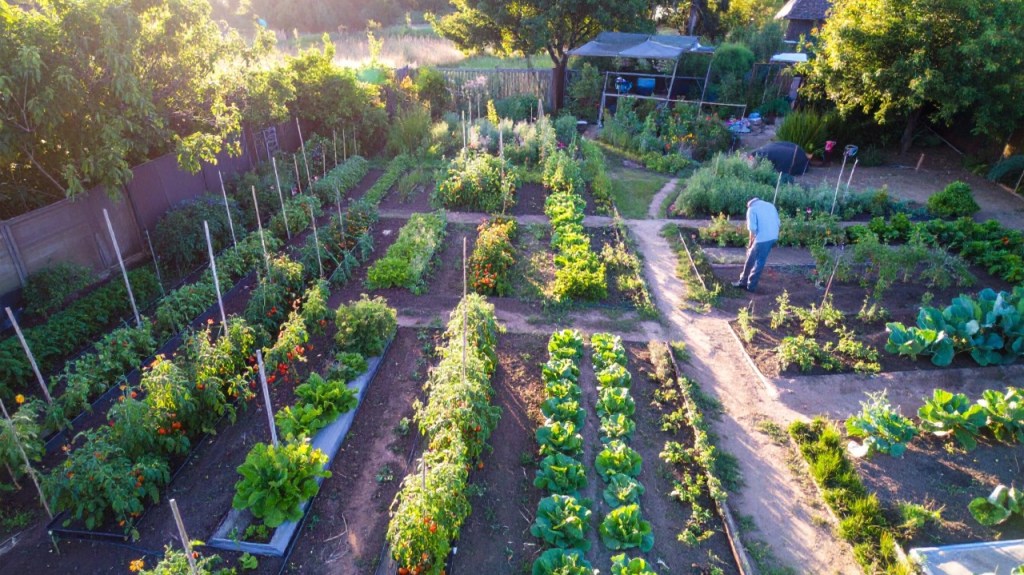
The Vision of My Market Garden with just Cherry Tomatoes and Lettuce

I listen to Farmer Jesse a few times a week to feed my farming soul. His quirky style, paired with humble confidence, makes each episode both educational and refreshing. A recent podcast titled “How Big for a One Person Market Garden + High Tunnels as Ecological Traps” watch it here, really stuck with me and inspired this week’s Sowing Success newsletter.

One of the lessons I’ve been learning on the farm (and relearning in my business) is the value of starting small and scaling with intention. Whether it’s farming or technology consulting, there’s always a sweet spot between capacity and output. In market gardening, Jesse suggests the magic number is about 1 farmer per 1/3 acre. Of course, that ratio flexes depending on factors like energy, crop complexity, and your go-to-market model.

That got me thinking… what’s my own version of “the right size”?

In farming, it might mean focusing on just cherry tomatoes and lettuce. If I had the right market for it, that combo alone could be my core offering. Fewer crops means deeper expertise: better timing, stronger soil management, improved pest control, and more targeted recipes for my customers. Simplicity leads to mastery.

But if you peek at my Iron Mountain Organics store, you’ll still see over a dozen veggies listed. I haven’t made that leap to minimalism yet. Why? Because it’s hard. Narrowing focus feels risky even when it’s the healthier long-term path. Also, narrowing focus takes discipline each year as I browse through my seed catalogs and think of all the things I could grow.

The same lesson is playing out at ThreeWill. Like many service companies, we started with a wide variety of offerings—almost a dozen. But we’ve realized that less is more, and now we’re narrowing down to a single core service offering, described at thethreewillway.com, tailored to just a few industry verticals.

The first vertical we’re focusing on is Home and Community-Based Care. These organizations do deeply meaningful work, and we’ve found that thoughtfully applied Microsoft technology can free up hours of admin time and redirect that time to care. That’s the mission. And that’s the power of narrowing your focus.

So, let me ask:

Are you simplifying what you grow in the garden—or what you grow in your business? It’s not easy. But it’s often the healthiest thing you can do to have a flourishing business.


This post first appeared on August 1, 2025 in Sowing Success, my weekly LinkedIn newsletter on leadership and organic farming. Read the original on LinkedIn.
You Don’t Get Fruit the Day You Plant the Seed

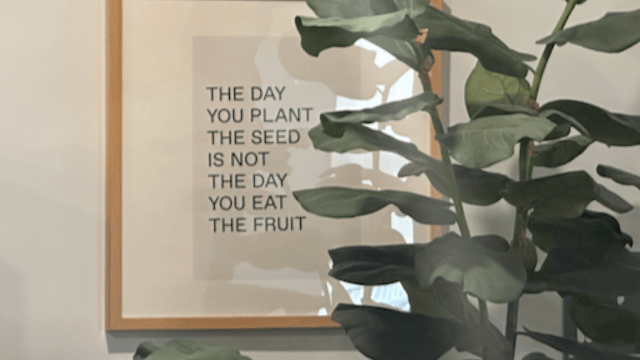
A quote at Thrive Alpharetta - West End
A quote at Thrive Alpharetta – West End

Today, at my coworking space called THRIVE Coworking — hands down the best coworking space thanks to its incredible community and top-notch community managers — I walked past a framed quote that stopped me in my tracks.

Funny thing is, I’ve probably passed it a hundred times without noticing. But today, it caught my eye. And given how often I draw lessons from nature, I’m honestly surprised it didn’t hit me sooner.

The quote simply read:

“The day you plant the seed is not the day you eat the fruit.”

It’s such a simple truth, one I live by as a farmer. But seeing it in a workspace reminded me just how relevant it is in leadership and business too.

When I’m on the farm, I don’t rush nature. I know that each seed needs time — time to root, to rise, to be shaped by its environment. I can nurture it, give it the best chance to grow, but I can’t force it to bear fruit on my timeline.

That same patience is something I’m learning to carry into my work as a CEO. Whether it’s launching a new service, mentoring a team member, or shifting a company culture, real change doesn’t happen overnight. It happens gradually — invisibly at first — through consistent, thoughtful effort.

And often, just like in the garden, the growth you don’t see is the most important part.

That quote hanging in Thrive wasn’t just a decoration — it was an invitation to slow down, breathe, and trust the process. I’m grateful to be in a space that values inspiration and reflection. It’s a reminder that the best environments, whether farms or companies, are the ones designed to cultivate growth — not demand it instantly.

So if you’re planting new seeds in your life, your work, or your community — keep tending to them. With enough care and time, the fruit will come.


This post first appeared on July 25, 2025 in Sowing Success, my weekly LinkedIn newsletter on leadership and organic farming. Read the original on LinkedIn.
Planning at the Right Level: What My Market Garden is Learning from Our Consulting Business

Chillaxin after a productive day of EOS Quarterly All Day

At ThreeWill, we’ve learned that success depends on more than vision. It depends on planning at the right level.

Before using the Entrepreneurial Operating System (EOS) at ThreeWill, we set annual goals but rarely paused to reflect or adjust. That changed when we started our implementation of EOS and introduced Quarterly Pulses. These are companywide days where we take a step back, look at where we are, and make adjustments based on what it will take to reach our goals. We also have Weekly L10s (an EOS Worldwide term, see – https://www.eosworldwide.com/blog/the-level-10-meeting) that help us stay aligned and address issues before they become roadblocks.

These rhythms are not just for leadership. They involve everyone and give the entire team a shared sense of direction.

Yesterday, during one of those quarterly sessions, I found myself thinking about Iron Mountain Organics. On the farm, I’ve always had an annual plan. I know what I want to grow, when to plant, and how we want to serve our community. But I’ve never applied the same structure we use at ThreeWill to our market garden.

What I experienced yesterday raised some thoughtful questions…

  • What would it look like to have a quarterly planning rhythm for the farm?
  • Could a weekly check-in with Linda Ryan help us stay aligned and better measure our impact?
  • Would that give us the ability to adapt in season instead of reacting too late?

I haven’t implemented these ideas on the farm yet. But I’m starting to think that I should.

Running a farm takes more than hard work. It takes planning. Sales, marketing, operations, and finance all have a role. The same disciplines that make a business successful can help a farm thrive.

This is the first time I’ve looked to the business to inform the farm. It may not be the last ;).

Where are you running on autopilot that might benefit from a purposeful pause?


This post first appeared on July 18, 2025 in Sowing Success, my weekly LinkedIn newsletter on leadership and organic farming. Read the original on LinkedIn.
Pause, Then Act: The Gate, The Deer, and Better Business Decisions

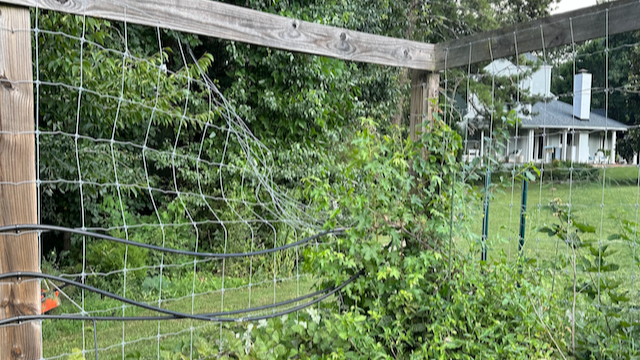
This is what happened this week with the deer encounter.

This week, I learned once again that sometimes the best action is no action at all, at least not immediately.

On the farm, I found myself standing at the entrance gate, aware that a deer had somehow gotten inside my 8-foot fence. My first instinct? Try to control the situation and guide the deer out. But without taking a moment to pause, I ended up pushing the deer into a corner. It panicked, ran into the fence multiple times, and finally crashed through it. Instead of a calm solution, I was left with a fence to repair and the thought that I caused unnecessary stress for that poor animal.

If I had simply paused for a moment, I could have thought through my options: open the gates wide, create a clear and safe exit, and let the deer find its own way out calmly.

This situation reminds me of how we should lead in business. When we encounter a new challenge or an unexpected problem, it’s tempting to react immediately, to force things, to act out of urgency. But in most cases, unlike a true emergency, a pause is the wiser move.

Taking that brief pause to run through possible scenarios and visualize the likely outcomes helps us avoid mistakes that can set us back or cause more damage than the original problem.

A short pause to think instead of jumping to act can be the difference between a broken fence and a peaceful exit. Or, in business terms, between a setback and a breakthrough.


This post first appeared on July 11, 2025 in Sowing Success, my weekly LinkedIn newsletter on leadership and organic farming. Read the original on LinkedIn.
Give Away the Shishitos: Why Sampling Builds a Stronger Business

Give Away the Shishitos: Why Sampling Builds a Stronger Business

One lesson I keep learning, whether I’m selling vegetables from Iron Mountain Organics (IMO) or consulting services through ThreeWill, is that sales and marketing are often the hardest parts of the job.

It’s not enough to grow healthy, tasty vegetables. If no one knows about them or is unsure they’ll like them, they won’t buy them. The same goes for our consulting work. You can have the best solution in the world, but if people don’t trust you yet, or can’t picture the value, it doesn’t matter.

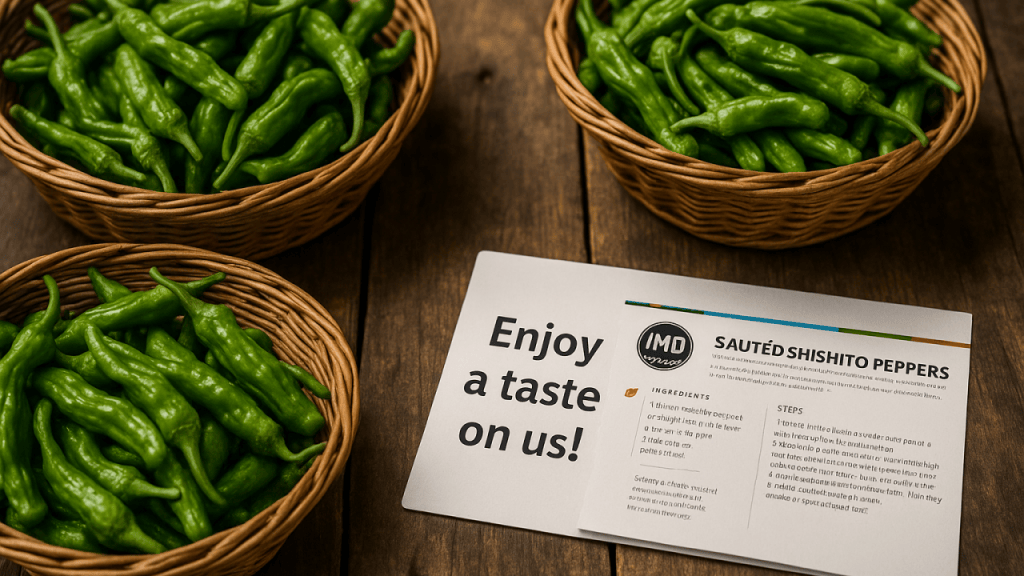
At IMO, I’ve learned that giving away product is sometimes the best marketing investment I can make. Maybe someone has never tasted a shishito pepper. So I put a few in their bag, along with a recipe card. Suddenly, they’re hooked and next week they’re buying shishitos.

At ThreeWill, our “free shishitos” are our thought leadership. We provide content that benefits people, whether they hire us or not. In both cases, this approach builds trust and a relationship. You’re not forcing someone to buy something they may not like or need. Instead, you’re letting them try it, enjoy it, and come back for more when they’re ready.

The best part? It creates a healthy, referral-based business. When people like what you do and trust you, they tell others.

So the next time you’re wondering if it’s worth giving away a taste of what you do, remember the shishitos. Sometimes a free sample today grows into your most loyal customer tomorrow.


This post first appeared on July 4, 2025 in Sowing Success, my weekly LinkedIn newsletter on leadership and organic farming. Read the original on LinkedIn.
Dialing in the Right Environment: For Plants, People, and Partnerships

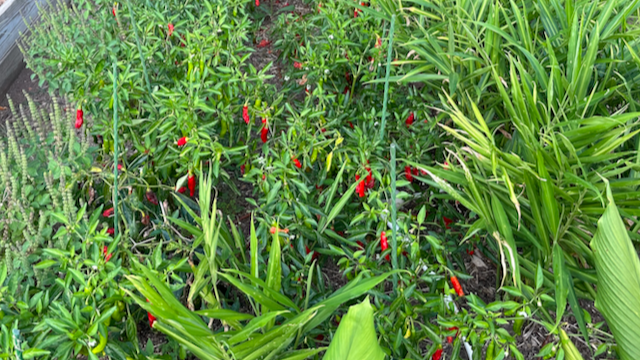
Companion planting of turmeric, ginger, holy basil and shishitos

Success in the garden starts with understanding what a plant needs to thrive. It’s not one-size-fits-all; each vegetable has its own preferences. Some crave sun, others tolerate shade. Some like more water, others need careful drainage. The right mix of micronutrients, soil structure, and even nearby companion plants can make all the difference.

The same goes for people.

In the workplace, each team member thrives under different conditions. Some perform best with clear structure and predictability, while others flourish when given creative freedom and autonomy. One person may be energized by complex technical challenges, while another finds their strength in navigating people-centered dynamics. As leaders, our role is to observe closely and be intentional about how we align responsibilities, support, and challenges, dialing in the environment that helps each person do their best work.

This philosophy also extends to our clients. Every client relationship has its own unique chemistry. We’ve found that early and frequent sampling—quick check-ins, honest conversations—helps us determine if we’ve got the right match between our consultants and the client’s environment. When the fit is right, the results speak for themselves.

It’s a bit like companion planting. Certain crops thrive when planted side by side (see picture above). They support one another, enhance each other’s growth, and even offer protection from pests. We aim for the same kind of synergy in our client relationships—pairing consultants and clients in ways that bring out the best in both. When there’s the right chemistry, collaboration feels natural, communication flows more easily, and the outcomes are stronger. It’s not just about compatibility—it’s about creating an environment where both sides grow and succeed together.


This post first appeared on June 27, 2025 in Sowing Success, my weekly LinkedIn newsletter on leadership and organic farming. Read the original on LinkedIn.
The Right Kind of Stress

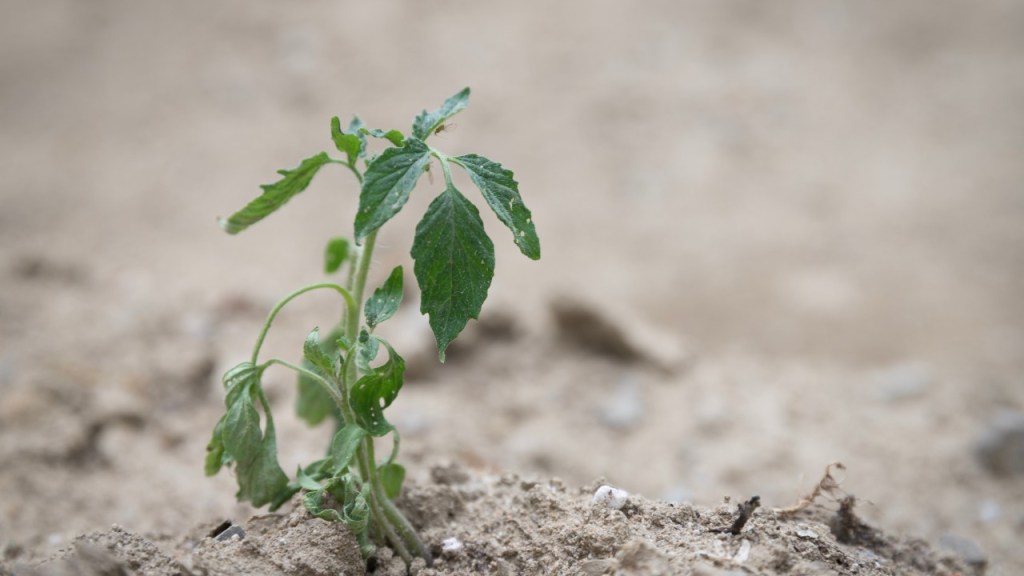
A stressed tomato seedling

In both the garden and the workplace, stress is inevitable—but not all stress is bad.

In the garden, the early stages of a plant’s life are crucial. When starting seeds or transplanting seedlings, the goal is to minimize stress. You want to give the plant just what it needs: not too much water or too little, enough light to prevent legginess, and nutrients to encourage root development—not overwhelm it. When you move it to the field, it’s best to do this at the end of the day, avoiding the direct heat of the sun. Water it in well, maybe even cover it for a bit to reduce transplant shock. Why all the care? Because if the plant can establish a strong root system, it can handle what’s to come.

Once a plant is grounded and growing, some natural stresses—like heat and limited water—can actually help. Grapes, for example, often taste better when the vines experience dry periods. That’s because the stress concentrates flavor. This “good stress” doesn’t weaken the plant—it strengthens its character.

The same applies to our teams. When someone joins a new company or steps into a new role, we shouldn’t expect them to thrive under immediate pressure. They need time and care to set roots. That might look like onboarding support, mentorship, and clearly defined expectations. If we rush this stage or expose them to unnecessary stress too early, we risk stunting their potential.

But once someone is established? That’s when the right kind of stress—the kind that stretches skills and challenges thinking—can lead to growth. Letting people struggle through a tough project or navigate a tricky situation on their own isn’t neglect; it’s trust. It’s how people develop depth, resilience, and character.

Whether it’s soil or company culture, the goal is the same: create the right conditions early on so that when the inevitable stresses come, they don’t break us—they make us better.


This post first appeared on June 20, 2025 in Sowing Success, my weekly LinkedIn newsletter on leadership and organic farming. Read the original on LinkedIn.

Know Your Soil, Know Your Role

Day 1 at Edisto Island, SC

This week, I’m writing from Edisto Beach, SC—a place my family visits every year. It’s always striking how different this coastal ecosystem is from the soil and climate back home. The vegetation, the animals, even the rhythm of life is different. And every time I’m here, I find myself thinking: What would it be like to grow vegetables here?

The answer starts with understanding your environment. What grows well here? What role could I play in this local ecosystem that complements, rather than conflicts with, what nature is already doing?

On Edisto, cotton plantations and tomatoes thrive—not just by accident, but because they align with the region’s sandy soil, heat, and humidity. The tomatoes, in particular, have a flavor shaped by this unique climate. Trying to grow lettuce here year-round? That’s a losing battle. But a hearty tomato? Now that has potential.

That same lesson applies to business.

At ThreeWill, we often talk about “meeting clients where they are.” That means taking time to understand their soil and climate—their industry, their culture, their internal systems. If we don’t, we risk offering solutions that sound great on paper but don’t thrive in the real world of our clients.

Just like a gardener needs to respect the seasons and soil, we need to respect our clients’ ecosystems. That’s why we’ve made an intentional shift to focus on specific industries. When we know the region and soil of an industry—how decisions are made, how work gets done, what compliance and productivity really mean—we can design solutions that take root.

Whether you’re farming or building software solutions, the takeaway is the same: Don’t fight the ecosystem. Understand it. Work with it. Grow something meaningful.


This post first appeared on June 13, 2025 in Sowing Success, my weekly LinkedIn newsletter on leadership and organic farming. Read the original on LinkedIn.