The Power of Focus: Lessons from the Garden and the Business

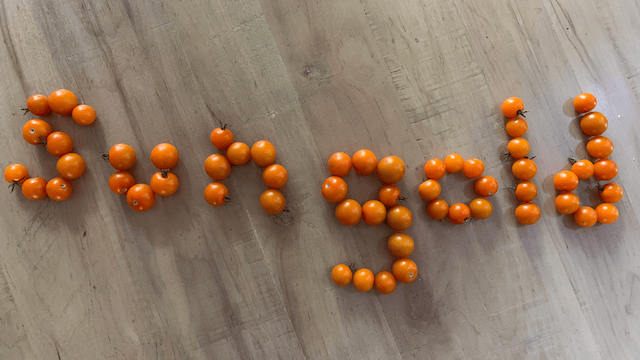
Iron Mountain Organics' Best Selling Product - Sun Gold Tomatoes - so sweet you would think they are candy!
Iron Mountain Organics’ Best Selling Product – Sun Gold Tomatoes – so sweet you would think they are candy!

One of the most valuable lessons I’ve learned in the garden is the importance of focus. When I pour my time and energy into mastering just a few crops—rather than spreading myself thin across dozens—I get better results. Not only do the vegetables thrive, but I also learn how to grow, market, and sell them in a way that builds momentum season after season.

Take Sun Gold tomatoes, for example. When customers know me for that Sun Gold—the one they crave all year—they come back looking for it again. But building that kind of loyalty takes time. If I switch varieties every season or try to grow everything under the sun, I risk confusing my customers and losing that hard-earned trust. The same goes for how I sell: if I’m constantly changing my offerings, I never give myself the chance to refine how I talk about the product and connect with my market.

I’ve found that herbs play a different role. They’re complementary—great add-ons, like basil or cilantro that ride alongside the main dish. But they’re not the focus. They don’t get the marketing energy or define the customer experience in the same way.

That principle of focus applies more than ever to my work at ThreeWill. We’re pushing ourselves to excel at one core service—to make it our signature offering – The ThreeWill Way. Around that, we offer a few strategic “side dishes”—services (we call them Quick Starts) that complement the main dish but don’t compete with it. This kind of focus lets us zero in on our marketing, speak directly to our ideal clients, and build stronger, repeatable outcomes.

We’re also focusing on three core verticals, which allow us to not just understand the most appropriate tech stack, but to deeply understand the business challenges and opportunities in those spaces. That level of depth only comes from focus.

Focus, of course, is easier said than done. It takes courage to trim your offerings. There’s always the temptation to cast a wider net. But I’ve found that trimming back is often what allows something to truly grow.

I’d love to hear from others—how are you striking the balance between being focused and staying flexible?


This post first appeared on June 6, 2025 in Sowing Success, my weekly LinkedIn newsletter on leadership and organic farming. Read the original on LinkedIn.
Milestones That Matter: Growth Rooted in Care

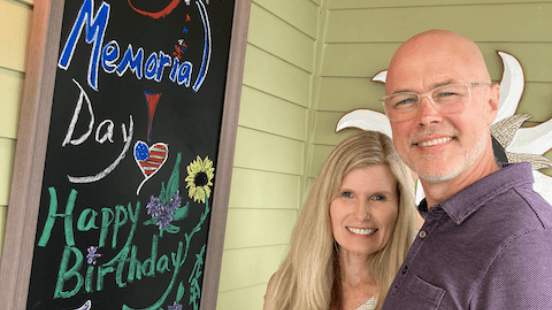
The Gift of Another Year to Live Life with Purpose!

Today, I’m celebrating another trip around the sun—and with that, I’ve been thinking a lot about milestones.

At ThreeWill, we’ve always placed a high value on recognizing people, especially their years of service. We’ve built a culture that not only endures but thrives, and I couldn’t be prouder. It hasn’t happened by accident—it’s taken intentional care. From day one, we’ve focused on creating a healthy culture and, most importantly, surrounding ourselves with people who fit that culture.

These days, having team members with 20+ years at the same company is rare. Yet we’re fortunate to have several. What’s most rewarding isn’t just their loyalty—it’s seeing how they’ve grown, taken on new challenges, and stretched into roles that help us all evolve.

I’ve seen something similar unfold at Iron Mountain Organics. Each year, the soil gets a little richer, more alive. Through composting, cover cropping, and refusing to rely on synthetic herbicides or pesticides, we’ve let nature lead. And in doing so, we’ve built up soil that’s now more productive and resilient than ever before. Good soil, like a good culture, gets better with time—if you care for it the right way.

So today, I’m grateful. For the years, for the growth, and for the people and ecosystems that have matured alongside me. Whether it’s a team or a garden, milestones worth celebrating are always rooted in steady care, shared values, and time.

Here’s to seasons well-tended—and many more to come.


This post first appeared on May 30, 2025 in Sowing Success, my weekly LinkedIn newsletter on leadership and organic farming. Read the original on LinkedIn.
Having Time to Garden—Thanks to EOS

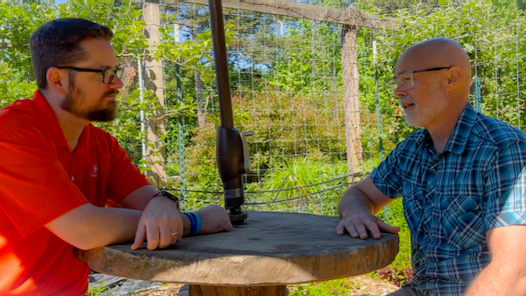
Sitting down with Will in the garden to reflect on the ThreeWill origin story

This week, I had the chance to sit down with Will Holland and reflect on the origin story of ThreeWill, the pivotal changes we had to make to survive, and how those changes are now fueling growth—for both our clients and our team.

As you can see in the photo above, I invited Will out to the garden—technically Iron Mountain Organics Garden Farm. It’s too big to be just a garden, and maybe still a bit small to call a farm, but it’s where I recharge. It’s where I get to be a co-creator with nature—nurturing life, restoring soil, and finding joy in the process. When I’m not working with our team, partners, or clients, this is where I find perspective.

What stood out from our conversation was how much EOS (Entrepreneurial Operating System) and operationalizing our core processes have enabled a healthier balance in my life—between leading ThreeWill, tending to the farm, and being present with my family. As we’ve improved how we run ThreeWill using EOS and Microsoft Teams, I’ve been able to shift from working in the business to working on it. Our team is better aligned, we’re rowing in the same direction, and while we’re far from perfect, we’re building something sustainable.

This personal transformation has inspired us to help other small businesses experience the same. We’re getting ready to roll out a new approach to our managed services—one that doesn’t just help companies “do more with Microsoft,” but ensures that technology investments are making a meaningful and measurable impact on the business because we align to their core processes.

We want business owners and their teams to feel confident that things are under control—so they can unplug, take real vacations, and be fully present with the people (and passions) that bring them joy. For me, that joy is found in the garden—co-creating with nature, embracing its rhythms, and remembering that healthy ecosystems—whether in soil or in business—take intention, care, and time.


This post first appeared on May 23, 2025 in Sowing Success, my weekly LinkedIn newsletter on leadership and organic farming. Read the original on LinkedIn.
Creating a Healthy Ecosystem

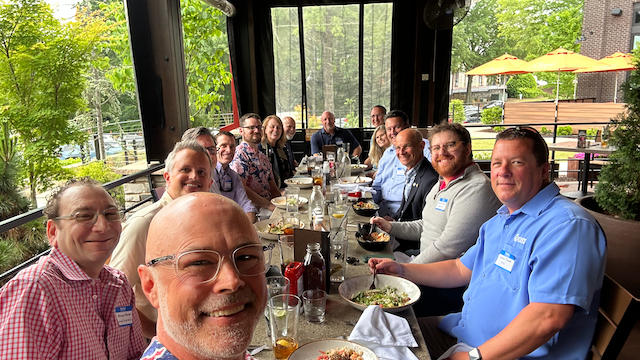
Our latest ThreeWill Alliance Luncheon

In my garden, nothing brings me more satisfaction than seeing a vibrant variety of plants and animals thriving together. However, the true magic happens at the microscopic level—in the soil. Over the years, I’ve discovered the critical importance of nurturing a healthy soil ecosystem by avoiding tillage and actively building compost to feed and sustain it.

This same principle of fostering a healthy ecosystem applies equally to our workplaces. The recent ThreeWill Alliance Luncheon was an important reminder of how essential it is to cultivate and nurture a network of relationships outside our immediate team. This network acts as an extension of our team, effectively amplifying our mission—much like the mycorrhizal network underground, invisibly connecting and supporting plants by distributing nutrients and communication signals (provided you a link to the term mycorrhizae, which is a powerful ecosystem that most people are unaware of).

At ThreeWill, we deeply understand that true productivity solutions start with culture (your company’s ecosystem). A healthy organizational culture thrives on diversity, bringing together people who excel and find joy in various roles, from marketing and sales to solution delivery. Just as vibrant soil creates abundant gardens, a nurtured culture creates thriving, productive companies.

Let’s continue nurturing these healthy ecosystems, both in the garden and at work, recognizing that the unseen connections often hold the greatest power for growth and sustainability.


This post first appeared on May 16, 2025 in Sowing Success, my weekly LinkedIn newsletter on leadership and organic farming. Read the original on LinkedIn.
Joy In Work and In The Garden

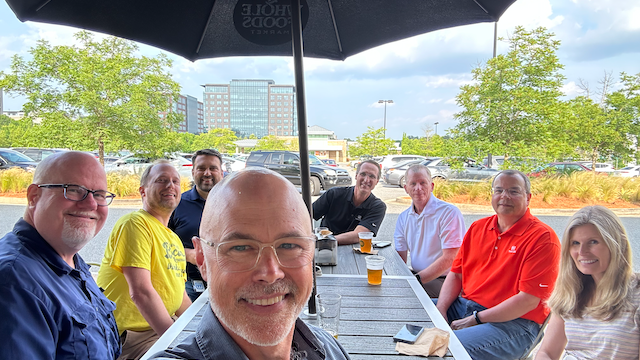
A ThreeWill Pint Night at Whole Food's Wednesday Night $3 Craft Beers
A ThreeWill Pint Night at Whole Food’s Wednesday Night $3 Craft Beers

Life is too short not to find joy in what you do—both at work and beyond. I’ve discovered firsthand that meaningful engagement, whether it’s leading meetings, coaching my children’s soccer team, capturing moments as the cross-country photographer, or nurturing vegetables in my organic garden, is essential to a fulfilling life.

The true joy comes from pride in what you do and the relationships you cultivate. It emerges in moments as simple as connecting with colleagues during a pint night (see above) or as enriching as giving friends and neighbors a tour of my organic garden. These moments reaffirm the value of investing ourselves fully in our passions and commitments.

Admittedly, daily responsibilities like endless meetings and a crowded inbox can threaten to drain joy. However, when viewed as integral components of building a business that provides stability, purpose, and meaning for my team, these tasks transform into acts of service and contributions toward a greater good. This perspective shift helps me honor both the clients we serve and the incredible talents of our team.

Sustaining joy in hard work hinges significantly on your organization’s culture and mission. Neither remains static; both require ongoing effort and commitment. If your professional and personal endeavors aren’t bringing you joy, perhaps it’s time to reconnect with your company’s purpose—or invest energy in clarifying it.

Ask yourself: are you finding joy in your work and your passions outside the office? Life is too precious for the answer to be anything but a resounding yes.


This post first appeared on May 7, 2025 in Sowing Success, my weekly LinkedIn newsletter on leadership and organic farming. Read the original on LinkedIn.
Co-Conspirators with Nature—and with Our Teams

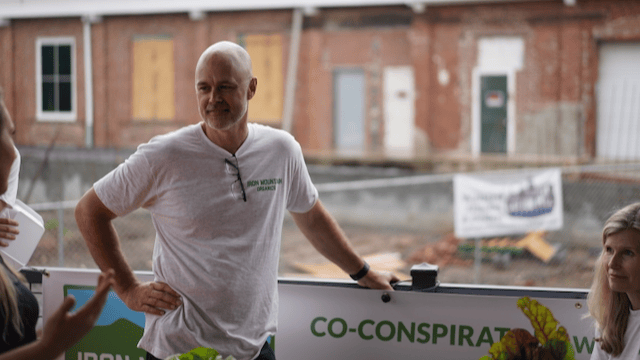
At the Canton Farmers Market in front of our sign "Co-Conspirators with Nature"
At the Canton Farmers Market in front of our sign “Co-Conspirators with Nature”

At Iron Mountain Organics, one of the first signs I put up at the farmers market said: Co-conspirators with Nature.

It was a simple phrase, but it captured something profound—my role wasn’t to force the garden to grow. Nature already knew how to do that. My job was to support it. To notice when a tomato plant needed a stake to lean on. To guide a vine toward the sun. To nurture what was already designed for growth.

That same mindset shapes how I lead at ThreeWill.

Our people, like our plants, are wired for growth. They want to stretch, explore, and thrive. I believe our people want to “Choose to Succeed.” But they need the right environment—and sometimes a stake to lean on when things get uncertain.

🌱 Supporting growth means getting out of the way—without disappearing. It’s not about micromanaging. But it’s not hands-off either. It’s about being present behind the scenes: – Giving people room to try – Letting them make mistakes – Offering quiet coaching in moments that matter – Believing in what they’re capable of, sometimes before they do

As leaders, we’re not the ones doing the growing. We’re the ones preparing the soil, pulling the weeds, and gently tying things up so our teams can bear fruit.

That’s the kind of leadership I want to embody—on the farm and in the office. Still conspiring with nature. Just with a different kind of garden.


This post first appeared on May 2, 2025 in Sowing Success, my weekly LinkedIn newsletter on leadership and organic farming. Read the original on LinkedIn.
Business Gets Better When It’s Personal

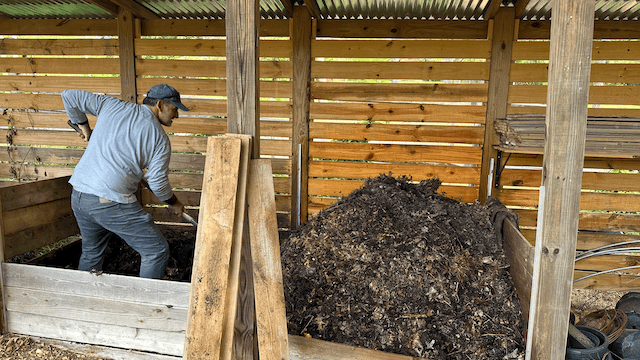
Brandon Lee Getting A Lesson On Building Compost

I recently had the joy of welcoming my friend and business peer, Brandon Lee, to spend a morning with me on my small-scale organic farm. What happened that day reminded me why I believe so deeply in integrating business with life.

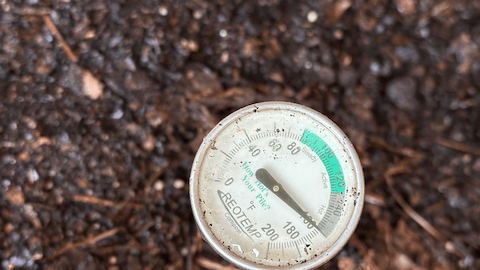
Brandon didn’t come out to talk strategy or sales. He came out to experience a slice of my world—to turn compost, get bit by ants (sorry again, Brandon), and talk about the things that really matter. That compost pile is now cooking at 160°F, by the way. 🔥

Results two days later - microbes in action, building the compost pile heat to 160F
Results two days later – microbes in action, building the compost pile heat to 160F

What struck me most wasn’t just that he showed up—it’s that he cared. He stepped into my world not because it’s his passion, but because he wanted to know mine.

As a part of Brandon experiencing my passion, I learned more about his passion for creating herbal tinctures for natural healing. That moment sparked an unexpected collaboration: I can grow the dandelion root, elderberry, and lemon balm, and Brandon can work his alchemy to create healing tinctures to share with friends and family (I’ve got a feeling I’ll be on that list 😉).

In a world that often rewards hustle over heart, I’m learning to value the relationships that go deeper than a contract. The ones that grow organically—pun intended—when we let people see who we really are.

Let’s talk about it. What’s one way you’ve built a deeper business relationship through a personal passion? Whether it’s baking cookies, restoring cars, or growing tomatoes and lettuce—hit reply or comment and share your story.

Because life is too short for shallow connections.


This post first appeared on April 25, 2025 in Sowing Success, my weekly LinkedIn newsletter on leadership and organic farming. Read the original on LinkedIn.
A Season of Renewal — In the Garden and in Business

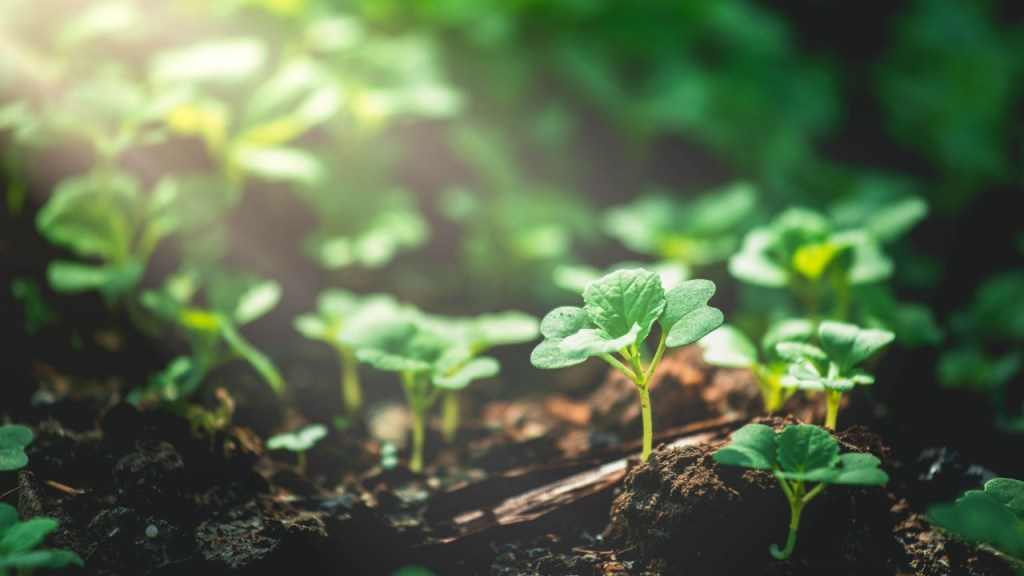
Gardening is a constant reminder of the paschal mystery.

Easter brings into focus the Paschal Mystery—the deep truth that through dying, we rise to new life. It’s a rhythm found not just in faith, but all around us—in nature, in leadership, and in how we grow.

Spring reminds us: new life comes through letting go. On the farm, the cycle is visible—plants from last season give everything to produce seed. Then they wither, having fulfilled their purpose. But those seeds? They bring the garden back to life.

The same is true in business.

For years, we served the enterprise with large project-based teams leveraging our scrum methodology—and accomplished great things that companies 10,000x our size could not. But we began to see our passion and skill (along with our core values) better served small and medium-sized businesses that needed a partner to leverage technology to help them grow.

💡 Letting go of what was familiar

We shifted away from a pure project-based model. As painful as it was to release something we’d mastered, we knew growth meant evolving.

🌱 Planting something new

We embraced a managed services approach—designed around long-term partnerships and consistent, measurable value. It’s been a big change, but the early fruit is encouraging: ✅ Steady growth ✅ Deeper client relationships ✅ Renewed clarity of purpose

🌾 Nature teaches us this every season: You can’t have new growth without release.

Whether you’re planting your first row of lettuce or rethinking your go-to-market strategy, I hope this season brings you fresh purpose—and flourishing growth.


This post first appeared on April 18, 2025 in Sowing Success, my weekly LinkedIn newsletter on leadership and organic farming. Read the original on LinkedIn.
Keep It Simple, Stupid (KISS) on the Farm and at Work

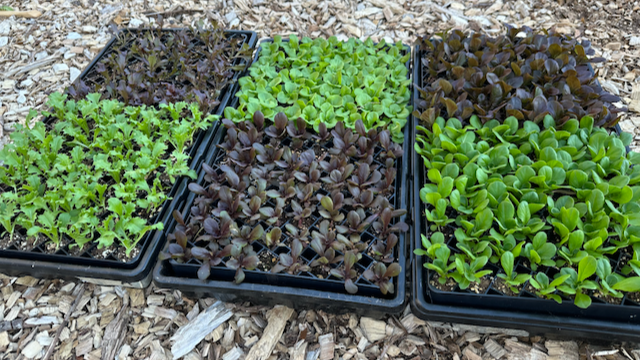
This salanova lettuce mix has been a customer favorite since the beginning of IMO

One of the hardest—but most powerful—things you can do as a leader or grower is keep it simple.

On the farm, the KISS principle shows up in how you decide what to grow. Every season, there’s a temptation to try a new variety, chase something trendy, or experiment with crops you’ve never grown before. And there’s nothing wrong with some experimentation—but it should be intentional and limited. I try to keep it to 10% or less of what I grow. The other 90%? That’s dedicated to mastering a few things I want to be known for—like having the best lettuce or tomatoes anyone’s ever tasted.

The same mindset applies in business. As a CEO, especially when sales are sluggish or market conditions shift, it’s tempting to constantly pivot. But if you’re always chasing the next thing, you risk confusing your team and diluting your impact. A clear, focused direction—anchored in your strengths—builds momentum. Yes, some pivots are necessary. But frequent changes can wear down your team and pull you away from what actually works.

Whether it is growing the same lettuce variety year after year or resisting changing your EOS Proven Process yet one more time (inside joke for the ThreeWillers), simplicity wins!


This post first appeared on April 11, 2025 in Sowing Success, my weekly LinkedIn newsletter on leadership and organic farming. Read the original on LinkedIn.
In and Out of Balance: The Cycles That Drive Growth

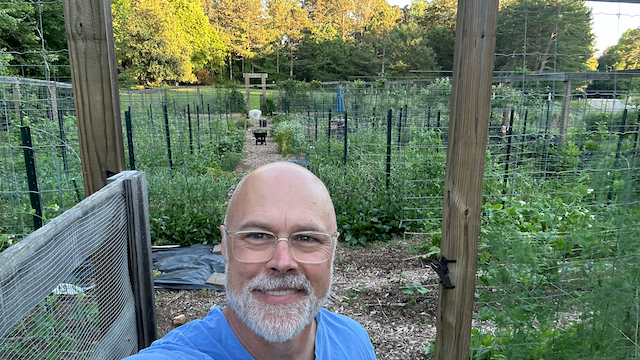
The Market Garden in Full Swing!

In our last newsletter, I reflected on the importance of setting a sustainable pace—how real growth, whether in business or in nature, depends on rhythms that support long-term health and productivity.

This time, I want to look at the ebb and flow of balance itself—and how being out of balance is not something to fear, but something to navigate.


Spring Is Not Balanced. And That’s the Point.

On the farm, spring is beautiful chaos. The pace quickens, and the usual routines get turned upside down. Sleep gets sacrificed, muscles get sore, and everything becomes urgent. The days feel long because they have to be. If you don’t hustle now, nothing will grow later.

The same thing happens in business.

Recently, we’ve been building out new service offerings. It’s exciting, but it’s required stepping outside of our comfort zone—taking on extra hours, stretching capacity, and navigating new challenges daily.

At the same time, we’ve been navigating a strategic pivot—shifting from how we’ve always done business toward a model we believe is more sustainable and valuable for the future. But here’s the catch: during the transition, we have to operate in both models. Different sales pitches. Different delivery approaches. Double the mental load.

Sometimes we also get hit with something completely outside our control—like losing a client due to an economic shift, policy change, or a shift in technology. It’s a gut punch. And it throws things out of balance fast. Suddenly, we’re backfilling work we thought was solid, filling gaps to keep things steady while also pressing forward.


Balance Isn’t a Constant—It’s a Rhythm

These moments are uncomfortable—but they’re also necessary. Growth rarely happens when everything is neat and tidy. In both farming and business, we push hard in one season so we can rest and restore in another.

I’ve come to appreciate that balance isn’t something you achieve and then keep. It’s something you move in and out of. What matters is learning how to return to center.

Some things that help me rebalance:

  • A quiet early morning walking the rows of the garden.
  • Reflecting with the team on what we’ve learned—even in the chaos.
  • Saying “no” more often so I can say “yes” to the right things.
  • Celebrating progress, not just perfection.

Growth Requires Both

Whether it’s responding to an unexpected frost or a shift in client demand, disruption comes with the territory. These moments test you—but they also prepare the ground for what’s next.

So here’s to leaning into imbalance when the season calls for it—and trusting that balance will follow.


This post first appeared on April 4, 2025 in Sowing Success, my weekly LinkedIn newsletter on leadership and organic farming. Read the original on LinkedIn.