One of the most important lessons I’ve learned—as both a business leader and a farmer—is this: sustainability doesn’t happen by accident. Whether you’re building a consulting practice or growing organic vegetables, long-term viability requires intentional planning and a steady, sustainable pace.
There’s a temptation in both worlds to cram—pushing hard during crunch time, then burning out when the pressure lifts. But over the years, I’ve learned that the real secret to success is found in rhythm. It’s about setting a pace that’s not only effective but also repeatable.
At ThreeWill, we’ve structured our business cadence using the Entrepreneurial Operating System (EOS). It gives us a framework that helps us stay aligned, grounded, and focused on the right priorities at the right time. With a 10-year target, a 3-year picture, and a 1-year plan, we zoom in and out regularly to stay on track. But the heart of our rhythm lies in our 90-day world. Every quarter, we set our “rocks”—our biggest, most important priorities—and we stay accountable to them through weekly L10 meetings. It’s not about doing more; it’s about doing the right things consistently over time.
And here’s the good news—it’s never too late to adopt a system like EOS. At ThreeWill, we were over 20 years into building the business before we fully adopted EOS. It came at a critical time, as we made a heavy pivot to refocus our company around providing managed services that help businesses get more productivity out of Microsoft’s platform. That shift required clarity, alignment, and strong execution—all things EOS helped us cultivate.
A special thanks to Tabetha Sheaver, Certified EOS Implementer®, who guided us through the transition and helped us lock in a cadence that continues to serve us today. Her leadership helped us navigate change and move forward with confidence.
This same mindset has carried over into how I run Iron Mountain Organics. While my crop planning isn’t quite as complex as our EOS framework, the principles are strikingly similar. Each season, I take stock of what sold well, what thrived in our specific soil and weather conditions, and what simply didn’t work. That reflection feeds into a plan—one that’s informed by the past, grounded in present capacity, and aligned with future goals.
And just like in business, farming demands pacing. If I try to plant too much at once or introduce too many changes in a single season, the quality suffers—both in my crops and my own well-being. Instead, I’ve found that thoughtful, incremental progress rooted in data and experience yields the most sustainable results.
Whether you’re guiding a team or growing organic vegetables, sustainability comes from having a clear plan and a regular rhythm. You can’t grow what you don’t nurture—and that nurturing requires time, space, and intentionality.
Call to Action: What rhythms help you stay grounded and on track—whether in business, your garden, or life in general? I’d love to hear how you plan and pace yourself for sustainable growth. Drop a comment or share your thoughts!
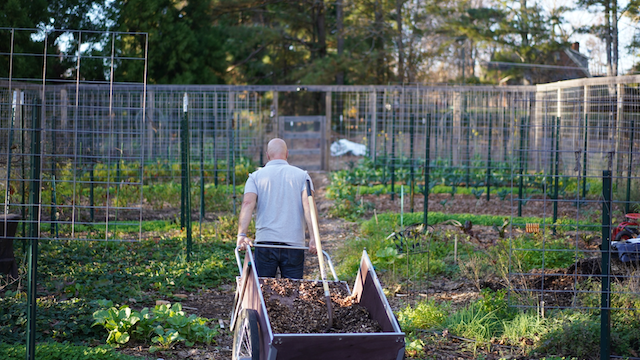
Tommy Investing in Building Healthy Soil with Applying Mulched Leaves to the Soil
Many principles that lead to success in business also apply to gardening. Whether you’re cultivating a thriving garden or building a profitable company, the same mindset—planning, investment, care, and risk management—is essential.
1. Planning and Strategy: Laying the Foundation for Success
Just as a business needs a solid business plan, a productive garden starts with a well-thought-out strategy. Before planting, you consider factors like seasonality, soil conditions, and plant compatibility. In business, the same logic applies—you identify your market, assess demand, and develop strategies to position your products or services effectively. A lack of planning in either domain can result in wasted resources and missed opportunities.
💡 Business Parallel: Conducting market research is like testing soil quality before planting. Both help ensure you’re set up for success before committing resources.
🌱 Software Tip: If you’re looking for a planning tool that helps you map out your garden and visualize your layout, I highly recommend Seedtime. As a software person, I’ve been very impressed with what they’ve built—it allows you to create planting schedules, track tasks, and optimize your space efficiently. Just as businesses use project management tools to streamline workflows, Seedtime helps gardeners stay organized and productive.
2. Investment and Resources: Fueling Growth
Every garden starts with an investment—seeds, soil amendments, tools, and labor. Similarly, businesses require capital, equipment, and human resources to grow. Both endeavors demand careful budgeting and prioritization to maximize efficiency and yield.
💡 Business Parallel: Entrepreneurs must decide how to allocate resources, just like gardeners determine where to focus energy—whether on high-yield crops or long-term soil health.
🌱 Garden Tip: Compost is the magic resource that pays dividends both for this year’s crop and the future of your soil. It transforms Georgia’s dense red clay into loamy, nutrient-rich earth teeming with microbial life. Just as businesses reinvest in infrastructure and people to build long-term success, adding compost is an investment in the soil’s health, improving fertility, water retention, and resilience year after year.
3. Maintenance and Care: Consistency is Key
A garden doesn’t thrive on autopilot, and neither does a business. Regular watering, weeding, and pest management keep plants healthy, just as ongoing customer engagement, product development, and process optimization keep a business running smoothly. The key is consistency—small, daily efforts compound into long-term success.
💡 Business Parallel: Proactive customer service and continuous process improvement are the “watering and weeding” of business—ensuring it remains competitive and resilient.
🌱 Garden Tip: Proactive weeding is one of the best investments you can make in maintaining a healthy and productive garden. Removing weeds early prevents them from competing with your vegetables for water and nutrients, giving your plants the best chance to thrive. Plus, a well-kept, weed-free garden is not just more productive—it brings peace and satisfaction rather than the stress of managing an overgrown, chaotic space. A little effort each day keeps the workload manageable and the garden enjoyable.
4. Growth and Harvest: Reaping What You Sow
The joy of gardening comes when plants mature, and the harvest begins. But just as a thriving business doesn’t happen overnight, a bountiful garden is the result of patience and persistence. Whether you’re launching a new product or waiting for tomatoes to ripen, success requires endurance, adaptability, and the ability to learn from setbacks.
💡 Business Parallel: Entrepreneurs celebrate milestones—new clients, increased revenue, or product launches—just as gardeners rejoice when their crops are ready for harvest.
🌱 Garden Tip (and Sales Tip 😉): One of the greatest rewards of a productive garden is sharing your harvest. Selling at a local farmers market is a great way to connect with your community, and for me, bringing homegrown vegetables when meeting a new client is a unique way to share my passion. There’s something special about handing someone a perfectly ripe, sun-warmed tomato—it almost always brings a smile. Just as businesses thrive on relationships, sharing what you grow builds goodwill and deeper connections.
5. Risk Management: Preparing for the Unpredictable
Every gardener knows that unpredictable weather, pests, or disease can ruin months of hard work. Similarly, businesses must navigate economic downturns, shifts in consumer behavior, and industry disruptions. Mitigating risks—through diversification, adaptation, and contingency planning—is crucial in both fields.
💡 Business Parallel: Just as a gardener plants multiple varieties to hedge against crop failure, a business diversifies revenue streams to stay resilient during market fluctuations.
🌱 Garden Tip: Start seedlings with 10-20% more than you need to account for poor germination or early losses. Having backups ensures you won’t have gaps in your garden if some plants don’t make it. Also, for crops you really want to succeed, practice succession planting—sowing new seeds every 2-3 weeks. This spreads out your harvest, reduces the risk of total loss from unexpected frosts or pest damage, and keeps your favorite vegetables coming in continuously. Just as businesses adjust strategies to market conditions, gardeners can use these techniques to build resilience and ensure a steady, reliable yield.
6. Sustainability and Long-Term Vision
A short-sighted approach—depleting soil nutrients for quick results—will harm long-term yields. The same goes for business; focusing solely on short-term gains without considering sustainability can lead to burnout and instability. Investing in regenerative practices, whether in soil health or company culture, ensures future prosperity.
💡 Business Parallel: Businesses that invest in employee well-being, ethical sourcing, and long-term customer relationships build enduring success, just as sustainable gardening practices ensure fertile soil for years to come.
🌱 Garden Tip: The secret to a garden that improves year after year? The 3 C’s: Compost, Compost, Compost. Nothing builds soil health like organic matter. Adding compost consistently enriches the soil, feeds beneficial microbes, improves water retention, and boosts plant resilience. Just as businesses thrive by reinvesting in their people and systems, a garden flourishes when you continually replenish its foundation. Over time, what starts as struggling soil transforms into rich, loamy earth that practically grows abundance on its own.
Final Thought: Cultivate Success Like a Garden
Whether you’re running a business or tending a garden, success comes down to strategic planning, resource management, daily care, resilience, and a long-term perspective. Both require a mix of patience, adaptability, and a willingness to learn from nature. By applying gardening principles to business—or vice versa—you can cultivate growth, resilience, and abundance in both areas of life.
In both farming and business, the fundamentals matter. Without them, progress can become unsteady, and distractions can lead us away from what truly drives success. That’s why at Iron Mountain Organics, we’ve embraced the tagline: Know Thy Food. It’s a call to return to the basics—understanding where our food comes from, valuing whole, nutrient-rich ingredients, and making conscious choices about what we consume. But this principle doesn’t just apply to farming and nutrition; it’s just as critical in business and leadership.
Iron Mountain Organics Logo
Know Thy Food – A Return to the Fundamentals
Modern food systems have made it easier than ever to be disconnected from what we eat. Processed foods, long supply chains, and misleading labels create a gap between us and the source of our nourishment. When we step back and focus on whole, real food, we reconnect with something essential: the power of unaltered, nutritious ingredients that fuel our health and well-being.
By knowing our food, we honor the soil, the farmer, and the process that brings food to our tables. This isn’t just about physical health—it’s about understanding and respecting the work that sustains us. And when we stray from this knowledge, we lose sight of what really matters: quality, sustainability, and trust in the food we consume.
Know Thy Business – The Fundamentals of Leadership
This idea of “knowing” extends beyond food—it’s fundamental in business as well. Just as we can become disconnected from our food, we can lose sight of the fundamentals in leadership and company culture. We can get caught up in trends, overcomplicated processes, and shiny new tools, forgetting that the core of business success remains simple:
Making and keeping commitments – A successful business is built on trust. Just like healthy soil produces strong crops, a culture of accountability creates a thriving organization.
Knowing your people – A great leader, like a great farmer, understands what their team needs to grow. What motivates them? What are their strengths? Investing in people and relationships fosters loyalty, engagement, and innovation.
Focusing on long-term health over quick gains – Just as industrial farming can deplete soil for short-term yield, businesses that chase immediate wins at the expense of sustainability risk long-term damage. Companies that prioritize foundational values over fleeting success create lasting impact.
The Risk of Straying from the Fundamentals
When we lose sight of the fundamentals—whether in food, business, or life—we create instability. Poor diet choices lead to declining health. Poor leadership choices lead to disengaged teams. But the solution is always the same: return to what works.
At Iron Mountain Organics, Know Thy Food is more than a tagline—it’s a reminder to stay grounded, to ask the right questions, and to focus on what truly matters. The same applies at ThreeWill. When we help businesses maximize their Microsoft investments, it’s not about chasing trends—it’s about making the fundamentals work better, increasing productivity, and improving employee experiences.
As you reflect on your own habits—whether in nutrition, leadership, or decision-making—consider this: Where have you strayed from the fundamentals? And how can you get back to what truly matters?
Planting Seeds for the Future
Success, whether on the farm or in business, is about doing the right things consistently. It’s about patience, discipline, and knowing that the best results come from a strong foundation. So let’s get back to the fundamentals—let’s Know Thy Food, Know Thy Business, and Know Thy People.
What fundamentals do you come back to time and time again? I’d love to hear your thoughts!
Spending time in the garden teaches you a lot—not just about plants, but about how thriving ecosystems work. And if you pay close attention, these lessons extend beyond the soil and into business, leadership, and life.
🌱 The Mycelium Network: Hidden Strength in Connection In a forest, trees don’t grow alone. Beneath the soil, they’re connected by a vast mycelium network that allows them to share nutrients, warn of danger, and support one another. Strong businesses function the same way—when teams, departments, and even competitors collaborate, the entire system becomes more resilient. If trees understand that their strength comes from connection, shouldn’t we? For a beginner-friendly exploration of this fascinating underground network, check out Kew Gardens’ article: Mycelium: Exploring the hidden dimension of fungi.
🥕 Interplanting: Diversity Reduces Risk In gardening, planting a single crop (monoculture) invites disaster—pests find easy targets, and disease spreads quickly. But when you interplant different species, the diversity confuses pests, strengthens plant health, and improves resilience. Businesses are no different. A team filled with people who think alike is vulnerable, but one built on diverse ideas, skills, and backgrounds is naturally more adaptable and resilient. For those new to interplanting, the Old Farmer’s Almanac offers a comprehensive guide: Companion Planting Guide for Vegetables.
💡 1 + 1 = 3: The Power of Different Perspectives A thriving garden isn’t made up of just one type of plant—it’s a collection of plants, each playing a role in creating a balanced ecosystem. In business, diverse perspectives lead to unexpected innovation. When you bring together different viewpoints, the outcomes can be greater than the sum of their parts. Innovation happens at the intersection of unique experiences.
🌾 Soil Health: The Foundation of Growth Healthy soil is alive with bacteria, fungi, and microorganisms that break down nutrients and make them available to plants. The more diverse the soil life, the more resilient and productive the garden. This mirrors how businesses thrive—when you cultivate diverse skills, backgrounds, and experiences within your team, you create an environment rich in potential and growth.
🤝 Do What You Do Best: Lean on Others for Strength No single plant in a garden does everything—some fix nitrogen, others provide shade, and some attract pollinators. In business, we thrive when we focus on what we do best and trust others to bring their strengths. Diversity allows each of us to lean into our passions while relying on those who are passionate about what we aren’t.
The garden teaches us that diversity isn’t just about variety—it’s about survival, strength, and synergy. Businesses and leaders who embrace this lesson build teams that aren’t just productive but truly resilient.
How have you seen diversity create resilience in your work or life? Drop your thoughts below! 👇
Pruning—whether in gardening or business—is always a painful process, but it is an essential part of maintaining a healthy ecosystem. It requires tough decisions and sometimes difficult losses, which is necessary for future growth. This reality isn’t limited to plants or companies; it’s something we also see in government. Recently, we lost a three-year client contract with the DOGE effort. I will not get into government pruning, because this is a charged topic, but hopefully some of what I share concerning gardening and business will be helpful. All pruning is painful, but I look forward to how the collective we bounce back and flourish from the pruning we do in the garden and our businesses.
The Power of Pruning in the Garden
Pruning is an essential practice for a thriving garden. It involves cutting back overgrown branches, removing dead or diseased parts, and shaping plants to improve their health and productivity. While it may seem counterintuitive to cut back something that’s growing, strategic pruning leads to stronger plants, better yields, and a more resilient ecosystem.
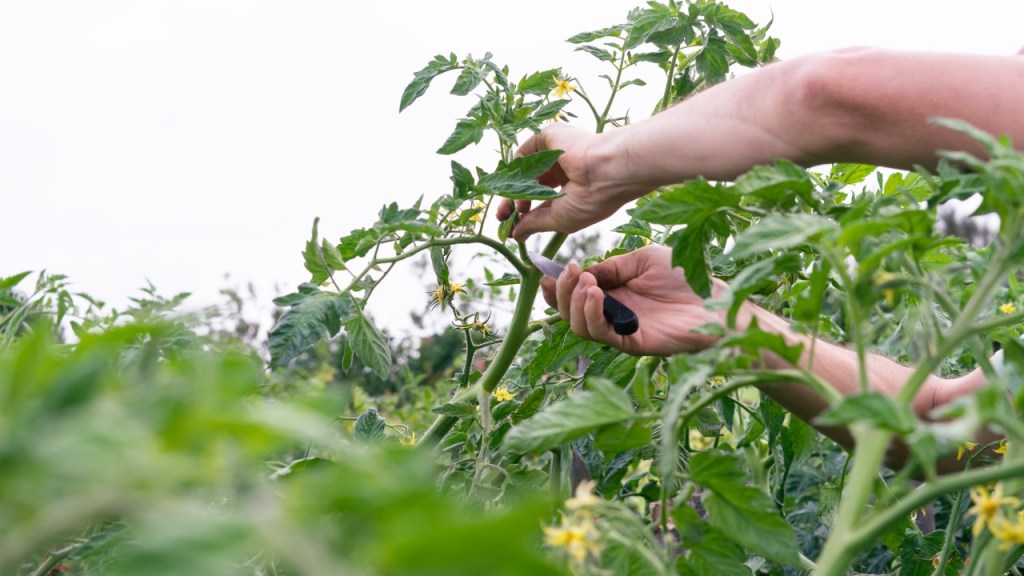
In my own organic farming experience, I’ve seen firsthand how pruning tomato plants increases airflow, reduces disease, and ultimately leads to a more abundant harvest. By removing unnecessary growth, the plant can focus its energy on producing high-quality fruit instead of wasting resources on excess leaves.
Pruning in Business
The same principle applies in business. It’s easy to fall into the trap of accumulating too many initiatives, projects, or even team commitments. But just like in gardening, unchecked growth can lead to inefficiency, burnout, and reduced impact.
Pruning in business can take many forms:
Eliminating non-essential projects – Are you working on initiatives that no longer align with your core mission or priorities? Cutting them can free up energy for more meaningful work.
Refining your focus – Are there services or products that no longer serve your company’s vision? Letting go of underperforming offerings can strengthen your brand.
Evaluating team workloads – Are your employees stretched too thin? Removing unnecessary meetings or streamlining processes can help your team be more effective and engaged.
Letting go of outdated systems – Are you holding onto tools or workflows that are no longer serving you? Simplifying operations can increase productivity.
The Courage to Cut Back
Pruning requires a certain level of courage. It can be hard to remove something that once had potential. But just as a gardener knows that a well-pruned tree bears the best fruit, a business leader understands that strategic cuts lead to sustainable growth.
At ThreeWill, we often talk about helping businesses get more value from the Microsoft tools they already own. This aligns with the idea of pruning—rather than constantly adding new technology, we help organizations refine and optimize what they have, ensuring that their digital workplace is effective and efficient.
The Season for Pruning
In gardening, pruning happens at the right time—whether it’s winter pruning for structure or summer pruning for shaping. The same applies in business. Periodic evaluation of what’s working and what’s not can ensure you’re focusing on what truly matters.
As we move through this season, I encourage you to consider what needs pruning in your work, your business, and even your daily routine. What’s taking up space without adding value? What can you remove to allow new, healthy growth to emerge?
Prune wisely, and you’ll set yourself up for a stronger, more productive future—whether in the garden or in business.
I’ve spent years leading a technology services company, helping organizations improve employee experience, boost productivity, and create meaningful work. At the same time, I’ve been cultivating something very different—healthy soil, fresh food, nurturing my local community and a deep connection to nature through organic farming.
At first glance, these two worlds may seem unrelated. But the more I dig in (literally and figuratively), the more I realize the lessons of leadership and organic farming are deeply connected. Both require patience, care, and a long-term vision. Both thrive on strong foundations—whether it’s company culture, employee productivity or soil health. And all are about growth—not just in numbers, but in people, ecosystems, and communities.
That’s why I’m launching Sowing Success, a newsletter exploring the intersection of culture, productivity and organic farming—three passions that have more in common than you might think.
What to Expect
Over time, I’ll share insights from both fields, drawing connections between:
🌱 Cultivating Growth – What farming teaches us about leadership, resilience, and innovation.
💡 Productivity & Sustainability – Lessons in efficiency, whether in the workplace or on the farm.
🌍 Community & Impact – How businesses and local food systems can both serve people in meaningful ways.
🔄 Seasons of Life & Work – Managing cycles of growth, rest, and renewal.
Whether you’re a business leader, an entrepreneur, a farmer, or just someone passionate about building something meaningful, I hope this space sparks new ideas for you.
I’d love to hear from you—what are some of the most unexpected places you’ve found leadership or business lessons? Drop a comment and let’s start the conversation!