Blog

Diversity Creates Symbiotic Relationships and Resilience

Diversity Creates Symbiotic Relationships and Resilience

Spending time in the garden teaches you a lot—not just about plants, but about how thriving ecosystems work. And if you pay close attention, these lessons extend beyond the soil and into business, leadership, and life.

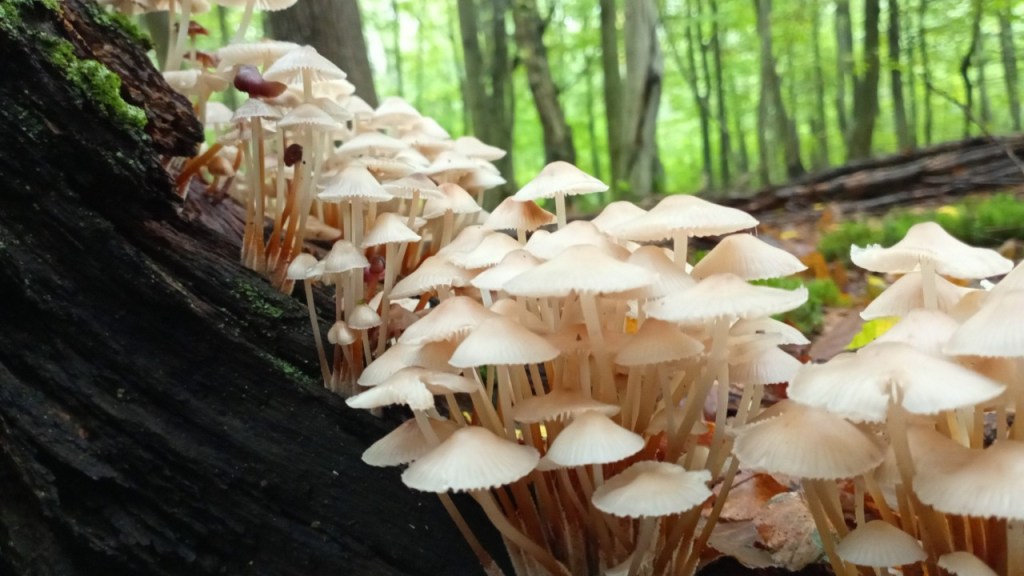
🌱 The Mycelium Network: Hidden Strength in Connection In a forest, trees don’t grow alone. Beneath the soil, they’re connected by a vast mycelium network that allows them to share nutrients, warn of danger, and support one another. Strong businesses function the same way—when teams, departments, and even competitors collaborate, the entire system becomes more resilient. If trees understand that their strength comes from connection, shouldn’t we? For a beginner-friendly exploration of this fascinating underground network, check out Kew Gardens’ article: Mycelium: Exploring the hidden dimension of fungi.

🥕 Interplanting: Diversity Reduces Risk In gardening, planting a single crop (monoculture) invites disaster—pests find easy targets, and disease spreads quickly. But when you interplant different species, the diversity confuses pests, strengthens plant health, and improves resilience. Businesses are no different. A team filled with people who think alike is vulnerable, but one built on diverse ideas, skills, and backgrounds is naturally more adaptable and resilient. For those new to interplanting, the Old Farmer’s Almanac offers a comprehensive guide: Companion Planting Guide for Vegetables.

💡 1 + 1 = 3: The Power of Different Perspectives A thriving garden isn’t made up of just one type of plant—it’s a collection of plants, each playing a role in creating a balanced ecosystem. In business, diverse perspectives lead to unexpected innovation. When you bring together different viewpoints, the outcomes can be greater than the sum of their parts. Innovation happens at the intersection of unique experiences.

🌾 Soil Health: The Foundation of Growth Healthy soil is alive with bacteria, fungi, and microorganisms that break down nutrients and make them available to plants. The more diverse the soil life, the more resilient and productive the garden. This mirrors how businesses thrive—when you cultivate diverse skills, backgrounds, and experiences within your team, you create an environment rich in potential and growth.

🤝 Do What You Do Best: Lean on Others for Strength No single plant in a garden does everything—some fix nitrogen, others provide shade, and some attract pollinators. In business, we thrive when we focus on what we do best and trust others to bring their strengths. Diversity allows each of us to lean into our passions while relying on those who are passionate about what we aren’t.

The garden teaches us that diversity isn’t just about variety—it’s about survival, strength, and synergy. Businesses and leaders who embrace this lesson build teams that aren’t just productive but truly resilient.

How have you seen diversity create resilience in your work or life? Drop your thoughts below! 👇


This post first appeared on February 28, 2025 in Sowing Success, my weekly LinkedIn newsletter on leadership and organic farming. Read the original on LinkedIn.
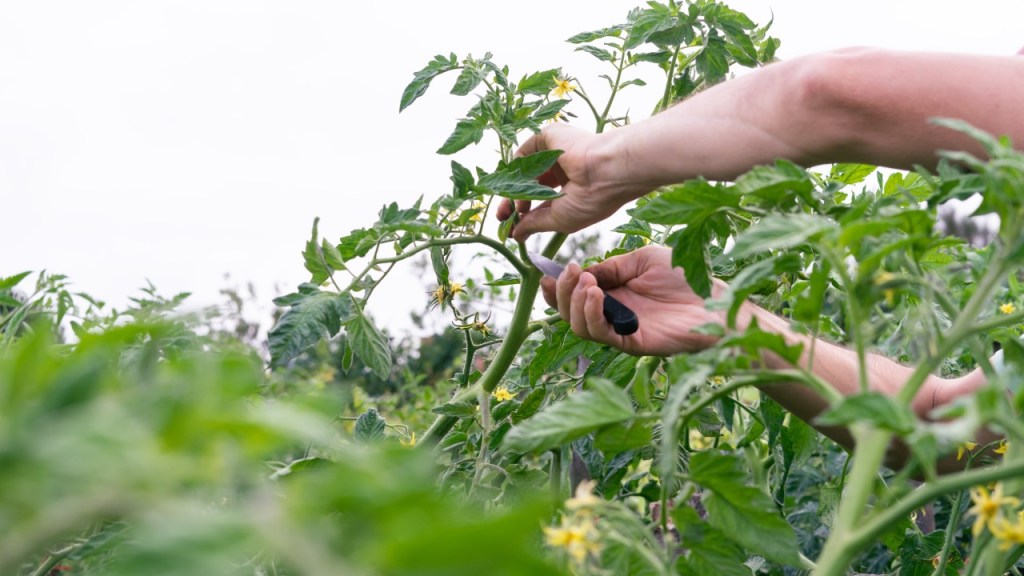

Pruning – A Concept for Gardeners and Business Owners

Pruning – A Concept for Gardeners and Business Owners

Pruning—whether in gardening or business—is always a painful process, but it is an essential part of maintaining a healthy ecosystem. It requires tough decisions and sometimes difficult losses, which is necessary for future growth. This reality isn’t limited to plants or companies; it’s something we also see in government. Recently, we lost a three-year client contract with the DOGE effort. I will not get into government pruning, because this is a charged topic, but hopefully some of what I share concerning gardening and business will be helpful. All pruning is painful, but I look forward to how the collective we bounce back and flourish from the pruning we do in the garden and our businesses.

The Power of Pruning in the Garden

Pruning is an essential practice for a thriving garden. It involves cutting back overgrown branches, removing dead or diseased parts, and shaping plants to improve their health and productivity. While it may seem counterintuitive to cut back something that’s growing, strategic pruning leads to stronger plants, better yields, and a more resilient ecosystem.

In my own organic farming experience, I’ve seen firsthand how pruning tomato plants increases airflow, reduces disease, and ultimately leads to a more abundant harvest. By removing unnecessary growth, the plant can focus its energy on producing high-quality fruit instead of wasting resources on excess leaves.

Pruning in Business

The same principle applies in business. It’s easy to fall into the trap of accumulating too many initiatives, projects, or even team commitments. But just like in gardening, unchecked growth can lead to inefficiency, burnout, and reduced impact.

Pruning in business can take many forms:

  • Eliminating non-essential projects – Are you working on initiatives that no longer align with your core mission or priorities? Cutting them can free up energy for more meaningful work.
  • Refining your focus – Are there services or products that no longer serve your company’s vision? Letting go of underperforming offerings can strengthen your brand.
  • Evaluating team workloads – Are your employees stretched too thin? Removing unnecessary meetings or streamlining processes can help your team be more effective and engaged.
  • Letting go of outdated systems – Are you holding onto tools or workflows that are no longer serving you? Simplifying operations can increase productivity.

The Courage to Cut Back

Pruning requires a certain level of courage. It can be hard to remove something that once had potential. But just as a gardener knows that a well-pruned tree bears the best fruit, a business leader understands that strategic cuts lead to sustainable growth.

At ThreeWill, we often talk about helping businesses get more value from the Microsoft tools they already own. This aligns with the idea of pruning—rather than constantly adding new technology, we help organizations refine and optimize what they have, ensuring that their digital workplace is effective and efficient.

The Season for Pruning

In gardening, pruning happens at the right time—whether it’s winter pruning for structure or summer pruning for shaping. The same applies in business. Periodic evaluation of what’s working and what’s not can ensure you’re focusing on what truly matters.

As we move through this season, I encourage you to consider what needs pruning in your work, your business, and even your daily routine. What’s taking up space without adding value? What can you remove to allow new, healthy growth to emerge?

Prune wisely, and you’ll set yourself up for a stronger, more productive future—whether in the garden or in business.


This post first appeared on February 21, 2025 in Sowing Success, my weekly LinkedIn newsletter on leadership and organic farming. Read the original on LinkedIn.

Sowing Success: My Unique Perspective on Meaningful Growth

Sowing Success: My Unique Perspective on Meaningful Growth

I’ve spent years leading a technology services company, helping organizations improve employee experience, boost productivity, and create meaningful work. At the same time, I’ve been cultivating something very different—healthy soil, fresh food, nurturing my local community and a deep connection to nature through organic farming.

At first glance, these two worlds may seem unrelated. But the more I dig in (literally and figuratively), the more I realize the lessons of leadership and organic farming are deeply connected. Both require patience, care, and a long-term vision. Both thrive on strong foundations—whether it’s company culture, employee productivity or soil health. And all are about growth—not just in numbers, but in people, ecosystems, and communities.

That’s why I’m launching Sowing Success, a newsletter exploring the intersection of culture, productivity and organic farming—three passions that have more in common than you might think.

What to Expect

Over time, I’ll share insights from both fields, drawing connections between:

🌱 Cultivating Growth – What farming teaches us about leadership, resilience, and innovation.

💡 Productivity & Sustainability – Lessons in efficiency, whether in the workplace or on the farm.

🌍 Community & Impact – How businesses and local food systems can both serve people in meaningful ways.

🔄 Seasons of Life & Work – Managing cycles of growth, rest, and renewal.

Whether you’re a business leader, an entrepreneur, a farmer, or just someone passionate about building something meaningful, I hope this space sparks new ideas for you.

I’d love to hear from you—what are some of the most unexpected places you’ve found leadership or business lessons? Drop a comment and let’s start the conversation!


This post first appeared on February 6, 2025 in Sowing Success, my weekly LinkedIn newsletter on leadership and organic farming. Read the original on LinkedIn.
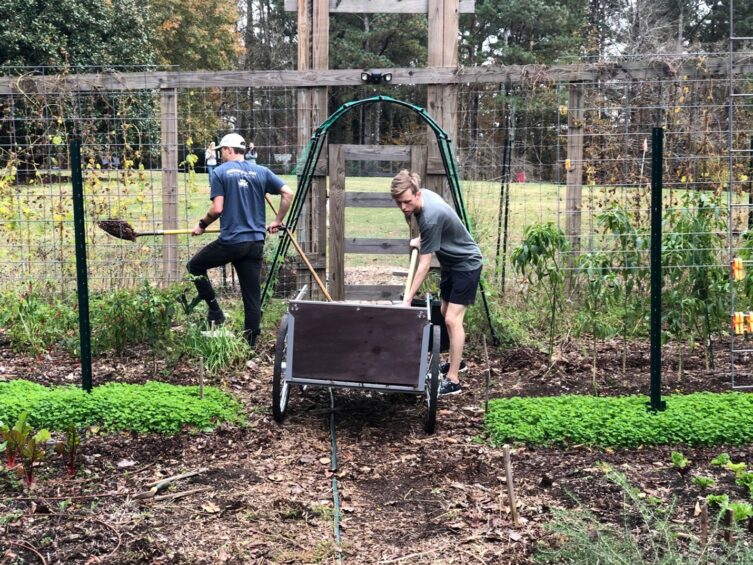
Gardening: A Metaphor for Creating a Healthy Work Environment

As we settle into new ways to get work done in the workplace, creating a healthy work environment has become more important than ever before. With the increasing stress levels and fewer in-person interactions, it is vital to nurture your employees and provide them with the tools and resources they need to succeed.

As a business owner and large-scale gardener (small scale farmer), I would like to explore how gardening can be used as a metaphor for creating a healthy work environment. Just like gardening requires nurturing, cultivating, and patience, creating a healthy work environment requires intentionality, care, and a consistent approach.

The Importance of Nurturing

Similar to how plants require sunlight, water, and nutrients to grow, employees need support, recognition, and encouragement to thrive. Nurturing your employees means investing in their growth and development by providing them with the necessary tools and support to perform their jobs effectively. This can include providing project opportunities that build skills, mentorship opportunities, and ongoing feedback and coaching. By investing in your employees’ growth and development, you can create a culture of learning and continuous improvement.

When employees feel supported and valued, they are more likely to be engaged and motivated, leading to increased productivity, creativity, and job satisfaction. Moreover, nurturing your employees can also help minimize attrition and reduce recruitment and training costs.

The Power of Collaboration

Gardening is often a collaborative effort, with different people contributing their skills and passion to get to an end product of a vegetable. There are a variety of underlying tasks that get to the point of having a vegetable. Picking what to grow, knowing when and how to grow it, the labor of sowing the seed, cultivating the ground, and harvesting the vegetable are a few of those tasks. Similarly, creating a healthy work environment requires collaboration and teamwork. Encouraging collaboration can lead to better communication, increased creativity, and a greater sense of belonging. You can create a sense of shared purpose and a more cohesive team by fostering a collaborative work environment.

Collaboration can also lead to diverse perspectives and ideas, which can help in problem-solving and innovation. Team diversity can produce stronger results by bringing in new ideas that just one person could never conceive, but you must be open and patient when considering ideas that are not your own. This has been a personal challenge of mine, but as I have learned to be more vulnerable to other people’s ideas, I have found that this has provided personal growth for me and others. Moreover, when employees feel included in the decision-making process, they are more likely to be invested in the organization’s success.

I have also found that being open to new ideas in gardening has been a significant part of my growth as a gardener.  Be open to what my neighbors are trying and not think I do not have anything further to learn about a gardening topic.

The Benefits of Patience

Gardening requires patience, as plants take time to grow and flourish. Not only do you need the patience to wait out the time needed for a plant to grow, but patience with failures that inevitably come through making mistakes or trying new things. Similarly, creating a healthy work environment requires patience and persistence. Change doesn’t happen overnight, and it’s important to stay committed to the process, even when progress seems slow or you suffer setbacks when trying new things or setting goals beyond your current capabilities.

When creating a healthy work environment, it is essential to have a long-term perspective and not expect immediate results. It takes time to build trust, foster collaboration, and establish a culture of continuous improvement. By staying the course and remaining patient, you can create a work environment that is supportive, productive, and fulfilling.

Moreover, patience is also necessary when dealing with conflicts and challenges. Instead of taking a reactive approach, it is essential to address the root cause and work towards finding a long-term solution. Getting to the root cause is essential to growing beyond the current problems you face. I have found that putting a weekly discipline that operationalizes getting solutions in place is essential to your company’s growth and morale.

it is about creating healthy environments

In conclusion, gardening provides a powerful metaphor for creating a healthy work environment. By nurturing your employees, fostering collaboration, and practicing patience, you can create a culture that promotes growth, learning, and success. Just like a well-tended garden, a healthy work environment requires ongoing care and attention. But with the right approach, the rewards can be almost limitless.

Creating a healthy work environment is just beneficial no for the employees but also for the organization as a whole. It can lead to increased productivity, reduced absenteeism, improved employee engagement, and a positive brand image. Therefore, it is essential to invest in creating a culture that values and supports its employees.

quick side note

I find that there are aspects of my personal passions that I find beneficial to bring into my work environment. I am amazed at how much my gardening experience informs me of the natural laws of a work environment. Do you have a personal endeavor outside of work that informs you about improving your work environment? I would love to hear about that in the comments if you do.

Learning Healthy Leadership through Law of the Harvest

Working with the land is a great teacher of natural principles that are transferable to leadership.  The principles I have learned from vegetable farming can be carried over into our professional lives. 

Law of the Harvest 

Stephen Covey was a strong influence in the building of the consulting company ThreeWill. My brother (and co-founder) and I would take early walks before our workday to discuss the values of our future company.  One concept that stuck with me from reading Stephen Covey was the “Law of the Harvest.”  He shares the lesson you learn on a farm and you can not rush the process.

Did you ever consider how ridiculous it would be to try to cram on a farm—to forget to plant in the spring, play all summer and then cram in the fall to bring in the harvest? The farm is a natural system. The price must be paid and the process followed. You always reap what you sow; there is no shortcut.

Stephen R. Covey The 7 Habits of Highly Effective People: Powerful Lessons in Personal Change

For example, if you want to harvest green beans.  There are some things you can do to shorten the time to harvest, but you still will need to wait at least 45 days to get green beans from the time you decide to grow green beans. You just can’t plant a green bean seed today and expect to harvest green beans from the plant tomorrow. As Steven Covey says, there is no cramming in farming.

Natural Laws on the Farm

In an instant gratification society (Amazon next day delivery and ordering fast food as examples) we can lose sight that accomplishments that you are proud of come through an intentional planned effort.  In vegetable farming, there are several factors that go in a well planned harvest.  I would like to share my experience with three of these concepts: Creating Fertile Ground, Planting Seeds and Tending the Field.

I will share some brief thoughts (these concepts can be their own posts) on these natural systems that occur in nature and then how that understanding can be translated to business and leading teams.

Creating Fertile Ground 

You feed your plants by feeding and caring for the soil.  In organic vegetable farming, one key way to do this is through compost. In addition to compost, you can feed the soil through cover crop to increase biomass and carbon in the soil.  Creating healthy soil will feed the plants and allow plants to have strong resistance to diseases and pests. This foundation of healthy soil is one of the key elements of a successful vegetable farm.

Planting Seeds

As simple as it sounds, you can’t have a harvest unless you start with a seed.  With planting seeds, you need to think about what seeds to plant based on your goals for the farm and what plants you are prepared to nurture.  One of the biggest challenges with farming is planting too many seeds and not having the time to properly take care of them.

Tending to the Field 

Removing weeds early. Walking the field to see when an area of the field is suffering or under stress.  Noticing the small things that could turn into bigger things. With farming, things can quickly get out of control if there is lack of care provided at early signs of stress or problems.  For example, when you find blight on tomato leaves, you want to remove the leaves early before that blight spreads further into the tomato plant causing you to potentially lose the whole plant.

Translating this to Business

Creating Fertile Ground Through Creating a Healthy Culture

A healthy company culture creates the fertile ground needed for ideas to “germinate and thrive!” The culture of a company can be compared to the soil on the farm. A heathy culture is a key foundational part of a thriving business. Just as poor soil yields unproductive crops, poor culture yields low trust, lack of common ground and overall can impact how your company can come together as a team and achieve challenging goals.

Planting Seeds By Casting a Vision

On a farm you sow seeds. In a business, you sow seeds through ideas, vision/mission and belief in your team. As mentioned in “Planting Seeds” above, you need to be careful to only sew the number of seeds you can tend to and nurture. It is easy to get overwhelmed with “sewing” too many ideas. It is better to have a business plan for the year that determines what are the right number of ideas (seeds) that need to germinate within your teams. Speaking from experience, a team can get easily get overwhelmed or confused if you plant too many seeds. Those ideas (seeds) compete with each other which will decrease the chances of that idea to come to fruition (or in farming terms – bear fruit).

Tending the Field through Understanding the Needs of the Team

Planting ideas (or seeds) in an organization can be the fun part. Coming up with the next great idea is exciting, but we all know the hard work is seeing that idea through to completion and getting good results. Seeing an idea through to completion requires showing up each day and “walking the farm.” Walking the farm to see what needs attention and to connect to what is working and not working through in person observations.

The plants of the farm can be in some way compared to the people of your organization. Your team needs the constant interaction to see what is working or not working along with getting a sense of what needs help before it becomes a true problem. For example, as a pepper plant matures it can get top heavy and topple over if you do not stake it. You want to do this same preventative maintenance with your teams. You do this by staying connected to your team members to be sure they are healthy and have the support they need to play their roles as they get their jobs done to the best of their ability.

Two Other Points of Comparison

Showing Up

Showing up is a key to the success in farming and success in business.  Expanding on law of the harvest and tending to the field, it takes a consistent commitment to see results over time.  It is the constant attention to detail over time that will show up in progress in the long term.  If you don’t keep consistent with “showing up,” then things can degrade.  You can get overrun with weeds or disease on the farm or have your business wither without attention to the health of the people in your company.

Embrace self governing systems

There is value in letting natural systems self-govern as much as feasible.  Creating an environment where plants use their natural ability to adapt to their conditions will help make the plant stronger.  You do not want to create dependencies to things that are available naturally.  For example, you do not want to provide fertilizers if nutrients occur naturally in well amended soil (usually through nature provided nutrients in compost).  Nature has a way of taking care of itself without our help (just look at an old growth forest).  There are times we just need to get out of nature’s way.  That also can apply to the people we lead.  We sometimes need to get out of the way and let them learn through natural consequences that reinforce what works and does not work.  If we shield people from failure, then they cannot grow from experiencing natural consequences.

In summary, I have reaffirmed what works in business through observing laws of nature and general experience that comes with the hard work of vegetable farming. These natural laws are not just limited to the farm, but carry over to our personal and professional lives. I would love to hear from others on how they see nature teaching them concepts or principles based on personal observations. You would be amazed to see what comes to mind when you stop and think about it. Please share your thoughts in the comments below. It does not have to be vegetable farming. It could be vegetable gardening, taking care of flower beds or just growing one plant on your porch. Looking forward to learning from others.

Hot Pepper Sauce Recipe

description

This is a recipe from a friend of IMO that loves to find good ways to make a spicy condiment.

ingredients

  • Enough hot peppers to fill 3/4 of a 32 oz canning jar
  • 2 cups white vinegar
  • 2 tbsp sugar
  • 2 tsp pickling salt
  • 2 tsp olive oil

Instructions

  1. Add hot peppers to a 32 oz canning jar
  2. Boil all the ingredients and pour over the peppers.
  3. Let cool and refrigerate.

Tips

It is best to let it sit for about a week before use, but the longer it sits, the better it gets.

Lemony Cucumbers Recipe

Description

We had a IMO Customer mention this recipe to us when he was picking up his vegetables from the farm stand. This is a quick and refreshing way to enjoy fresh summer cucumbers!

Ingredients

  • 2 medium cucumbers
  • 1/4 cup vinegar
  • 2 tablespoons sugar
  • 2 tablespoons chopped onion
  • 1 tablespoon lemon juice
  • 1 teaspoon celery seeds
  • 3/4 teaspoon salt
  • 1/8 teaspoon pepper

Instructions

  1. Score cucumbers with a fork and thinly slice.
  2. Combine vinegar and remaining ingredients, stirring well.
  3. Pour over cucumbers.
  4. Cover and chill at least 4 hours

Tips

Depending on your tastes, you might adjust the balance between vinegar, sugar and lemon juice to better tune the proportions of the recipe.

Basic Pesto Recipe

Description

Pesto is a quick and easy sauce you can use on many things from pasta to green beans. You can make pesto from other greens besides basil (for example, mustard greens) and use a variety of nuts from pine nuts, pecans to walnuts. What is key to a good pesto is to toast the nuts.

Ingredients

  • 1 1/2 cups firmly packed fresh basil leaves
  • 1/2 cup pecan pieces, toasted
  • 1/2 cup olive oil
  • 3 cloves garlic, peeled
  • 3 tablespoons lemon juice
  • 1/2 teaspoon salt
  • pepper to taste

instructions

  1. In a food processor, blend together all ingredients without oil and then add oil and blend until smooth.
  2. Refrigerate leftover Pesto up to 5 days or freeze up to 3 months.

tips

If you want parmesan cheese, just sprinkle on each portion you use.

Oilve oil can be cut by 25% and could go 50% when replacing basil with mustard greens.

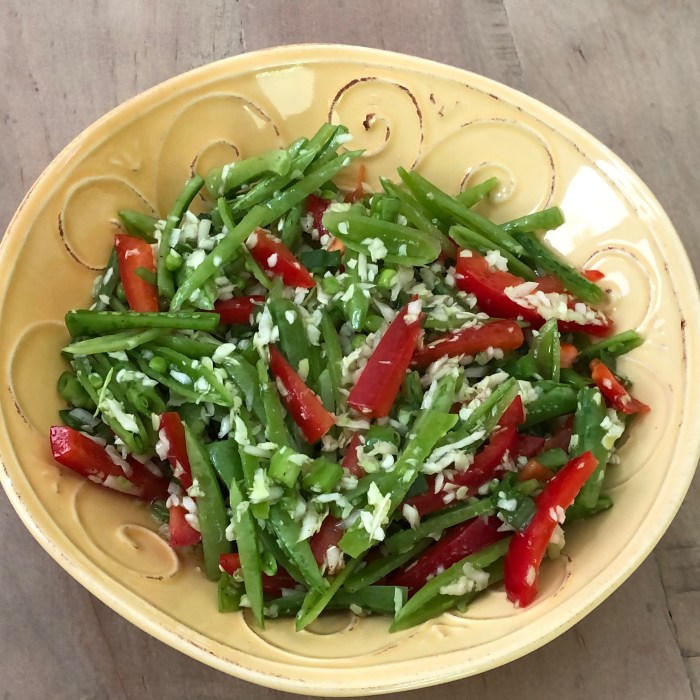
Fresh Sugar Snap Pea Slaw Recipe

Description

The two things we have in great abundance in early summer / late spring are sugar snap peas and scallions. This recipe is a great way to enjoy the natural texture and flavor that comes with fresh pea pods and scallions.

Ingredients

  • 2 cups sliced sugar snap peas
  • 3/4 cup julienne red pepper
  • 3 scallions diced
  • 3/4 cup shredded green cabbage
  • 1/4 cup oil (light flavored)
  • 1 Tbs Dolcedi or honey or agave
  • 1 tsp lime juice
  • 1/4 cup citrus champagne vinegar or white wine vinegar
  • 1/4 tsp black pepper
  • salt to taste

instructions

  1. Combine sugar snap peas, red peppers, scallions, and green cabbage in a large bowl.
  2. Combine remaining ingredients and stir to combine. Toss with vegetables and serve chilled.

tips

This is a link to the source of the recipe “Sugar Snap Pea Easy Summer Slaw” from Joanie Simon’s website. We have also tried lime infused vinegar for the vinegar in the recipe and have enjoyed that as a substitution.

Canton Farmers Market Schedule

We have enjoyed our first three weeks at the Canton Farmers Market. We have had some repeat customers ask us for a schedule of the weeks we will be attending. Below is our schedule for the Canton Farmers Market for the Summer 2019 Season. Saturdays where we are not attending are noted and we will update if our schedule changes

  • May 11
  • May 18
  • May 25
  • June 1 (not attending)
  • June 8 (rained out)
  • June 15 (not attending)
  • June 22
  • June 29 (not attending)
  • July 6
  • July 13
  • July 20 (not attending)
  • July 27
  • August 3 (not attending)
  • August 10
  • August 17 (not attending – growing fall crops)
  • August 24 (not attending)
  • August 31 (not attending – growing fall crops)
  • September 7 (not attending)
  • September 14
  • September 21 (not attending)
  • September 28
  • October 5 (not attending)
  • October 12