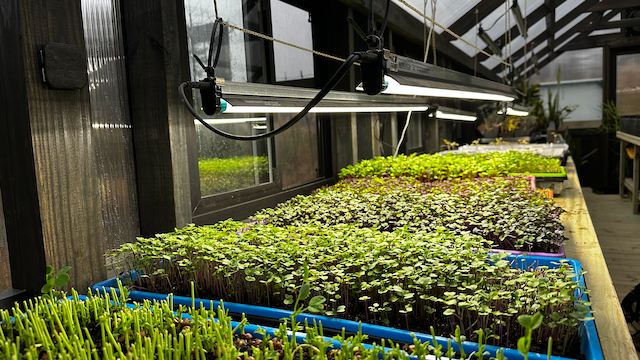
The Garden Looks Quiet, but the Work Has Already Started

Microgreens in the Greenhouse

Deep winter has a way of telling a story that is not fully true.

The garden looks gray. The beds look still. The air feels like it has pressed pause on life. And if you only judge by what’s visible, it is easy to assume nothing is happening.

But winter is not a lack of life. Winter is life underground. Life in the plan. Life in the preparation.

It is the season that asks a better question than “What are we producing right now?” It asks: “Are we getting ready to produce the right things next?”

Winter Is Where Next Season Gets Chosen

In farming, the harvest is decided long before the first tomato shows up. It is decided in winter when we choose what to plant, how much to plant, and what the community actually wants and needs.

Business is not that different.

There are seasons where revenue is lighter, projects slow down, or the calendar opens up in a way that can feel uncomfortable. The temptation is to interpret that quiet as a problem to escape.

I’m learning to see it differently.

A break in the season is an invitation to ask:

  • What are the “seeds” worth planting this year?
  • Are we targeting the right outcomes to harvest later?
  • Are we building things our community can truly use?

For Iron Mountain Organics, that is food people are excited to eat. For ThreeWill, that is practical software solutions that reduce chaos and increase care for Human Services providers.

Different harvest. Same responsibility.

Quiet seasons are for sharpening tools

When the garden is not demanding everything, I can invest in the work that makes the next season possible.

That might look like sharpening the blade on a hoe, fixing irrigation, installing a new high tunnel or reworking a bed plan so spring does not become an emergency.

In the consulting world, the parallel is just as real:

  • building demos that clearly show how we solve problems
  • refining our point of view on Human Services workflows
  • creating repeatable assets that make delivery faster and more consistent
  • strengthening the “how” behind the value we promise

This is the work that is easy to postpone when things are busy. It is also the work that makes the busy season healthier when it arrives.

The greenhouse tells the real story

Here is what I love about this time of year. You can walk the garden and think it’s all still. Then you step into the greenhouse and realize the truth.

The work is underway.

Trays are filling. Seeds are waking up. The next season is not a surprise. It is being built on purpose.

That’s the mindset I want to carry into 2026.

Even if things feel quieter on the outside, we can be very active where it counts:

  • planting the right seeds
  • investing in readiness
  • building toward a harvest that serves real people

Winter is not wasted time. It is where we decide what kind of year we want.

And the bottom line is this: we’re not waiting for the season to change. We’re getting ready to lead it.


This post first appeared on January 9, 2026 in Sowing Success, my weekly LinkedIn newsletter on leadership and organic farming. Read the original on LinkedIn.
Planting the New Year: Presence, Progress, and Staying the Course

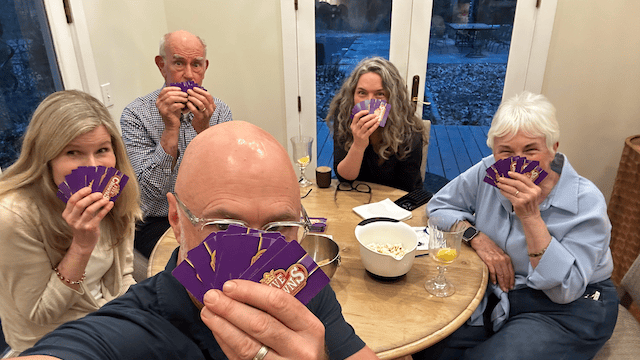
Playing Five Crowns for the first time with my wife, sister and parents. So grateful to have family who are fun to be around.

This newsletter kicks off the new year, and I want to start with a simple confession. I did my best to disconnect over the holidays, but I still have some work to do to truly be present when I’m “off.”

One small sign that I’m getting more intentional about disconnecting is that I skipped last week’s edition.

And yes, that “skipping” came with a little guilt. But I’m starting to see it as progress, not a miss.

I may also borrow a page from Will Holland’s playbook at ThreeWill. He does a great job queuing up our company content in advance, which gives him space to truly unplug. It’s a strong example and one I can learn from.

As we step into 2026, there are three ideas I want to share. They’re simple, but I think they’re the kind that actually change how we live and lead.

1) Have fun

We only get one shot at living a full life. Some of my best moments over the break were the silly ones. The kind where you laugh too hard at a card game and realize, “This is the good stuff.” If you’re wired like me, fun can feel unproductive. I’m learning it is often the most productive thing you can do for your soul and for the people you lead.

2) Recognize what you’ve accomplished, and who you accomplished it with

At ThreeWill, our team did some amazing work in 2025. I took time to inventory wins, progress, and hard-earned lessons, and honestly… wow. It was a year worth honoring.

There’s something powerful about pausing long enough to name what went well, what we overcame, and who carried the load alongside us. Recognition is not fluff. It is fuel.

3) Do the hard work of staying the course

This one is for me as much as anyone. We all feel the pull of the new shiny thing. Starting something new is exciting. Refining something good is harder.

But refinement is where excellence grows. Improvement is where simplicity is earned. Staying the course is how you turn effort into impact.

Looking Ahead: Doubling Down on Human Services

At ThreeWill, we’re continuing to refine our focus on Human Services. This year is all about communicating what we’ve built for this industry and building genuine relationships with those we serve. I’m grateful we’ve made this move toward a niche that speaks to my heart and helps an often underserved market.

My commitment for 2026: Every single week, I’ll have at least one meaningful interaction in Human Services. Whether that’s talking with providers, having lunch with community leaders, or volunteering directly. It’s about raising the dignity of every human being who deserves proper care and support.

From Farm to Business: The Planning Season

January on the farm means planting seeds and mapping out the year’s harvest. I am deciding what gets planted where, when, and backing that into a germination schedule. Next week, our leadership team is doing the same strategic work with our Annual Pulse (a term from EOS Worldwide for annual planning and recalibrating to the vision), planning ThreeWill’s year ahead.

There’s something energizing about being at the start of a new year for both ThreeWill and Iron Mountain Organics.

A Wish for All of Us

I hope everyone has had the right amount of rest and relaxation to tackle another year with purpose. Let’s take our gifts and passion and channel them into something the world truly needs.

I feel fortunate to have the drive to provide better productivity to Human Services with less chaos and more quality care, while also growing healthy, flavorful vegetables for my neighbors and community.

Here’s to a year of intention, impact, and maybe a few more family card games along the way.

What are you doubling down on this year?


This post first appeared on January 2, 2026 in Sowing Success, my weekly LinkedIn newsletter on leadership and organic farming. Read the original on LinkedIn.
Testing Seeds, Testing Ideas

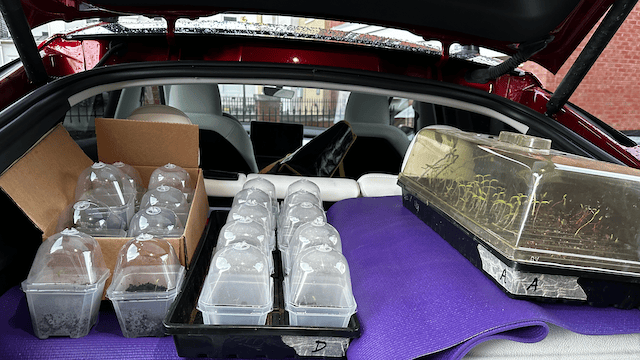
What the trunk in the car looks like this morning as we pack to come back home.

I’ve reached a new level of commitment to farming. The kind where my trunk looks less like luggage and more like a mobile seed-starting station. (Bioassays are coming in a future issue. Today is all about germination.)

Because germination is where hope becomes real.

It is the stage where you can’t yet see results, but everything depends on getting the conditions right. You look at a seed and you honestly do not know whether you’re going to be successful. The seed might be old. It might have been stored poorly. It might have experienced heat, cold, moisture, or time in ways you cannot see. Seeds, like ideas in business, can be fragile.

There are a few key concepts I always think about when it comes to germination: viable seed, fertile ground, and light. You could add water too, but I fold that into “fertile ground” because it is part of the environment that makes life possible.

1) Viable seed: Start with what can actually grow

Before I commit precious greenhouse space, soil, and time, I test germination rates. Not because I love spreadsheets (I do), but because I want reality. I want signal. I want to know if the seed has life in it.

In business, this is the discipline of testing an idea before you spin the whole company up around it. It is the humility to run small experiments. It is the wisdom to ask, “Is this viable?” before you ask everyone to sprint.

A non-viable seed doesn’t just fail quietly. It wastes time, energy, and attention that could have been invested in something that can actually become fruit.

2) Fertile ground: The environment that makes growth possible

Even a great seed struggles in poor conditions.

Fertile ground is not just “dirt.” It is oxygen access. It is moisture held at the right level. It is structure that roots can move through. It is nutrients that will support the plant once it pushes past the first fragile stage.

In our Human Services work, I see “fertile ground” as the ecosystem around the idea:

  • Leaders in a potential client who is building a healthy culture, not just chasing quick fixes
  • Partners and clients who share a vision, and want outcomes more than activity
  • A shared commitment to do the hard work of clarity, standards, and follow-through
  • Enough trust to try, learn, and iterate without fear

This matters because Human Services organizations operate in a world where the stakes are real and resources are stretched. If the environment is chaotic, even the best ideas struggle to take root. If the environment is aligned, small improvements compound into meaningful impact.

3) Light: The energy that turns potential into motion

Light is what fuels photosynthesis. Without light, a plant can sprout, but it cannot thrive. It cannot convert what it’s pulling from the soil into sustained growth.

In business, light is the energy around an idea. It’s belief. It’s momentum. It’s a team that understands the “why” and chooses to carry it together.

You can have a great plan on paper, but if there’s no excitement, no shared purpose, and no emotional buy-in, the idea stalls before it ever becomes healthy growth.

What I’m focusing on right now: fertile ground in Human Services

Today, my attention is on the fertile ground piece.

We want to find and serve Human Services leaders who are creating the conditions for their organizations to thrive. Leaders who are building culture, not just managing crisis. Leaders who want to reduce chaos so their teams can deliver more care with the resources they have today.

That kind of leadership is not loud. It’s consistent. It creates oxygen in the room. It makes it safe to improve. It makes it possible for good seeds to grow.

And if you’re reading this while you’re in your own germination season, here’s the encouragement I’m taking from the farm:

You don’t have to see the harvest yet. You just have to keep getting the conditions right.


This post first appeared on December 19, 2025 in Sowing Success, my weekly LinkedIn newsletter on leadership and organic farming. Read the original on LinkedIn.
The Jig Effect: Building Systems That Scale

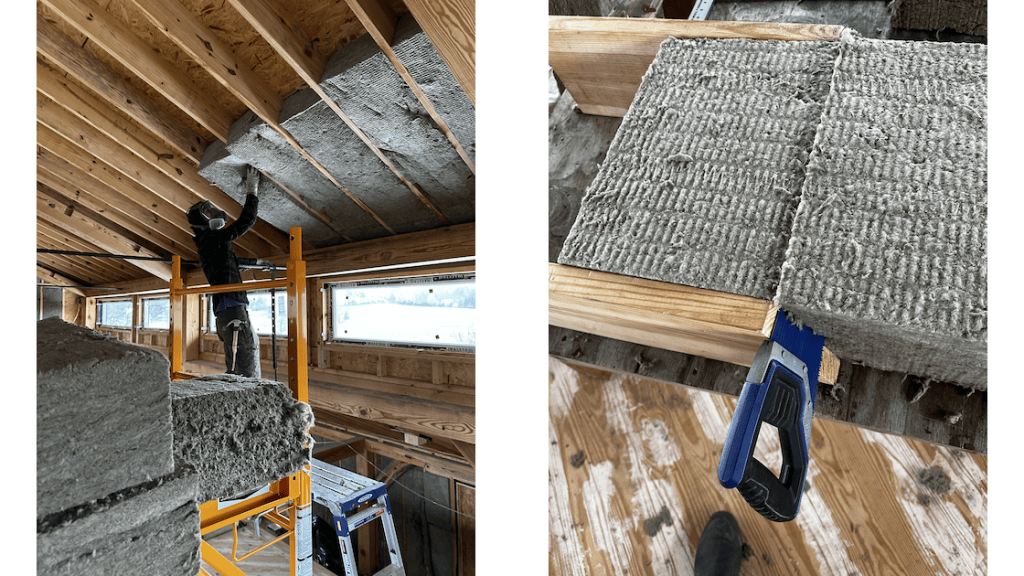
Ian placing insulation batting while Tommy feeds him standard-cut wedges of rockwool
Ian placing the batting and I am feeding him standard cut wedges of rockwool

We’ve been in Virginia this week, welcoming our new grandson into the world. He is a beautiful child (no, we are not biased), and we feel fortunate to take the time to be present for this moment. There’s something grounding about these early days of his life.

I’m also breaking my usual pattern of pulling a lesson straight from the farm, mainly because I’ve been on the road. Although, for the record, I brought seed germination tests with me. Once a farmer, always a farmer. 😉

This week’s lesson came from a different kind of fieldwork: building systems that scale.

Watching a system get built, one repeat at a time

For the past couple of years, I’ve carved out time during these Virginia trips to work alongside my son-in-law, Ian, on their house build. I’m continually in awe of what he’s doing. He’s building a home literally from the ground up, and he approaches it with a steady, methodical confidence.

This trip focused on insulation batts in the rafters. If you’ve ever done repetitive work like that, you know how quickly “we’ll just do it by hand” turns into wasted motion, uneven results, and fatigue. Ian did something brilliant and straightforward: he tested an approach, then built a jig to make the work predictable.

That’s the part that stuck with me.

A jig is not flashy. It’s not the final product. It’s a tool that makes quality repeatable. It quietly turns effort into output you can trust.

The jig is the difference between hustle and scale

In business, we often celebrate hustle. We admire people who can power through, solve problems on the fly, and carry things across the finish line through sheer will.

Hustle is sometimes necessary, especially early on. But hustle does not scale.

Scale comes from taking a step back and asking:

  • What are we doing repeatedly?
  • Where are we wasting motion?
  • What steps are inconsistent depending on who’s doing them?
  • What would make “the right way” the easy way?

That’s what Ian’s jig did. It reduced decision points. It created consistency. It made it easier for two people to work together in flow, instead of stepping on each other.

How this shows up in our HCBC Productivity Toolkit

It immediately reminded me of what we’re building with our Home and Community-Based Care Productivity Toolkit.

We’re trying to be that “jig” for organizations that are doing mission-critical work with limited resources. We take core processes and pair them with maturity guides that help teams scale their operations using the Microsoft software they already own.

Not by adding complexity. Not by asking people to become tech experts. But by creating a clearer, more repeatable way to run the work.

In a sector where the stakes are real, where people are stretched thin, and where chaos steals time away from care, systems are not red tape. Systems are relief.

The farm has been teaching this all along

Even though I wasn’t physically on the farm this week, the lesson is deeply “farm true.”

Farming punishes waste. If you don’t create repeatable systems, you pay for it in time, energy, and missed windows. You learn quickly that small inefficiencies compound.

Some examples that show up on the farm:

  • Tool placement: Store tools where they are used. Fewer steps adds up fast.
  • Batching work: Prep all beds before switching to seeding. Reduce task switching between dissimilar work.
  • Standard setups: Trays, stations, and routines that make it easy to do the right thing every time.

It’s the same principle, whether you’re growing food, building a home, or improving care operations.

The invitation

This week, I’m grateful for new life in our family. And I’m grateful for the reminder that scale is not about doing more. It’s about building what makes “doing it well” repeatable.

Look for the jigs in your world. Build the simple tools. Document the process. Make quality easier than chaos.

That’s how you grow without losing what matters.


This post first appeared on December 14, 2025 in Sowing Success, my weekly LinkedIn newsletter on leadership and organic farming. Read the original on LinkedIn.
New Life, New Season: Welcoming Felix, Planting Seeds, and Testing What Is Possible

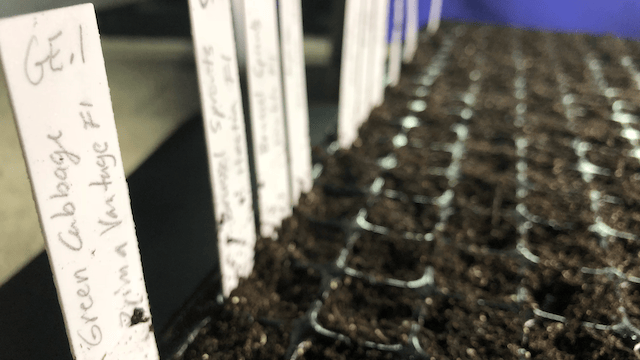
Germination Testing for 2026 Season

As I write this, I am in the passenger seat of our car headed north. Linda is driving, and my heart is about to burst. We are on our way to meet our new grandson, Felix.

There is something about waiting to meet a new life that sharpens your sense of what matters. You start to think not only about this one little person, but about the future he represents. New life changes the story for an entire family.

On the farm and at work, I am noticing the same pattern. New life, in all its forms, has a way of resetting priorities.

New life in a seed tray

Out at Iron Mountain Organics this time of year, the farm is not at its flashiest. The beds are resting, the days are shorter, and most people would say the show is over until spring.

But behind the scenes, a lot is happening.

Right now, I am testing germination rates for my seed stock. Before I plant full trays for the spring, I will take a sample of seeds, tuck them into soil blocks or cell trays, give them warmth and moisture, and then simply watch and count. How many actually sprout? How long do they take? Which varieties are still vigorous, and which ones are past their prime?

It is a quiet kind of excitement. Every tiny green loop that pushes through the soil says, “Yes, there is still life in this seed. You can count on me this season.” It also keeps me honest. If only half of a packet germinates, I have a choice to make. I either need to overseed to compensate or replace the seed entirely.

Testing germination is about more than curiosity. It is about stewardship. I want to go into spring with a realistic understanding of what will grow well, not just a romantic idea of what I wish would grow. It lets me plan bed space, crop rotations, and harvest goals with more confidence.

In other words, before I fill a whole field, I test a tray.

New life in our work

At ThreeWill, we are doing something very similar with our ideas.

Much of our focus lately has been on how we can help home and community-based care organizations reduce chaos and create more room for care with the resources they already have. These organizations are under incredible pressure. Staff are stretched, paperwork is relentless, and the need in the communities they serve keeps growing.

We believe that AI and better use of Microsoft 365 can make a real difference here. Not by adding more complexity, but by simplifying the work, capturing knowledge once, and automating what is repetitive, so people can focus on human moments.

As the landscape of AI continues to evolve with new capabilities, we are starting to “test germination” with our ideas.

We ask questions like:

  • What could we do to shave 30 percent off the time it takes to document a visit
  • What if new staff could find the right policy or form in seconds instead of digging through folders for several minutes
  • What if supervisors had a simple, near-real-time view of who is overloaded and who has capacity

We then build small concept tests. Simple AI prompts. Lightweight prototypes. A reworked workflow in Teams or SharePoint. We try it, measure it, and see how it feels in the real world.

These are our seed trays.

Not every concept “germinates” the way we hope. Some ideas sound brilliant in a meeting and then fall flat when they hit the messiness of real operations. Others surprise us. A small change in how notes are captured or how information is tagged can unlock a lot of value with less effort than we expected.

By testing early, we avoid planting our entire season on wishful thinking. We learn which ideas are alive and vigorous and which ones need to be composted so something better can grow.

A question for you

As you look at your own organization, ask yourself:

  • What “seeds” of new ideas are you testing right now
  • Where are you assuming that something will just “grow” without checking its viability
  • What small experiments could you run in the next 30 to 60 days that might make life better for your team or your clients

You do not need to overhaul everything at once. Start with a tray, not a field. Start with one workflow, not the whole organization. Start with one conversation about how to reduce chaos and make more room for meaningful work.

New life is rarely loud at first. It is a tiny heartbeat on an ultrasound, a small loop of green in a tray, a simple prototype that saves someone ten minutes of frustration in their day. But if we pay attention and nurture it, it can change everything.

For me, today, new life has a name. Felix. I cannot wait to hold him, whisper a quiet welcome, and keep planting seeds, both in the soil and in the way we work, that will help his world thrive.


This post first appeared on December 5, 2025 in Sowing Success, my weekly LinkedIn newsletter on leadership and organic farming. Read the original on LinkedIn.
Abundance at the Table, in the Field, and at Work

The Master Carver!
The Master Carver!

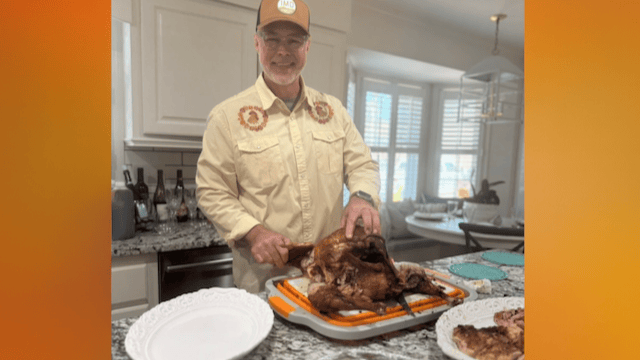
I am writing this after a full day of Thanksgiving with my wife’s family in Orangeburg, South Carolina. Full plates, full hearts, and more turkey than any reasonable group of people should be allowed to have.

We had five turkeys for sixteen guests. Yes, five. Some were smoked, some deep fried, and a few were a little of both. They had different marinades and prep methods, including pickle brining and something our family calls “frogging” (if you are curious about that one, feel free to ask in the comments).

I carved four of those turkeys in my festive Thanksgiving shirt, surrounded by laughter, kids running around, and people going back for “just one more bite.” It was a visual reminder that abundance is not just about quantity. It is about shared experiences, generosity, and the joy that comes when there is clearly more than enough to go around.

That spirit of abundance is carrying into how I am thinking about the farm and the business this week.


Planning for an Abundant 2026 Season at Iron Mountain Organics

With the holiday break, I am going knee deep into planning the garden for the next season at Iron Mountain Organics. The theme for 2026 is abundance for my local community, but I know from experience that abundance does not happen by accident.

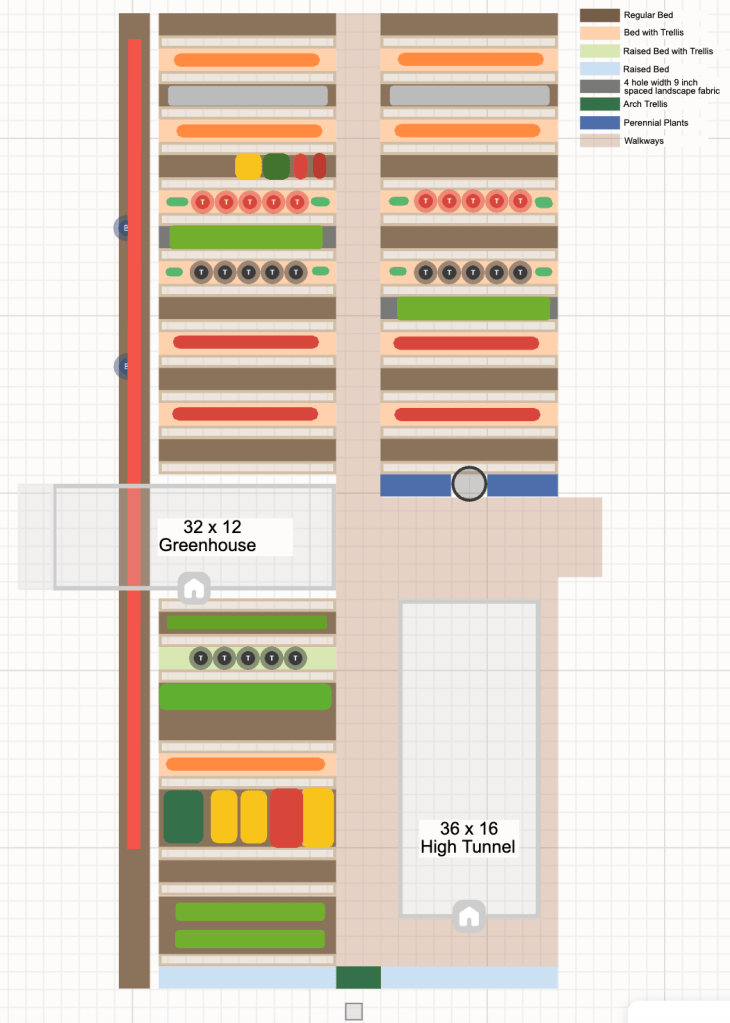
On the farm, abundance is built long before the first harvest. It is in the way you design the beds, the way you rotate crops, and the way you invest in infrastructure that sets you up to grow more, with less stress. In the plan below, you will see some of the infrastructure investments to create abundance (32×12 Propagating Greenhouse and 36×16 Growing High Tunnel).

2026 IMO Field Plan
2026 IMO Field Plan

With the new greenhouse and a high tunnel I can now extend the season to add to my abundance. I have been working on a layout that brings it all together: 30-inch beds, thoughtful pathways, and protected growing space that will let me start earlier, extend later, and protect more crops from the extremes of the weather.

It is a reminder that “abundant harvest” is really just another way of saying “intentional planning plus consistent follow-through.” The seeds you choose, the tools you invest in, and the systems you set up show up months later as either scarcity or abundance.

The farm keeps teaching me that if I want more, I need to design for more.


Leading with an Abundance Mindset at ThreeWill

That same mindset is shaping how we run ThreeWill.

Abundance Mindset is one of our core values. It is easy to talk about it in good times and much harder to live it when budgets are tight or the future is uncertain. Yet that is exactly when the choice between scarcity and abundance makes the biggest difference.

As we invest more deeply in serving Home and Community-Based Service (HCBS) organizations, we are trying to live abundance in practical ways, not just in slogans.

  • We created a free HCBS Productivity Toolkit to share what we know and help organizations improve, even if they are not ready to hire us.
  • In 2026, we are planning to look for ways to use our Volunteer Time Off to serve in the very communities our HCBS clients serve, because we want our impact to extend beyond paid engagements.
  • We continue to build relationships and partnerships with the mindset that there is enough work and enough opportunity to go around, and that collaboration ultimately creates more value for everyone.

In our world of Home and Community Based Care, we phrase our abundance mindset as…

Less Chaos and More Care.


A Question for You

As you come out of the holiday, I hope your day has been abundant in laughter, full tummies, and room to rest.

Maybe this is a good moment to pause and ask yourself:

  • Where in your life or work do you already have more than enough, if you stop and notice it?
  • Where could a bit of intentional planning turn a small trickle into a future harvest of abundance?

Whether it is five turkeys on a table, a greenhouse on a farm, or a new way of serving your clients, abundance often starts with gratitude for what is already in front of you and a decision to build from there.


This post first appeared on November 28, 2025 in Sowing Success, my weekly LinkedIn newsletter on leadership and organic farming. Read the original on LinkedIn.
Fall Is the Start of Next Year’s Harvest

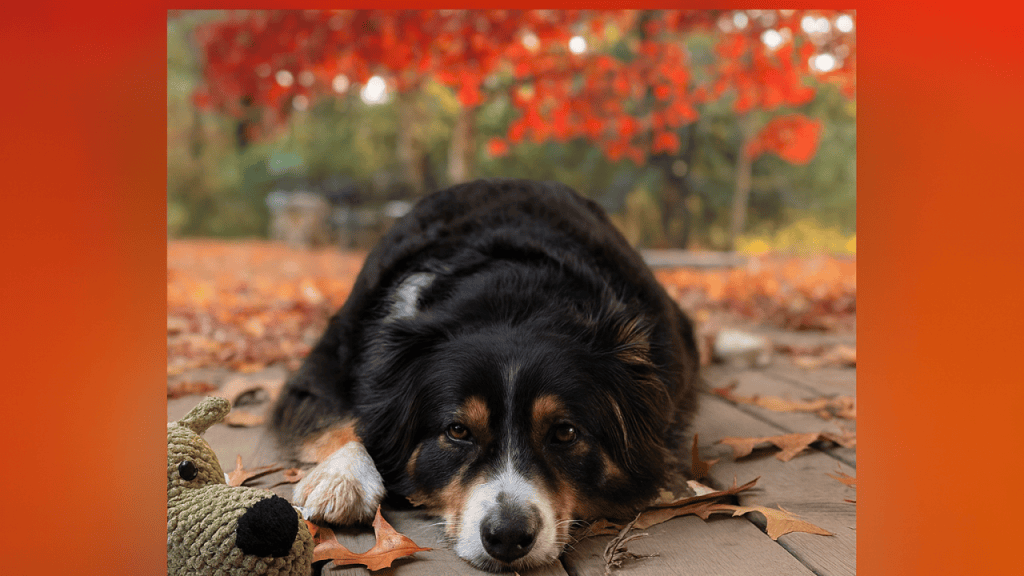
Kona on a cool fall day this week with a pop of fall color in the background

Fall color has a way of stopping you in your tracks. The Japanese maples at our house have been absolutely glowing, and a photo of our grandpup Kona this week captured the moment perfectly. The trees are giving us their final burst of color, a kind of crescendo after a full year of creating leaves, fruit, and, in some cases, nuts. It is nature’s reminder that every good cycle has a closing chapter, and that chapter can be beautiful.

As I soak this in, I find myself thinking about how fall helps us prepare for what comes next. The leaves may be dropping, but the work beneath the soil is just beginning. Roots strengthen, and seeds that have dropped to the ground are being conditioned for the upcoming spring season to begin another miraculous cycle of life (never get tired of that miracle of life yielding new life).

This rhythm is showing up in my own planning. Two seed catalogs arrived this week, and I will be spending some time over Thanksgiving dreaming about Iron Mountain Organics’ 2026 season. These catalogs are like possibilities in printed form. They remind me that next year’s harvest begins with the choices we make today.

The same is true at ThreeWill. We are closing out the year with intention, especially as we lean into a few big Rocks (our 90-day world in EOS). One of the more significant rocks is our transition to a new Professional Services Automation tool. We went from 10 years of tracking time in spreadsheets to our first PSA tool, and almost 15 years later, we are moving to Ruddr. I never thought I would be excited to talk about time revenue projections, resource allocation, and real-time margin analysis, but this upgrade will help us run our delivery in a much more informed and confident way. Our launch is right around the corner, and I can already see how it will support healthier growth in 2026.

We are also investing deeply in our HCBS Productivity Toolkit. This ecosystem is filled with people doing work that matters, and it deserves thoughtful support. Every asset we create for this toolkit strengthens the foundation we are giving away for free to HCBS (Home and Community-Based) organizations. They can self-implement it or choose to partner with us, but either way, we want to equip them to serve their communities with more clarity, less chaos, and more care.

Fall has a way of reminding us that the year is closing quickly, and that rest is on the horizon. There is still meaningful work to finish before we step into the quiet of the Christmas season, but the energy feels good. Purposeful. Grounded.

So here is a question that fall invites each of us to answer.

What is the one thing you want to accomplish before the end of the year?

I hope this season encourages you to choose something that will make your future self grateful.


This post first appeared on November 21, 2025 in Sowing Success, my weekly LinkedIn newsletter on leadership and organic farming. Read the original on LinkedIn.
Planting the Right Seeds

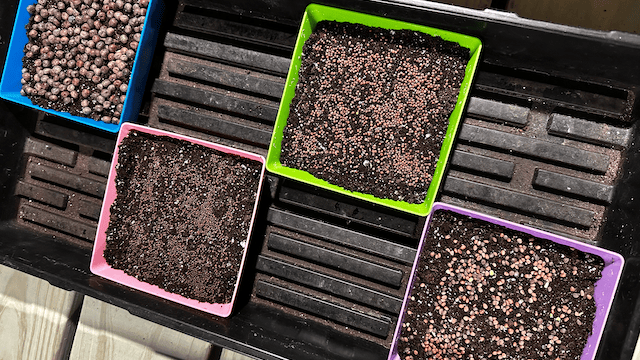
My first seeds in the new greenhouse that are a microgreen test.

When I am out in the garden, I am reminded how often the work mirrors what I do in business. One of the metaphors I return to again and again is the simple idea of planting a seed. In the garden, seeds are intentional. We choose varieties that we hope will thrive, and we place them where light, soil, and space support their purpose. Some seeds will grow into vegetables to harvest. Others help pollinators. A few create protection as a hedgerow. Every seed has a role.

The same pattern shows up in our work lives. We plant seeds in the minds of our teams when we share a vision for the company. We plant seeds with potential partners when we explore what might be possible together. We plant seeds with prospects who may not be ready today but could become long term relationships that serve both sides.

The part that challenges me most is asking myself if I am planting the right seeds and if I am prepared to nurture what may grow. Every seed has requirements. Some need daily attention. Some need patience. Some will rest quietly under the surface for months before any sign of growth appears. It reminds me that leadership takes clarity and discipline. We must know what we want to harvest in two or three years, or the wrong seeds will fill the space.

This is why focus matters. When we plant without intention, we could create weeds. When we plant with purpose, we build something that can nourish a whole community.

So here is the question I keep asking myself. Am I planting the right seeds in my relationships? The seeds I sow today are already shaping what will be possible a few years from now. My hope is that I stay intentional about what I want to grow and faithful to the work of tending each relationship as it begins to rise toward the light.


This post first appeared on November 15, 2025 in Sowing Success, my weekly LinkedIn newsletter on leadership and organic farming. Read the original on LinkedIn.
The Foundation for Growth: Investing in the Right Infrastructure

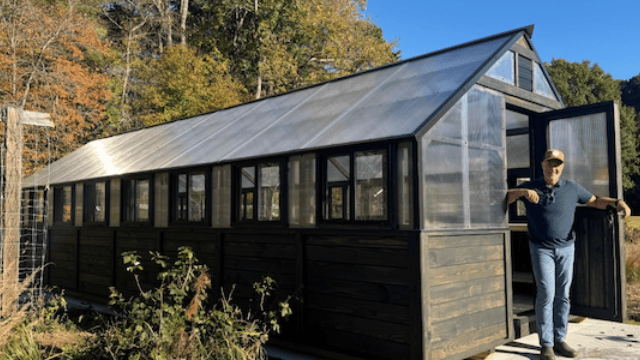
The Greenhouse has arrived!

Over the past few months, I’ve been preparing for a big milestone at Iron Mountain Organics. The arrival of my FIRST GREENHOUSE! On Wednesday, the truck from Yoderbuilt finally rolled in with a 32×12-foot structure (yes, I had to go with the biggest one available, you have to dream big!).

For me, this greenhouse represents more than just a space to grow vegetable starts. It’s an investment in infrastructure. The kind of foundational step that allows you to scale sustainably. With this setup, I can extend my growing season, start more plants, and ultimately serve more people with fresh, local produce.

Meanwhile, at ThreeWill, we’re making our own kind of infrastructure investment. We’re in the process of moving our Professional Services Automation tool to Ruddr.io, and I couldn’t be more impressed. The level of thought, design, and care behind this platform shows through in every interaction. Even better, the Ruddr team is right here in Georgia. From CEO Rob Patten to VP of Customer Success Jason Barrett, they’ve shown a genuine commitment to helping us better understand the health of our operations as we scale.

We’re on track to go live December 1, and this partnership already feels like planting the right seeds for future growth. 🌱

Whether it’s farming or technology consulting, scaling operations requires the right foundation. That’s the spirit behind our HCBS Productivity Toolkit at ThreeWill. We are all about helping Home and Community-Based Service providers strengthen their core operations, reduce chaos, and focus their energy where it matters most: delivering care. We’ve seen organizations save up to 20% on caregiver and patient onboarding costs by applying these principles.

If you know an HCBS organization ready to scale and serve more people with less chaos, please share our Toolkit with them at https://threewill.com/hcbs-productivity-toolkit/.

And as for me, if you’re wondering where I’ll be every evening and weekend for the next few months, just check the greenhouse. 🤣


This post first appeared on November 7, 2025 in Sowing Success, my weekly LinkedIn newsletter on leadership and organic farming. Read the original on LinkedIn.
Wearing Multiple Hats: Finding Balance Between Bits and Soil

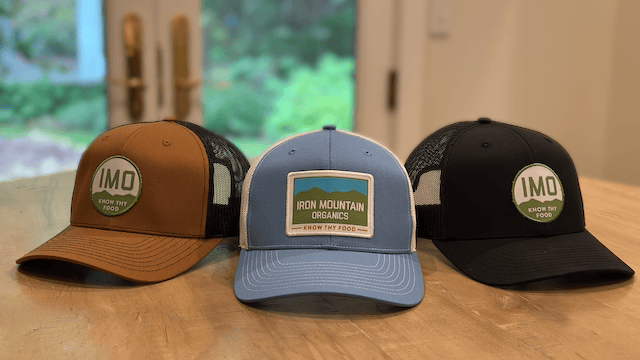
The Latest Lineup of IMO Hats

Running two businesses (a technology services firm and a small-scale market garden) often feels like living in two worlds. Yet, for me, that balance is what keeps life whole.

At ThreeWill, our work is about the art of the possible. We turn digital 1s and 0s into solutions that help other organizations achieve their missions. It’s creative work born from ideas, logic, and the invisible threads of technology. There’s magic in watching a concept become real. Going from an app that simplifies someone’s day to a platform that strengthens an entire organization.

Then there’s Iron Mountain Organics (IMO), where creation starts in the soil. From a tiny seed to a basket of fresh greens, it’s a different kind of magic that is slower, grounded, and deeply tangible. Where ThreeWill feeds the missions of many, IMO feeds the people in my community — literally 😋.

In many ways, these two businesses form a yin-yang relationship. One stretches my mind, the other restores my soul. The market garden gives me space to think, to let the stress of technology melt away as I troubleshoot a pest problem or plan the next planting bed. And as ThreeWill has leaned into supporting Home and Community-Based Care at ThreeWill, I’ve realized that both ventures are rooted in a community that helps others thrive in their environments, whether digital or natural.

Wearing multiple hats isn’t just a necessity; it’s a gift. Each role brings perspective, renewal, and purpose to the other.

I’d love to hear from fellow entrepreneurs. Do you have a complementary pursuit that balances your main work? How do your “other hats” bring you back to center?


This post first appeared on October 31, 2025 in Sowing Success, my weekly LinkedIn newsletter on leadership and organic farming. Read the original on LinkedIn.